

Most mid-market companies lose between 10 and 15 percent of potential revenue each year not because of weak products or bad leads, but because their own teams can’t coordinate handoffs fast enough to match how buyers actually move. You’re running marketing, sales, and customer success on mismatched KPIs, fragmented tools, and outdated assumptions about who owns what—and the cost compounds quietly until it’s impossible to ignore. What follows is a practical framework for reversing that damage.
Key Takeaways
- Misaligned incentives—marketing chasing MQL volume, sales chasing closed revenue—create structural conflict that fragments collaboration by default.
- No shared, real-time customer interaction view forces teams into separate data silos with competing definitions of success.
- Pipeline damage from misalignment costs mid-market B2B companies over 10% of annual revenue through leaks and wasted effort.
- Replacing departmental KPIs with shared revenue-path goals eliminates the structural root cause of cross-functional blame cycles.
- Rebuilding requires an operating model with real-time CRM sync, bi-directional logging, and cross-functional governance rituals.
Why Mid-Market Teams Default to Silos
When marketing gets rewarded for generating MQL volume and sales gets rewarded for closed-won revenue, you’ve built an organizational structure that guarantees an “us vs. them” dynamic rather than a shared mission. Departmental KPIs and incentives pull teams in opposing directions, so low-quality handoffs become the norm rather than the exception.
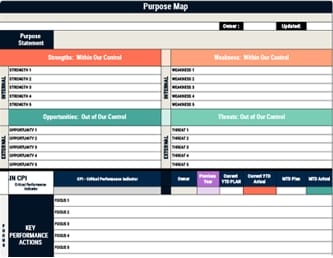
This problem compounds because today’s buyer journeys are chaotic and overwhelmingly digital—Gartner reports 83% of decision time happens online. Without a shared, continuously updated view of customer interactions, your teams simply can’t coordinate fast enough to match the pace buyers move. Each department retreats into its own data, its own definitions of success, and its own protective routines, making silos the default operating model. One way to break this pattern is to align teams around a small set of Critical Performance Indicators that define shared success across functions.
What Misalignment Costs Mid-Market Companies Each Year
Because siloed incentives quietly erode revenue before most leadership teams even notice, the financial damage of sales-marketing misalignment deserves a hard look—U.S. businesses lose over $1 trillion annually to this problem, and for mid-market B2B companies specifically, it can translate into more than 10% of annual revenue evaporating through pipeline leaks, wasted content, and duplicated effort.
You’ll see this play out in concrete ways: 79% of marketing leads never convert, sales reps ignore up to 50% of passed leads, and 60–70% of your marketing content goes completely unused.
Where alignment stays weak, you’re likely facing an average 4% annual revenue decline.
Meanwhile, highly aligned organizations prove 72% more profitable.
That gap isn’t theoretical—it’s the difference between compounding growth and compounding waste across every quarter you delay fixing the problem.
As companies like Tesla and HubSpot show, strategic alignment turns broad goals into coordinated execution across teams, which is exactly what mid-market firms need to stop revenue leakage before it compounds.
How Internal Friction Reaches Your Customers
Though the financial toll of misalignment is staggering on its own, the less visible damage happens when internal friction crosses company walls and reaches your buyers directly—costing you 10% or more of annual B2B revenue through inconsistent experiences that erode trust before you’ve earned it.
Since modern B2B buyers spend 83% of their decision time in digital channels rather than vendor meetings, fragmented messaging between your sales and marketing teams gets amplified across touchpoints before you’ve built any relationship.
Customers encounter mismatched value propositions—a marketing email says one thing while a sales pitch says another—damaging brand credibility by over 50%.
Poor handoffs then force buyers to re-explain their needs, while 79% of marketing leads never convert because misaligned incentives collapse pipeline quality into delays and unreliability.
Implementing visual management boards can help cross-functional teams align on shared KPIs, surface performance deviations quickly, and reduce the customer-facing fallout of internal miscommunication.
Siloed KPIs and the Mid-Market Pipeline Breakdown
The damage customers experience from misalignment traces back to a specific structural flaw inside mid-market companies: marketing and sales teams operate under completely different definitions of success.
Marketing optimizes for MQL volume while sales optimizes for quota attainment, and this separation floods your pipeline with unready prospects—79% of marketing leads never convert, and reps ignore up to 50% of what they receive.
Only 9.1% of salespeople rate marketing leads as “very high quality,” which erodes trust and forces duplicate prospecting effort.
Because performance reporting stays fragmented, you can’t build a unified view of what’s actually working across the lead-to-revenue path.
The measurable cost is significant: B2B companies lose 10% or more of annual revenue to this misalignment, with poorly aligned organizations averaging a 4% annual revenue decline.
A performance dashboard can help unify visibility across teams by continuously tracking progress from lead generation through revenue outcomes.
When Silos Breed Blame, Burnout, and Talent Drain
When incentive structures pit marketing against sales—one team chasing lead volume, the other chasing closed revenue—the resulting friction doesn’t stay contained inside strategy meetings; it metastasizes into a blame cycle that grinds your people down.
Reps lose trust in marketing-qualified leads and ignore up to 50% of passed prospects, while U.S. employees collectively spend 2.1 hours per week managing workplace conflict—costing roughly $359 billion annually.
That sustained tension drives disengagement, which drains about 18% of each affected employee’s salary in lost productivity, and when burnout pushes people out the door, replacement costs can hit 150% of their annual compensation.
You’re also exposed legally: the probability of an employment lawsuit in the U.S. sits at 10.5%, with many claims rooted in toxic, conflict-laden cultures that siloed teams generate.
Organizations with strong organizational alignment can grow revenue 58% faster and be 72% more profitable because teams work toward a shared strategic vision instead of competing priorities.
How Aligned Mid-Market Teams Operate Day to Day
Aligned mid-market teams replace the blame cycle with a shared operational rhythm that starts at the most basic level: everyone works from the same real-time view of customer interactions—calls, texts, dispositions, and notes—rather than trading disconnected reports back and forth across a conference table.
When you operate from a single source of truth, you eliminate the alignment perception gap where executives claim collaboration exists but frontline teams don’t feel it.
You enforce shared accountability through joint dashboards and weekly cadences with transparent decision-making.
You agree on lead quality definitions tied to revenue outcomes instead of passing volume that reps ignore.
Because buyers spend roughly 83% of their decision time online and meet vendors only 17% of the time, you coordinate around live interaction data so internal friction never reaches the customer.
This kind of operating model is strengthened by visual management tools that provide real-time feedback, increase transparency, and help teams spot inefficiencies before they turn into cross-functional breakdowns.
Building a Cross-Functional Operating Model That Holds
Because alignment doesn’t sustain itself through good intentions alone, you need a cross-functional operating model with structural reinforcement—one built around a single source of truth, shared metrics, and governance rituals that keep teams accountable to each other rather than just to their own department heads. To make that model durable, teams must integrate operational realities into planning early so strategy stays actionable and execution stays aligned.
That model requires four foundational components:
Alignment isn’t a mindset—it’s an operating model built on four structural foundations.
- Real-time CRM and activity sync across calls, texts, dispositions, and notes so every team operates from the same performance view.
- Shared goals replacing departmental KPIs, which eliminates the misalignment loop where marketing chases lead volume while sales chases revenue.
- Bi-directional logging through tools like Kixie to automatically capture every touchpoint and unify reporting dashboards.
- Cross-functional governance rituals—recurring check-ins, transparent decisions, and trust-building habits—that prevent the misalignment tax costing B2B companies 10%+ of annual revenue.
Frequently Asked Questions
What Are the 3 C’s of Collaboration?
The three C’s of collaboration are Clarity, Consistency, and Communication.
You’ll want to align on shared goals, buyer definitions, and handoff criteria so your teams aren’t chasing conflicting KPIs.
You should keep messaging unified across every touchpoint to prevent fragmented buyer experiences that erode trust.
Finally, you need a single source of truth—like real-time, bi-directional CRM logging—so both sales and marketing measure the same pipeline reality.
What Are the 5 P’s of Collaboration?
You might think frameworks oversimplify real problems, but the 5 P’s give you a concrete checklist that exposes exactly where collaboration fails. They’re Purpose, People, Process, Platforms, and Performance.
You align teams around shared revenue outcomes, build cross-functional trust, standardize handoffs across the buyer journey, unify your data in a single source of truth, and measure results with shared definitions so every department operates from the same scorecard.
Conclusion
You’ve seen how misalignment silently drains revenue, burns out your team, and confuses your buyers—so the next step is building the operating model that prevents it. Consider a mid-market SaaS company that replaced departmental MQL and close-rate KPIs with a single shared pipeline-velocity metric, ran weekly cross-functional syncs, and saw their sales cycle shrink by 22% within one quarter. You can achieve similar results when you unify your data, goals, and governance rituals into one system.