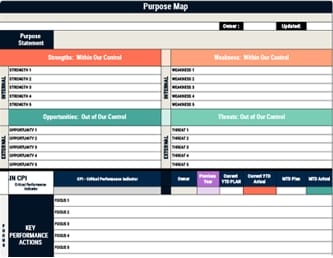


Like a lighthouse cutting through fog, visual management systems help you see performance, standards, and abnormalities at a glance, so you act before small issues grow. You’ll learn how boards, signals, and dashboards translate strategy into shop-floor behavior, connect OKRs to takt time, and drive rapid containment through zero-silence reporting. You’ll also see how PDCA, user-led design, and scalable digital tools reduce waste and align teams, but first you need to decide where visibility truly starts.
Key Takeaways
- Visual management makes current conditions, standards, and abnormalities obvious at a glance, enabling immediate, error-free action without meetings or reports.
- Core tools include Kanban, Andon, 5S visuals, dashboards, shadow boards, and color-coded indicators to improve flow, quality, safety, and accountability.
- Align visuals with strategic objectives using OKRs, configurable KPIs, and PDCA cycles to unify reporting and sustain continuous improvement.
- Start with a focused pilot, involve frontline teams, set clear action triggers, and standardize metric displays and update cadences.
- Digitally integrate boards with ERP/MES for real-time visibility, cross-site benchmarking, mobile access, and reduced data silos at scale.
Purpose and Rationale of Visual Management
Why does visual management matter on a manufacturing floor? You need information that’s instant, accurate, and unmistakable, so you can act without waiting for a report or a meeting. Visual devices—boards, signals, marks, andons—tap the brain’s fast visual processing to show standards, current performance, and abnormalities, letting you see what’s normal and what’s not at a glance.
Use visuals to guide what to do, where to go, and when to act, so deviations stand out and safety risks don’t hide in text. Ground your approach in Lean and the Toyota Production System, where visual signals expose waste, trigger rapid problem solving, and reinforce standard work. Design cues that fit daily routines, and extend them across departments to keep communication simple, consistent, and actionable. Add real-time cues and ensure each display meets the 1-3-10 rule so teams can instantly see status, pinpoint issues in seconds, and know the next action and owner.
Benefits of Implementing Visual Management Systems
Building on the purpose of making standards and abnormalities visible at a glance, implementing visual management delivers tangible gains in safety, productivity, and decision speed by putting timely, unambiguous information where work happens. You reduce risk with clear warnings and status lights, and you cut delays by showing real-time priorities, capacities, and constraints where teams can act immediately. Standardized visuals display what to do, when to do it, and how to do it, which lowers errors and miscommunication while stabilizing flow. Use Andon cues to flag abnormalities instantly, then guide rapid root-cause checks and targeted containment, improving first-time quality. Apply Kanban boards, 5S, and dashboards to expose waste, balance workloads, and maintain discipline. Finally, real-time KPIs enhance transparency, enable proactive management, and reinforce continuous improvement across teams. Teams can further boost ownership and speed of action by using color-coded indicators like green/red status on daily boards to highlight normal conditions and problems at a glance.
Key Principles and Foundational Concepts
At its core, visual management rests on a few nonnegotiable principles: make the current state obvious at a glance, define clear standards, and highlight deviations immediately so people can act without waiting for a meeting or a report. You communicate real-time conditions, not just history, so operators and leaders see what to do now, where risks sit, and whether work meets expectations. You anchor these visuals in Lean and the Toyota Production System, using them to remove waste, improve flow, and protect quality and safety. You set purposeful goals first, then choose visual signals that map directly to those targets, ensuring metrics are transparent and actionable. You involve workers in defining standards, validate understanding through daily use, and continuously monitor, adjust, and sustain behaviors. To reinforce execution, align visuals with OKRs so every team can see how their daily performance ties to strategic goals and accountability.
Common Visual Management Tools and Examples
How do you turn principles into daily practice on the floor? Start with Kanban boards, where you map work items as cards across process stages, then set WIP limits to surface bottlenecks and balance production with demand. Use Andon systems to give teams clear visual, and sometimes audio, alerts, so they can pause work, contain issues immediately, and trigger quick support. Apply 5S visual management by labeling locations, color-coding zones, and posting standards, which helps you sort essentials, set them in order, keep areas clean, and sustain consistency. Deploy visual dashboards with real-time widgets for throughput, quality, and downtime, enabling fast, shared decisions. Install shadow boards so every tool has a visible outline, making missing items obvious and improving safety and accountability. Real-time visual indicators and dashboards support continuous improvement by quickly highlighting inefficiencies and enabling faster, more informed responses to issues.
Lean Manufacturing Connections and Waste Reduction
Why does visual management matter so much to Lean? It lets you see waste as it happens, so you can stop it fast and keep value flowing. With Andon lights, Kanban signals, and visual dashboards, you detect abnormalities immediately, halt non-value‑adding activities, and trigger targeted countermeasures before defects, delays, or extra inventory grow.
You also support just‑in‑time by exposing real capacity and demand, which prevents overproduction and cushions inventory, while clarifying transportation, motion, and waiting losses across the cell. Standardized visuals—5S layouts, visual work instructions, and process maps—make best practices obvious, reduce variation, and sustain improvements day to day.
Real-time KPIs on boards align teams to Lean goals, shorten feedback loops, and drive kaizen that lowers cycle time, reduces defects, and stabilizes flow. This visibility also strengthens organizational alignment, helping teams connect daily improvements to strategic goals and improving collaboration and profitability.
Implementation Strategies and Overcoming Challenges
Seeing waste in real time only matters if you can put visuals to work, so start implementation with a focused pilot that proves value, builds confidence, and exposes practical issues before you scale. Define clear goals and KPIs across quality, safety, delivery, cost, and people, then set simple standards for how each metric is displayed and updated. Involve operators, supervisors, maintenance, and quality early to select tools, decide placement, and agree on action triggers, which reduces resistance and improves usability. Provide hands-on training before rollout, refresh it regularly, and coach leaders to run brief, disciplined standups at the boards. Close the loop with a cadence for feedback, PDCA cycles, and alignment to lean and LDLP principles. Strong visual management reinforces organizational alignment by clarifying goals, roles, and communication, which boosts engagement and accelerates performance improvements.
- Make abnormal conditions visible, actionable, and owned.
- Standardize visuals, but iterate based on results.
- Tie every board to a clear daily routine.
Digital Integration, Real-Time Data, and Scalability
When digital tools extend your visuals beyond the board, you turn static snapshots into a living system that updates itself, connects sites, and drives faster decisions. Use digital Kanban and SQDCP boards to broadcast real-time safety, quality, delivery, cost, and people metrics, so teams see issues as they emerge and act immediately. Centralize data in the cloud to enable cross-site collaboration, consistent standards, and benchmarking that exposes best practices you can replicate quickly. Provide mobile apps and remote access for on-the-go entry, alerts, and performance views, increasing responsiveness on the floor and after hours. Integrate ERP and MES to align shop activities with business goals, unify reporting, and reduce data silos. Choose scalable tools with configurable KPIs and PDCA support to sustain growth. Incorporate structured frameworks like OKRs to align digital visual management with strategic objectives and reinforce continuous communication and feedback loops.
Frequently Asked Questions
How Should We Budget and Estimate ROI for Visual Management Initiatives?
Budget by scoping pilots first, itemizing hardware, software, design, training, integration, and maintenance, then adding a 10–20% contingency.
Quantify benefits by mapping waste reduced: time saved, defects avoided, inventory trimmed, and safety incidents prevented.
Convert to dollars using baseline metrics and standard labor, scrap, and carrying costs.
Estimate ROI with (annual benefits − total costs) ÷ total costs, validate with a 3–6 month pilot, then scale in phases.
What Change Management Tactics Address Resistance From Experienced Operators?
Picture seasoned hands pausing at a new board; you reduce resistance by co-designing standards with operators, piloting in one cell, and using their feedback to refine visuals.
You explain the why with data and examples, pair skeptics with respected peers, and formalize quick wins into standard work.
You provide bite-sized training on the floor, adjust workloads to protect learning time, measure impacts openly, recognize contributions publicly, and address issues rapidly.
How Do We Govern Visual Standards Across Multi-Site Global Plants?
You govern standards by defining a global visual taxonomy, codifying it in a central style guide, and enforcing it through a change-controlled master library. You assign process owners, establish a cross-site governance council, and require site-level custodians to implement and audit. You mandate metadata, versioning, and approved languages, while integrating templates into MES/CMMS. You run quarterly audits, track adherence KPIs, escalate deviations, and tie compliance to management reviews and leader standard work.
What Cybersecurity Practices Protect Digital Visual Boards and Data?
Lock the door digitally as you’d physically: you enforce SSO with MFA, not weak standalone logins, and you segment networks so boards can’t reach crown-jewel systems. You encrypt data at rest and in transit, apply least-privilege roles, and log every access. You harden devices, patch promptly, and disable unused services. You use secure APIs, certificates, and secrets vaults, then back up configurations, test restores, and run regular audits and phishing-resistant training.
Which KPIS Best Evaluate Adoption and Behavioral Compliance Over Time?
Track adoption and compliance using KPIs like active user rate, daily/weekly login frequency, and feature utilization by role, then pair them with training completion and certification currency.
Measure policy adherence via audit pass rate, exception rate, and time-to-correct nonconformities.
Monitor engagement with meeting attendance, action item closure rate, and on-time completion.
Trend these over cohorts and sites, segment by shift or supervisor, and set thresholds to trigger coaching, refresher training, or process redesign.
Conclusion
You’re now ready to deploy visual management with purpose: define clear standards, display performance visibly, and detect deviations quickly, then drive disciplined PDCA responses. Start small, secure stakeholder support, and scale with digital dashboards that sustain shared situational awareness. Practice the 3 S’s—see, signal, solve—to align daily work with OKRs, reduce waste, and stabilize flow. Maintain zero-silence reporting, measure what matters, and update boards often, because consistent, concise communication creates confident, coordinated, and continuous improvement.