

Most QBRs fail not because they lack data, but because they lack decisions. You’ve probably sat through reviews where polished slides filled the room and everyone nodded along, yet nothing actually changed afterward. The problem isn’t preparation—it’s purpose. When a QBR doesn’t end with named owners, specific commitments, and a clear 90-day plan, it’s just a presentation disguised as strategy. What separates the best teams isn’t what they present—it’s what they commit to doing next.
Key Takeaways
- QBRs must be structured around three to five forward-facing decisions, not rearview-mirror reporting that no one acts on afterward.
- Every action item requires a named owner and a committed deadline before the meeting adjourns to ensure follow-through.
- KPI variances should use RAG thresholds to trigger root-cause diagnosis, connecting gaps to specific drivers like late deals or headcount changes.
- Agendas built around outcomes—using stop/start/continue framing—replace passive updates with accountable, time-bound commitments.
- Between-QBR health checks at 30–60 days prevent drift and keep quarterly commitments on track before the next review.
Why Most QBRs Become Slide Decks Nobody Acts On
Although most companies run quarterly business reviews with good intentions, the process typically devolves into what’s best described as reporting dressed up as strategy—polished slide decks full of charts and metrics that no one acts on once the meeting wraps.
Most QBRs are just reporting in a strategy costume—pretty slides, zero follow-through.
The core problem is loop delay: your variance data is often three weeks old by the time it reaches the room, which forces your team into rearview-mirror narration rather than forward-facing decisions.
When you spend the entire session reading numbers off slides instead of mapping each variance to its root cause and a specific next step, you’ve built a data dump, not a decision-making framework.
The meeting ends with “good discussion” but zero owners, zero deadlines, and zero forecast adjustments.
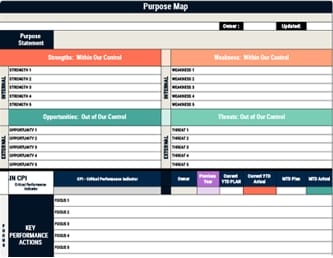
Instead of static reporting, QBRs should function like a live strategy map, connecting current performance to strategic objectives, clear owners, and real-time course corrections.
What a QBR Is and How It Differs From an EBR
Fixing that broken QBR process starts with understanding what a quarterly business review actually is—and what it isn’t.
A QBR is a structured, every-three-month meeting between your team and your customer’s business stakeholders to align on KPIs, demonstrate ROI, and set measurable next-quarter objectives. It also reinforces alignment and accountability by connecting quarterly goals to concrete action plans, owners, and performance tracking.
It’s not a technical check-in, and it’s not an Executive Business Review.
An EBR targets senior leadership, happens less frequently, and centers on long-term strategy and high-level priorities.
Your QBR, by contrast, focuses on shorter-term execution momentum with the people directly tied to daily outcomes.
Where an EBR frames progress in broad strokes, a QBR surfaces gaps and trends through data-driven discussions, assigns action items with owners and deadlines, and builds the kind of recurring accountability that reduces surprises at renewal.
Four Pillars of a QBR: ROI, Direction, Renewal, Trust
Every effective QBR rests on four pillars—ROI, Direction, Renewal, and Trust—that work together to turn a routine check-in into a decision-driving conversation.
- ROI ties quarter results directly to customer-specific objectives—think CAC/CLV ratios, churn rates, and NPS—so you can quantify business impact and justify the ongoing investment when renewal or expansion conversations arise.
- Direction validates whether your annual operating plan still fits by surfacing priority shifts, identifying blockers, and collaboratively setting measurable next-90-day goals that keep both teams aligned.
- Renewal assurance eliminates last-minute surprises by using health checks and RAG-status KPI variances to flag risks well before the renewal window opens.
You reinforce Trust by assigning every action item a clear owner and deadline, then delivering honest updates—even when the quarter falls short of plan. When QBRs explicitly connect strategic choices to how they’re actually executed, they turn into a practical forum for integrating operational reality into strategy and closing the gap between plans and outcomes.
Which KPIs and Health Scores Belong in a QBR?
Behind the four pillars sits a practical question: which numbers actually deserve a slide?
You’ll want three decision-grade KPI buckets—financial performance (gross profit margin, CAC, CLV:CAC ratio), customer health (churn rate, NPS, product usage trends), and operational coverage (average resolution time, team goal completion)—so your QBR tells a balanced story rather than a lopsided one.
Center everything on a single north-star metric with sub-metrics rolling up to it, because a wall of numbers kills discussion. In many organizations, that north-star is one of a small set of Critical Performance Indicators that ultimately define whether the business is winning or losing.
Each KPI should trigger behavior at RAG thresholds: when usage drops into red, you’re diagnosing whether that’s an adoption gap or a pricing problem, not just noting the decline.
Skip vanity metrics like page views that don’t connect to outcomes, and instead add a customer health update built from real-time signals—activity, tickets, adoption versus purchase—turning your review into a timely health check.
Build Your QBR Agenda Around Outcomes, Not Updates
Once you’ve identified the right KPIs and health scores, the next challenge is structuring your QBR agenda so it drives decisions rather than simply recapping what already happened.
Instead of walking through each department’s slide deck, you should organize the conversation around the three to five decisions you need to make for the coming quarter.
Follow an “outcomes → impact” flow that includes:
- Executive highlights and KPI RAG status comparing targets against actuals so everyone sees gaps immediately
- Root-cause explanations tied to specific variance drivers like late deals, headcount changes, or price-point shifts
- Decisions with assigned owners and deadlines framed as stop/start/continue actions, such as budget reallocations
This structure ensures you’re spending your sixty minutes debating what to do next, not narrating what’s already done. By consistently anchoring your QBR in outcomes and decisions, you transform it into a practical engine of strategic alignment that keeps goals, structure, and execution tightly in sync across the organization.
How to Run a QBR That Ends With Clear Commitments
Lock down every commitment before anyone leaves the room—this single habit separates QBRs that drive change from those that end with a polite “great discussion” and no follow-through.
When you surface a RAG status change, don’t just explain the variance—derive a specific action from the driver behind it, assign a named owner, and set a deadline within the next 90 days.
If adoption dropped, tie the commitment to the exact enablement gap rather than defaulting to generic “improve usage” language.
Use SMART-style objectives so each commitment links measurably to the customer’s stated goals and demonstrates clear ROI.
Before you close, schedule the next QBR and confirm which decisions you’ll evaluate then, keeping every promise time-bound and reviewable.
Reinforce each commitment by displaying it on visual management boards with clear, color-coded indicators so the team can track progress and address deviations in real time between QBRs.
Mistakes That Kill QBR Momentum and Trust
Even the best commitment framework falls apart if your QBR habits quietly erode the trust you’re trying to build. These three patterns are the most common culprits:
- Presenting stale data as strategy. When your deck relies on metrics that are three weeks old, you’re reporting history rather than steering decisions, and stakeholders disengage because nothing feels actionable.
- Dwelling on variance without linking to solutions. Spending time dissecting what went wrong without connecting each gap to a specific root cause and next action turns your QBR into a blame session instead of a planning session.
- Ending without owners and deadlines. If the meeting wraps with “good discussion” but no re-forecast, assigned owners, or committed timelines, you’ve generated conversation without accountability. Inconsistent QBR ownership and follow-through quietly undermine organizational alignment, weakening both engagement and the clear line-of-sight between quarterly decisions and long-term strategic goals.
What Happens Between QBRs: Follow-Through That Builds Trust
Because the real test of a QBR isn’t what happens in the room but what happens after everyone leaves, your follow-through cadence determines whether commitments translate into results or quietly dissolve. Schedule every action item with a clear owner and deadline before the meeting ends, and book the next QBR while stakeholders are still present. Between reviews, run 30–60 day health-check conversations aligned to your quarter’s SMART goals so drift doesn’t become a surprise. Track variance drivers in real time rather than relying on stale data at the next meeting. When signals like usage drops or escalations appear, trigger enablement workshops that produce concrete adoption steps. By consistently connecting QBR actions to measurable performance indicators, you reinforce accountability and sustain operational excellence across quarters. Share progress and blockers frequently enough that renewal conversations become formalities, not risks.
How to Scale QBRs Without Losing the Personal Touch
When your follow-through engine works reliably for a handful of accounts, the next pressure point is making it work across dozens or hundreds without turning every QBR into a copy-paste exercise that feels hollow to the customer sitting across from you.
The solution is standardizing your process while personalizing your content:
- Standardize the agenda structure around four pillars—ROI evidence, strategic direction, renewal assurance, and trust—so every QBR drives decisions, then customize each deck with that customer’s usage data, milestones, and the right stakeholders in the room.
- Automate KPI refreshes through CRM, finance, and project tool integrations so CSMs spend time on analysis, not copying numbers.
- Send the completed deck 48+ hours early so your 60-minute meeting becomes collaborative discussion, not a data dump.
- Treat each QBR as a lightweight version of the strategic organizational alignment practices used by companies like Tesla and Airbnb, ensuring your execution rhythm consistently supports your customers’ long-term goals.
Frequently Asked Questions
What Is a Quarterly Review Called?
You’ll hear a Quarterly Business Review called several names depending on the organization—common alternatives include a “health check,” an “activity and usage review,” or a “renewal-assurance checkpoint.”
Some teams frame it as a structured buyer–user–accountability conversation that aligns stakeholders around adoption and ROI. Regardless of the label, you’re conducting the same core exercise: reviewing what’s working, identifying gaps, and setting clear next steps to keep customer success on track.
Why Are Quarterly Reviews Important?
Without quarterly reviews, you’re fundamentally flying blind into every renewal conversation.
QBRs are important because they tie your quarter’s results and KPI progress directly to your customer’s priorities, which helps you demonstrate ROI and justify continued investment.
They also replace vague status updates with decision-driven goals and variance analysis, so you can adjust direction in real time while building trust through transparent, action-oriented next steps with clear owners and deadlines.
Conclusion
You’ll find that a well-run QBR functions like a compass recalibrated every 90 days, keeping your team and your customer aligned on what actually matters. When you anchor every conversation in measurable outcomes, assign clear owners to every commitment, and follow through between meetings, you transform the QBR from a passive reporting ritual into the single most powerful accountability mechanism in your customer relationship.