

You can scale from small squads to autonomous delivery units by starting with a one‑page blueprint that clarifies goals, principles, and constraints, then mapping roles, team topology, and hiring pipelines to those targets. Establish clear interfaces and SLAs to grant bounded autonomy, and use a management cadence with visual artifacts and metrics to sustain alignment. Hardwire culture and communication norms early, because they shape decision speed, accountability, and growth outcomes—next, you’ll decide the exact cadence and measures.
Key Takeaways
- Anchor scaling on five pillars—hiring, people management, organization, culture, communications—with metrics like time-to-fill, NPS, and delivery lead times.
- Define self-sufficient delivery teams with clear interfaces, decision rights, autonomy levels, and SLAs to minimize handoffs and dependency risks.
- Align hiring pipelines to target org design early, using standardized scorecards, structured interviews, and real-time pipeline dashboards.
- Use OKRs, governance rhythms, and visual management boards to maintain alignment, transparency, and fast course corrections as teams grow.
- Implement a 90-day plan assigning pillar owners, clarifying decision paths, and sequencing requisitions tied to growth milestones and autonomy targets.
Start With a One-Page Scaling Blueprint
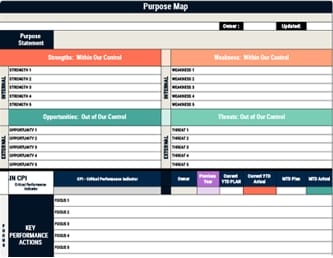
How do you translate growth ambitions into a clear plan you can execute today? Start with a one-page scaling blueprint that anchors five pillars—hiring, people management, organization, culture, and communications—against milestones from 10 to 150+ people. For each stage, mark inflection points where current practices fail, and note warning signs like missed 1-on-1s, directional ambiguity, and growing inter-group friction. Specify target design decisions that preserve velocity, including team autonomy levels, delivery boundaries, and expected cross-team dependencies. Add checklists and metrics—time-to-fill, NPS culture score, delivery lead times—so you can assess health quickly and correct course. Close with a 90-day implementation plan that assigns owners per pillar, clarifies decision paths, and defines how choices cascade across teams for consistent execution. To reinforce consistency and agility, align the blueprint with the 7-S Model’s elements—Shared Values, Strategy, Structure, Systems, Style, Staff, and Skills—to ensure choices remain coherent as you scale.
Define Scaling Goals and Org Design Principles
With your one-page blueprint in hand, set explicit scaling goals and the org design principles that will steer every hiring and structuring choice from 10 to 150+ people. Tie goals to growth milestones, such as moving from one cross-functional team to several autonomous delivery teams at defined headcount points, so progress is measurable and expected. Establish principles that prioritize self-sufficient teams with clear purpose and adequate autonomy, because motivation and speed erode when dependencies multiply. Use the Spotify model as an illustrative reference, not a template, to embody these principles. Back the design with Continuous Delivery and Continuous Improvement, which reduce cross-team coupling and raise quality. Finally, emphasize alignment mechanisms that keep strategy coherent while minimizing inter-team coordination overhead as you scale. Incorporate regular OKRs reviews to maintain strategic alignment and measure progress across teams as you grow.
Map Roles and Team Topology for Scaling Teams
Why start mapping roles and team topology now rather than later? Because as you scale, coordination costs rise quickly, and clear team boundaries prevent dependency gridlock. Define self-sufficient Delivery Teams that can deliver most work without cross-team help, then document their responsibilities, interfaces, and decision rights. Give each team a clear purpose tied to company growth milestones, so priorities stay coherent when pressure increases.
Design for sufficient autonomy, letting teams own roadmaps and quality while aligning on shared objectives, metrics, and standards. Use Continuous Delivery to reduce batch sizes and handoffs, and apply Continuous Improvement to refine boundaries as work evolves. Borrow from the Spotify Model’s ideas—squads, chapters, and guilds—without copying blindly. Capture roles, APIs, and escalation paths, ensuring complexity stays manageable as scope expands. Establish governance rhythms to regularly track progress and maintain alignment as teams scale.
Align Hiring Pipelines to the Target Org
Sooner is better when aligning hiring pipelines to your target org, because you need to map roles and headcount to concrete growth milestones before demand surges and forces reactive decisions. Translate your target org chart into sequenced requisitions, with each team’s first critical hires defined, interview plans prepared, and capacity forecasts reviewed against timelines. Introduce your first recruiter early, tasking them to standardize job definitions, scorecards, and candidate messaging, so the employer brand and process scale consistently. Build structured interviews with objective criteria, diverse panels, and calibrated rubrics, prioritizing candidates with long-term contribution potential and team-fit over short-term speed. Maintain rigor despite pressure, since rushed hiring creates costly dysfunction later. Use clear role definitions and a recurring 1-on-1 cadence to synchronize recruiting priorities with evolving team structures. To ensure hiring decisions stay aligned with execution needs, establish lightweight visual dashboards that display real-time pipeline KPIs and role progress, enabling 1-3-10 second comprehension for faster adjustments.
Build Autonomy With Clear Interfaces and SLAs
Hiring rigor sets the talent foundation, but teams actually scale when their work units stand on their own, operate through clear interfaces, and commit to explicit service-level expectations. Design self-sufficient delivery units that complete most work without waiting on others, minimizing handoffs that slow progress. Define interfaces between teams with precision: specify inputs required, outputs produced, ownership boundaries, and acceptable dependency patterns, so coordination overhead stays low. Implement SLAs for every inter-team interaction, stating timing, quality criteria, and escalation paths, which turns vague promises into enforceable commitments. Use the Spotify squad model as a reference, and deploy traveling squads to clarify interface ownership during transitions. Pair each interface with metrics and RACI-like accountability, ensuring visibility and fast course correction as scale increases. Incorporate mobile-first communication and regular feedback loops to ensure interfaces remain inclusive and effective, reinforcing trust through real-time feedback and measurable engagement metrics.
Set a Management Cadence That Scales
How do you create a drumbeat that scales with headcount without drowning leaders in meetings or starving them of signal? Start early with weekly 1:1s and biweekly team reviews, then shift to multi-team leadership huddles as you add squads, using a defined calendar of rituals to keep everyone aligned. Anchor the cadence with weekly 1:1s, biweekly performance check-ins, monthly all-hands for broad updates, and quarterly management reviews that confirm readouts and priorities. Tie this rhythm to measurable signals: keep voluntary attrition under 10–15%, sustain 90%+ on-time releases, and enforce clear escalation paths in runbooks. Prevent bottlenecks by requiring pre-reads, concise update templates, and time-boxed meetings. Recalibrate when teams double or new functions launch to formalize handoffs and decision rights. Use visual management boards with color-coded indicators and team-specific customization to create real-time, actionable performance visibility that supports this cadence.
Hardwire Culture and Communication for Scaling Teams
Even as your headcount climbs, you hardwire culture by making values explicit, measurable, and visible in daily work, not just posters or kickoffs. Start by discovering your team’s core values with broad input, then draft clear culture statements and translate them into behaviors, decision rules, and rituals. Hire for values fit by probing real scenarios in interviews, and reinforce expectations in onboarding with examples, shadowing, and practice. Prevent culture drift by instrumenting values: link them to review criteria, promotion cases, and decision logs, and publish artifacts so teams see alignment. Use organizational design to support norms, grouping teams to reduce divergence and clarifying interfaces. Close the loop with regular 1-on-1s and skip-levels, where you inspect lived behaviors, surface tensions, and react quickly to culture problems. Incorporating visual management tools provides real-time visibility into behaviors and processes, enhancing transparency and enabling faster course corrections aligned with your values.
Frequently Asked Questions
How Should We Sunset Teams or Products Without Disrupting Morale?
Define clear criteria for sunsetting, announce decisions early, and explain the rationale, timeline, and impact. Offer redeployment paths, training, and role-matching, prioritizing affected people first. Preserve knowledge with structured handoffs, documentation, and success metrics that celebrate closure. Maintain service levels via a wind-down plan, milestones, and owners, while freezing new work. Communicate frequently, answer questions transparently, and honor contributions publicly. Provide severance and support when needed, and conduct retrospectives to improve future transitions.
What Metrics Indicate When to Split or Merge Teams?
Track lead time, cycle time, WIP, handoff frequency, and defect rates; rising queues, stalled throughput, or excessive coordination suggest a split. Watch team cognitive load, context switching, and on‑call volume; if capacity is constantly exceeded, divide scope. Merge when utilization falls, dependencies are tight, or duplicated work grows. Validate with DORA metrics, backlog health, customer wait time, and SLA breaches, then pilot changes, measure impact, and adjust org boundaries iteratively.
How Do Equity and Compensation Evolve as Teams Scale?
Equity and compensation shift from broad, high-upside grants to structured bands as you scale, so you’ll move from founder-heavy ownership to refresh cycles, role-based levels, and market-aligned pay.
You’ll standardize salary ranges, introduce promotion calibrations, and use equity refreshes to combat dilution and retention risk.
You should separate performance bonuses from equity, add location and role premiums, tighten offer governance, and publish transparent leveling guides to ensure fairness, predictability, and budget control.
How Do We Manage Cross-Time-Zone On-Call Without Burnout?
Stagger rotations across time zones, define clear handoffs, and cap consecutive nights so you protect sleep. Use follow-the-sun coverage where possible, automate alerts, and tighten thresholds to reduce noise. Publish playbooks, assign incident commanders, and rehearse drills, ensuring decisions don’t bottleneck. Offer compensatory time, rotate fairly, and track incident load and burnout indicators. Encourage async updates, maintain on-call calendars, and review postmortems to adjust schedules, tooling, and staffing as data warrants.
What Governance Is Needed for Third-Party Vendor Dependencies?
You need vendor governance that’s tighter than a drum. Define ownership, approve vendors through risk-based due diligence, and require contracts with SLAs, uptime, security, compliance, data rights, audit rights, and exit terms. Maintain a vendor inventory, map dependencies, and set risk tiers. Monitor performance with KPIs, security attestations, and incident reporting, escalating breaches quickly. Enforce change management, review vendors quarterly, and test continuity and offboarding, so you can switch fast without operational shocks.
Conclusion
You balance speed with stability, using a one-page blueprint to align intent while mapping roles and topology to execution, so teams scale without drift. You hire to a target org, not a vacancy, then grant autonomy through clear interfaces and SLAs that reduce friction. You set a management cadence that surfaces risks early, while culture and communication hardwire shared standards. In practice, you iterate like engineering: measure time-to-fill, delivery lead times, and NPS to sustain alignment and adapt.