

You’re probably sitting on dozens of operational wins—reduced cycle times, fewer defects, lower carrying costs—that never make it past the plant floor, and that disconnect is quietly starving your pipeline. The problem isn’t a lack of proof; it’s that nobody’s translating those results into language your buyers actually respond to. Closing that gap requires a deliberate handoff process most teams skip entirely, and what it looks like might surprise you.
Key Takeaways
- Quantify operational wins with specific dollar, time, or risk metrics so they become credible proof points in sales conversations.
- Translate internal efficiency gains into buyer-facing outcomes like faster delivery, lower cost, and consistent quality at scale.
- Use documented operational results to fuel discovery calls, replacing generic questions with metric-anchored, assumption-challenging dialogue.
- Structure formal handoffs from Success to Pre-Sales to Sales so proven wins move into pipeline instead of staying in internal decks.
- Track whether each operational proof point converts into measurable pipeline activity like discovery calls, demos, and committed spend.
Why Do Most Operational Wins Never Reach Sales?
Although your team may be generating measurable improvements on the plant floor or inside your workflows, those wins almost never make it into a sales conversation because they’re treated as internal successes—process tweaks, productivity bumps, efficiency gains—rather than as quantified evidence that speaks directly to a buyer’s priorities.
When you label a result as “faster” or “cheaper” without attaching a conservative ROI metric—what a specific percentage change actually returns in dollars, hours, or risk reduction—sales has nothing credible to carry into a pipeline conversation.
You’ve captured pain without quantifying impact.
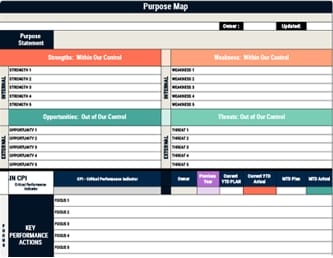
Compounding this, your ICP may exist in a deck while your go-to-market behavior ignores it entirely, so even well-documented wins never get routed to the conversations where they’d move deals forward. By translating plant-floor improvements into Critical Performance Indicators and supporting KPIs, you turn internal efficiency gains into externally credible, outcome-focused proof points that sales can use to advance real opportunities.
Identify Which Operational Metrics Buyers Care About
Before you can turn an operational win into a sales asset, you need to separate the metrics that matter to your buyer from the ones that only matter to your operations team—and the difference comes down to whether a number changes a business outcome or simply describes internal activity.
Buyers respond to quantified reductions in cost, cycle time, or risk because those numbers map directly to what they measure daily.
Cost, cycle time, and risk reductions win deals because buyers already track those numbers every day.
You should validate your metric selection by checking which deals actually close, retain, or expand based on the KPIs you’re presenting, rather than assuming your ICP definitions are correct.
Package each metric with conservative ROI logic—showing that even a modest improvement drives a positive return—so the conversation advances beyond early discovery.
To sharpen which metrics really matter to buyers, borrow from strategy execution tools like a Balanced Scorecard and align your sales KPIs with the financial, customer, and operational outcomes your customers already track.
Translate Execution Results Into Customer Language
Once you’ve identified the metrics that map to your buyer’s world, the next step is converting your internal execution results into language that speaks directly to what customers want to achieve.
Instead of saying “we scaled from $118M to $1.5B ARR,” frame the underlying capability as a customer outcome:
- Speed: Describe how your execution enables faster delivery across the customer’s workflow, reducing time-to-value in measurable terms.
- Cost: Quantify the financial impact customers can expect, such as “the impact of a 30% efficiency gain” on their bottom line.
- Quality: Position your systems-driven resilience as consistent, repeatable delivery that doesn’t degrade during growth phases.
- Reliability: Translate PLG-driven capacity lessons into conversion reliability and dependable buying experiences your customers can count on.
By aligning these outcomes with visual management boards, you can show buyers how your internal performance discipline translates directly into clearer, more actionable results in their own operations.
Build Discovery Questions From Operational Wins
The best salespeople rarely walk into discovery calls armed only with generic questions about budget, timelines, and decision-makers—they bring hard-won operational insights that let them ask sharper, more provocative questions their competitors can’t.
When you’ve driven a measurable gain on the plant floor—say a 15% cycle-time reduction—you can frame assumption-challenging questions like “What are you assuming caused similar bottlenecks in your operation?”
This moves you past surface-level discovery into what’s called Level 3–5 curiosity: challenge exploration and co-creation. By tying these insights back to your prospect’s strategic objectives and performance management metrics, you make the conversation directly relevant to how their organization plans, measures, and executes progress.
Ask prospects to quantify impact directly: “If we could reproduce that 15% improvement here, what would it change for your team and by when?”
Then reference how your team solved a real constraint and invite them to share theirs, turning your operational proof into their next decision trigger.
Give Every Buyer Role Its Own Proof Point
Sharp discovery questions lose their edge when you aim the same proof point at every person in the buying committee. Each role carries a distinct mandate, so you need to match one specific operational win to each buyer:
- Engineering lead: cite a measured cycle time reduction so they see direct process impact.
- Procurement/finance: present cost savings or ROI from a quantified percentage change that justifies budget approval.
- Security: reference a defect rate reduction that proves risk mitigation in production environments.
- RevOps/ops: highlight delivery speed gains that connect plant floor performance to pipeline velocity.
If a buyer can’t distinguish your proof point from a competitor’s, you haven’t made it role-relevant enough to differentiate. By tying each role-specific proof point to operational realities and clear performance metrics, you reinforce that your story is both strategically sound and executable in the real world.
Turn One Win Story Into Five Sales Conversations
Although a single operational win might seem like material for just one conversation, you can multiply its pipeline impact by mapping that same story across five distinct buyer interactions, each framed through a different level of the Curiosity Hierarchy.
One win isn’t one conversation — it’s five, when you frame each through a different level of curiosity.
Start at Level 1 with data-driven conversations anchored to budget and usage metrics, then deepen into Level 2 by exploring the buyer’s situational processes.
At Level 3, challenge assumptions by asking what happens if the problem remains unresolved.
Level 4 tests whether their current beliefs hold under scrutiny, and Level 5 co-creates the ideal outcome together.
By tying each of these conversations back to how the win improved organizational alignment—from clearer roles to better communication—you help buyers connect the story to broader business performance and change management.
Each conversation should vary in question sophistication by persona and produce a concrete next step, ensuring your one win becomes a repeatable, execution-driven pipeline engine rather than a single anecdote repeated five times.
Ask Deeper Questions Using Real Outcome Data
Mapping one win across five buyer interactions gives you breadth, but the real leverage comes when you use the quantified outcomes from that win to push each conversation past surface-level discovery and into territory your competitors can’t reach. When you ground these questions in visual performance indicators, you mirror how high-performing operations teams make fast decisions and signal you understand how value is actually managed on the plant floor.
Instead of opening with “What’s your budget?” anchor your questions to measurable before/after results and climb the Curiosity Hierarchy:
- Level 1–2 (surface): “What challenges are you facing with cycle time?”
- Level 3 (challenge): “What happens to downstream throughput if this doesn’t get resolved this quarter?”
- Level 4 (quantified): “We captured the impact of a 15% reduction in cycle time—what would that number mean for your operation?”
- Level 5 (co-creation): “What would perfect look like if we built the solution around that metric?”
Align Handoffs Between Success, Pre-Sales, and Sales
When operational victories stay locked inside your Success team’s update decks, they lose the one thing that makes them valuable to revenue: timing.
You need to treat every documented win as a handoff-ready input, meaning Success captures the quantified impact, Pre-Sales translates it into discovery-ready proof, and Sales uses it to move conversations forward.
Each team owns a piece of the pipeline outcome so the process doesn’t collapse when a single leader leaves.
Ensure that every operational victory includes measurable impact—what did an X% improvement actually yield—because pain without numbers stalls handoffs.
In capacity-constrained environments where conversion demand outpaces your team’s bandwidth, this alignment ensures every win generates an actionable next step rather than sitting idle in a slide deck.
Measure Whether Operational Proof Is Building Pipeline
Because operational wins only matter to revenue if they actually advance deals, you need a measurement framework that connects every documented improvement—faster delivery cycles, higher quality output, reduced cost—to specific pipeline movement rather than applause.
Operational wins that never advance deals are just applause—measure what moves pipeline, not what earns praise.
Track these four indicators:
- Trigger-to-discovery conversion rate: what percentage of users who experience an operational win enter a Level 3–5 discovery conversation involving challenge exploration or co-creation
- Quantified pipeline impact: the ROI from each improvement translated into measurable increases in demo requests and committed spend
- ICP alignment validation: whether accounts that close, retain, and expand actually match the profiles surfacing operational proof
- Capacity-to-conversation correlation: whether proof exists but conversations stall, signaling your GTM system can’t convert wins into seller-led follow-up
As you evaluate these metrics, verify that your operational proof is reinforcing strategic organizational alignment so wins don’t just look impressive in isolation but actually move you toward industry leadership.
Frequently Asked Questions
How Long Should We Wait After an Operational Win Before Using It Externally?
You shouldn’t wait long—aim to leverage an operational win within two to four weeks while the data’s fresh and the momentum’s strong.
Use that window to validate results, gather specific metrics, and get internal approval for external use.
If you delay beyond a month or two, the story loses its immediacy and competitors may close the gap, so move quickly to convert operational proof into compelling sales conversations.
Who Should Own the Operational-Win-To-Sales-Content Workflow Inside the Organization?
If you leave responsibility unclear, that content will vanish into a black hole quicker than free donuts in a break room.
You should assign a designated marketing ops individual or content lead who partners directly with operations and sales enablement to capture victories, verify data, and package them into case-ready assets.
This person coordinates approvals, maintains a shared pipeline of stories, and ensures prompt handoffs so sales reps always have fresh, credible proof points.
What Legal or Confidentiality Issues Arise When Sharing Customer Operational Data Externally?
You’ll face NDA restrictions, trade-secret exposure, and data-privacy regulations whenever you share a customer’s operational metrics externally.
Before publishing any case study or performance claim, you should obtain written consent that specifies exactly which data points, process details, and facility identifiers you’re allowed to disclose.
You’ll also want legal review to confirm compliance with industry-specific regulations and to redact anything that could reveal proprietary methods or competitive advantages.
How Do You Maintain Proof Point Accuracy as Operational Metrics Change Over Time?
If a customer’s OEE improved from 72% to 85% at launch but later settled at 80%, you’d update your proof point to reflect the sustained figure.
You should schedule quarterly reviews of every metric you cite in sales materials, verify current numbers directly with the customer’s operations team, and version-stamp each proof point so your reps always reference the most recent, validated data rather than outdated claims.
Can Operational Wins From Small Accounts Credibly Influence Enterprise-Level Sales Conversations?
Yes, they can, but you’ll need to reframe the results in terms of scalable impact rather than absolute numbers.
Focus on percentage improvements, process efficiencies, and ratios that translate across company sizes, since an enterprise buyer cares less about a small account’s total output and more about whether the underlying methodology proves repeatable.
You should also pair those wins with industry-specific context so decision-makers recognize the operational patterns within their own environments.
Conclusion
You’ve built the bridge between your plant floor and your pipeline, so now every operational improvement has a clear path into a sales conversation instead of dying in an internal report. Don’t let these wins collect dust—capture them with quantified impact, translate them into buyer language, and track whether they’re actually moving deals forward. When you treat proof like fuel, your pipeline runs on results that buyers can’t ignore.