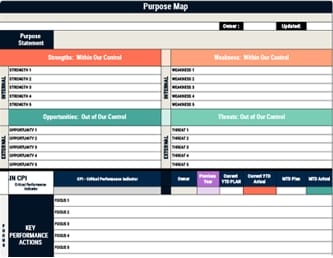


Most teams don’t fail because they lack talent—they fail because they’re solving different problems without realizing it. When departments define success differently, use mismatched metrics, or operate without clear ownership, even high-performers work at cross-purposes. You can fix this, but it requires more than a mission statement or a quarterly offsite. It takes a structured approach that most organizations skip entirely—and the first step isn’t where you’d expect.
Key Takeaways
- Define shared overarching goals, clarify ownership of every function, and map dependencies between teams before execution begins.
- Detect misalignment early by monitoring KPI definition drift, ownership gaps, and weak feedback loops across teams.
- Create a shared vocabulary and operating principles short enough to memorize, ensuring every team means the same thing.
- Structure every meeting around a call plan with one objective, required attendees, and a clear next step with ownership.
- Align KPIs through consistent definitions, assigned metric ownership, regular reporting cadence, and real-time data integration across teams.
What Team Alignment Actually Means
Team alignment means that every group in your organization shares clear overarching goals, works from agreed-upon definitions, and coordinates its efforts so that dependencies between teams are managed deliberately rather than discovered after something breaks.
Without it, you’re operating in silos that reduce agility and multiply mistakes across every function.
In practice, alignment shows up in day-to-day execution as clarity on who owns what, how handoffs work between departments, and what “good” looks like at each stage.
When you don’t have this foundation, teams drift into poor communication, missed updates, and unclear role allocation.
You can measure misalignment directly through employee and customer surveys or structured tools like the Organizational Alignment Survey to pinpoint exactly where understanding breaks down.
Strong alignment also requires integrating strategy, structure, and systems around shared goals, often supported by frameworks like OKRs.
Spot the Warning Signs of Misalignment Early
How quickly can misalignment take root before anyone notices?
Often, the first clues are inconsistent KPI definitions—when teams define MQL, SQL, or SAL differently, reporting integrity breaks down and masks where performance is actually failing.
You should also watch for unclear role allocation, where no one knows who owns the next step, resulting in stalled execution and recurring blockers.
If market shifts or customer feedback aren’t changing your priorities, you’re dealing with weak feedback loops and insufficient monitoring.
Poor task communication, missing status updates, and low visibility into work progress are additional red flags.
Misalignment often persists when organizations lack clearly defined Critical Performance Indicators that anchor teams to shared outcomes.
Deploy customer and employee surveys early, starting broad before narrowing into alignment-specific questions, since well-aligned organizations consistently retain more customers and achieve stronger return rates.
Build Shared Vocabulary to Align Your Teams
Every misalignment problem described above shares a common root: people using the same words to mean different things. You’ll fix this by creating a small, index-card-length vocabulary set that every team memorizes and references during handoffs, reporting, and goal-setting.
Most alignment failures aren’t strategic — they’re linguistic. Fix the vocabulary and the strategy starts fixing itself.
Define each term in qualification language that’s short enough to recall without checking a document. For lead stages, use concrete examples:
- Marketing Qualified Lead (MQL): A prospect who’s met behavioral thresholds like downloading a pricing guide
- Sales Accepted Lead (SAL): An MQL that sales has reviewed and agreed to pursue
- Sales Qualified Lead (SQL): A lead where sales has confirmed budget, authority, and timeline
- Review cadence: Survey teams quarterly to catch definition drift before it corrupts your KPIs
Using frameworks like OKRs helps keep these shared definitions consistently tied to measurable outcomes across teams.
Align on Principles, Not Just Values
Values are personal and subjective—they live in the eye of the beholder—but principles are team-alignable rules that define how you operate together.
Turn your principles into concrete operating guides for decisions, such as “when tradeoffs arise, we choose the option that best supports the agreed customer outcome.”
State them in plain language, keep them index-card short so they’re memorable under pressure, and reference them during planning, reviews, and handoffs.
You can measure whether they’re working by surveying customers and employees on one key question: “Do you understand how we make decisions here?”
Reinforce them through performance dashboards and regular reviews so decisions stay consistent across teams.
Set Alignment Standards That Define “What Meets”
Your alignment standards should specify:
- Execution criteria — required fields, formats, and quality thresholds so every team member knows the exact definition of “done”
- Timing and cadence — numerical deadlines and update frequencies, such as reporting status by 3pm daily or on a weekly cycle
- Communication requirements — mandatory artifacts like agendas and call plans, plus documented decisions and next steps after every meeting
- Reporting and visibility rules — designated placement, consistent naming conventions, and owner fields in shared tools
Add clear performance metrics tied to outcomes, using frameworks like a Balanced Scorecard to ensure progress is consistently measured and visible.
Plan Every Meeting With a Call Plan First
Before you send a single calendar invite, build a call plan that forces you to answer three questions: who needs to be in the room and what does each person need to walk away with, what’s the meeting’s single objective, and what specific next step should result from the conversation.
Every meeting needs a call plan before it gets a calendar invite — know who, what, and what’s next.
Define meeting success as end-of-meeting clarity on who does what by when, which transforms discussion into execution ownership.
Your call plan should also name the meeting’s purpose—whether you’re creating a decision, communicating information with feedback expectations, collaborating to solve a problem, aligning on strategy, or designing a solution—because purpose drives structure.
Once you’ve completed the plan, use it to shape your agenda and then choose the right format, not the other way around.
Ground your plan in operational realities to ensure the meeting translates strategy into actionable outcomes and avoids impractical decisions.
Match Communication Channels to the Work
Every communication channel in your toolkit—Slack, Google Docs, email, or a live meeting—serves a different purpose, and choosing the right one starts with the work itself, not the tool you’re most comfortable using.
Once you’ve defined your meeting’s purpose, map it to the channel that best supports the outcome you need:
- Slack for real-time coordination, quick updates, and time-sensitive questions that don’t require a durable record.
- Google Docs for collaborative work like specs, plans, or notes that must remain accessible and referencable long-term.
- Email for formal communications or stakeholder updates that don’t need immediate responses.
- Live meetings only when the work requires real-time alignment, decision-making, or solution design that asynchronous channels can’t resolve efficiently.
Standardizing these assignments reduces duplicate work and keeps your team’s attention where it matters. This approach also reinforces clarity by creating real-time feedback loops that make work visible and easier to coordinate across teams.
Align KPI Reporting Around Leading and Lagging Metrics
Different teams can use different leading/lagging pairs, but definitions must stay consistent across segments to prevent the same metric from meaning two different things.
Assign clear ownership for each metric and report them at a regular cadence so discrepancies surface early, before misalignment compounds into structural coordination failures that are harder to diagnose.
Incorporating real-time data into KPI reporting ensures teams can spot deviations quickly and act before small gaps turn into larger alignment issues.
Frequently Asked Questions
What Are the 4 Pillars of Alignment?
The four pillars of alignment are Shared Definitions, which ensure everyone uses the same glossary; Values vs. Principles, where you translate abstract values into actionable team principles; Execution Standards (“What Meets”), which set clear numerical and behavioral benchmarks so “done” isn’t ambiguous; and Communication & Reporting Mechanisms, where you establish predefined cadences, tools, and channels to keep updates visible and consistent across your organization.
What Are the 5 P’s of a Team?
Just as you’ve explored the 4 pillars of alignment, you’ll find the 5 P’s of a team build on that same foundation: Purpose (your shared “why”), People (who owns what), Process (how work flows and decisions get made), Performance (the standards and KPIs defining success), and Pace (the tempo for reviews and continuous adjustment).
Together, they ensure your team stays coordinated and executing effectively.
How Do You Ensure Alignment Across Cross-Functional Teams?
You’ll make sure alignment by first setting up shared definitions for key handoff terms like MQL and SQL so every team measures the same reality, then putting in place operating principles that reduce interpretation drift during execution.
You should define communication standards specifying who updates what and where, run meetings with explicit “who does what by when” outcomes, and implement KPI reporting that includes leading, lagging, and conversion metrics to keep dependencies visible across functions.
Conclusion
You’ve now got a complete framework for aligning teams, from defining shared outcomes and spotting misalignment early to building common vocabulary, setting execution standards, and matching communication to the work. The ball’s in your court—pick one area where alignment has broken down, apply the relevant step, and build momentum from there. Consistent execution across these practices turns fragmented teams into a coordinated force that delivers results.