

If you’re investing in operational excellence but haven’t matched your framework to your actual problem, you’re likely burning effort without real results. Lean, Six Sigma, and Theory of Constraints each solve fundamentally different issues, and choosing the wrong one can stall progress rather than accelerate it. Understanding where each approach fits—and when to combine them—is the difference between incremental tweaks and measurable transformation, and that distinction starts with what you’ll find below.
Key Takeaways
- Map your biggest operational pain points—quality defects, waste, or bottlenecks—before selecting any framework.
- Choose Six Sigma for reducing defects, Lean for eliminating waste, or Theory of Constraints for clearing bottlenecks.
- Avoid layering multiple frameworks simultaneously; target the single most pressing problem with the best-fit method first.
- Combine frameworks into one operating system using Hoshin Kanri for strategy and Balanced Scorecards for measurement.
- Pair leading and lagging indicators on real-time dashboards to confirm your chosen framework delivers measurable business results.
How to Choose an Operational Excellence Framework
Before you commit to any single methodology, start by mapping your biggest operational win-and-loss areas—whether that’s quality defects, capacity bottlenecks, or cycle-time delays—so you can determine whether Lean, Six Sigma, or the Theory of Constraints will address your root constraint fastest.
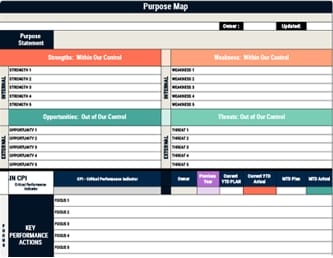
Apply a capability-and-problem fit test: choose Six Sigma when data reveals repeatable defect drivers requiring DMAIC and statistical control, Lean when waste and flow breaks dominate, and Theory of Constraints when a single bottleneck step limits throughput. Complement this by defining a small set of Critical Performance Indicators to ensure your chosen method directly ties to measurable business success.
Once you’ve identified the right fit, anchor your choice to a small set of governance pillars—leadership commitment, process standardization, and data-driven metrics—so results sustain beyond the initial pilot.
Avoid running competing programs simultaneously; instead, layer methods as your capabilities mature.
Lean, Six Sigma, and TOC: Where Each One Fits
Three distinct frameworks—Lean, Six Sigma, and the Theory of Constraints—each solve a different category of operational problem, and understanding where each one fits prevents you from applying the wrong tool to the wrong root cause.
If your biggest pain is waste and flow disruption, you’ll use Lean tools like 5S, Value Stream Mapping, and visual management to cut lead time and eliminate non–value-added activities.
Lean doesn’t chase every problem—it targets waste and flow, cutting the steps your customer never asked for.
When quality defects and inconsistency drive customer complaints, Six Sigma’s DMAIC methodology uses statistical measurement to identify root causes and tighten process variation.
If a single bottleneck limits your entire operation’s performance, TOC focuses your improvement efforts on that constrained step to increase throughput.
These frameworks aren’t competing—you can combine them sequentially, applying Lean for speed, Six Sigma for defects, and TOC for capacity.
In Lean environments especially, incorporating visual management systems helps teams quickly identify deviations, align on KPIs, and act in real time to sustain improvements.
Match Your OpEx Framework to Your Biggest Pain Points
How do you know which operational excellence framework will actually solve your problem instead of just keeping your team busy?
Start by identifying your single biggest pain point, then match it to the right toolkit.
If you’re battling quality defects and customer complaints, Six Sigma’s DMAIC methodology gives you the structured approach to find and eliminate root causes.
If waste and disrupted flow are dragging down your operations, Lean tools like value stream mapping and 5S will help you restore efficiency.
When a single bottleneck step is choking your delivery speed or capacity, Theory of Constraints tells you to focus there first and subordinate everything else to that constraint.
Don’t layer frameworks—target your most pressing problem directly.
To sustain results, reinforce your chosen approach with clear metrics and regular reviews using performance dashboards to track progress and adapt quickly.
Combine Frameworks Into One Operating System
Once you’ve identified which framework addresses your most pressing problem, the next step is to stop treating each methodology as a standalone initiative and start wiring them together into a single operating system that runs your business.
Use Hoshin Kanri for strategy deployment to set priorities, a Balanced Scorecard to measure outcomes through leading and lagging indicators, and Process Excellence methods like Lean, Six Sigma, and Theory of Constraints to deliver the actual change.
To prevent tool sprawl, define standard non-negotiables—governance cadence, a consistent problem-solving routine such as A3 or 8D, unified data sources for KPIs, and clear process ownership.
Then build learning loops through PDCA reviews and control plans so improvements stick when daily pressures mount. A well-documented Business Operating System ensures these elements stay aligned, accessible, and continuously improved across the organization.
Metrics That Tell You Your OpEx Framework Is Working
Wiring frameworks together into a single operating system only pays off if you can prove the system is actually producing results, which means you need metrics that connect daily operational activity to the business outcomes your leadership team cares about.
Pair leading indicators like issue closure time and standard-work adherence with lagging indicators such as cost of poor quality and on-time delivery so you can confirm cause-and-effect relationships.
Deploy real-time dashboards with color-coded thresholds that let teams course-correct the same day. Incorporate color-coded indicators to make performance deviations instantly visible and actionable for every team member.
Track stickiness through sustained process capability trends and recurring-defect reduction over multiple weeks.
Finally, establish data governance—single source of truth, consistent definitions, auditable feeds—so you’re measuring real performance, not chasing noise.
Frequently Asked Questions
What Is the Framework for Operational Excellence?
An operational excellence framework is a structured system that connects your strategy to daily execution by aligning KPIs with business outcomes, embedding process improvement methods like Lean or Six Sigma, and building leadership behaviors that make continuous improvement routine.
You’ll use dashboards and visual management for data-driven decisions, enforce non-negotiables like standard work and quality checkpoints, and implement through maturity assessments, pilots, and a phased roadmap.
What Are the 6 Pillars of Operational Excellence?
Like interlocking gears in a machine, the six pillars of operational excellence work together: you’ll focus on strategy deployment, performance management, process excellence, high-performance work teams, leadership and culture, and technology/data-enabled visibility.
Each pillar serves a distinct role—strategy deployment aligns goals to execution, performance management tracks leading and lagging indicators, process excellence eliminates waste, and the remaining three empower your people, governance, and real-time decision-making.
What Are the Four Pillars of Operational Excellence?
The four pillars of operational excellence are Leadership & Culture, Process Standardization & Control, Data-Driven Decision Making, and Continuous Learning/Problem-Solving. You’ll rely on leadership to set the tone, standardized processes to reduce harmful variation, metrics and dashboards to spot real problems quickly, and structured methods like PDCA or DMAIC to solve issues at their root and lock in lasting gains.
What Are the 5 Pillars of Organizational Excellence?
To get the ball rolling, you’ll want to build on five pillars: leadership and culture, where you set priorities and foster psychological safety; strategy deployment, which aligns goals across every level; process excellence, standardizing critical workflows to cut harmful variation; data-driven performance management, tying KPIs directly to business outcomes for quick corrective action; and people and work-team engagement, empowering teams with structured problem-solving methods to drive continuous improvement.
Conclusion
You might worry that choosing one framework means missing out on what the others offer, but the real risk is spreading your team’s focus so thin that nothing improves. Start by diagnosing your biggest operational pain point, select the method that targets its root cause, and track a few critical metrics to confirm you’re gaining ground. You can always layer in additional approaches once you’ve built momentum from that first measurable win.