

Most department heads who fail to own outcomes aren’t lacking competence—they’re defaulting to control because no one defined what ownership actually looks like in measurable terms. You’ve likely seen the pattern: approval layers multiply, decisions bottleneck, and your leaders stay stuck in doer mode instead of driving results. Three specific behaviors break this cycle, but they require you to rethink how you delegate, coach, and track what matters.
Key Takeaways
- Department heads default to micromanagement because unclear expectations make control feel safer than trusting teams to deliver outcomes.
- Jumping into “doer mode” replaces delegated outcomes with delegated activity, killing ownership and stalling team momentum.
- Running visible scoreboards replaces status meetings, making expected results and progress transparent without requiring leader interpretation.
- Coaching through missed outcomes with curiosity—not blame—builds diagnosis habits that fix systems instead of assigning fault.
- Tying recognition directly to delivered outcomes shifts credit gravity downward, reinforcing independence and self-directed accountability.
Why Department Heads Default to Control Instead of Outcomes
When a department head feels the weight of making sure things happen, the instinct isn’t to step back and design a system—it’s to grip tighter.
You insert yourself into every decision, add approval layers, and hover over execution because you don’t have a visible scoreboard that proves progress without your involvement.
Control becomes the substitute for clarity.
Without shared expectations and documented outcomes, your team can’t self-direct—they wait to be pushed because they can’t see where they stand.
When expectations live only in your head, your team has no choice but to wait for directions.
This problem compounds when you avoid hard conversations about accountability, which 80% of managers report struggling with.
Instead of coaching ownership, you default to micromanagement, which slows execution and creates the very confusion you’re trying to prevent.
What breaks this cycle is putting performance dashboards and regular progress reviews in place so the team can see movement, risks, and accountability without waiting for your intervention.
How Staying in “Doer Mode” Stalls Your Team’s Ownership
Micromanagement doesn’t just slow things down—it trains your team to stop thinking for themselves, and the longer you stay in doer mode, the deeper that dependency gets.
When you jump in to solve problems directly, you’re replacing delegated outcomes with controlled inputs, which quietly removes your team’s responsibility to act.
People stop stepping up because they assume someone else is handling it—classic diffusion of responsibility.
The real damage is invisible at first: clarity dies, ownership disappears, and momentum stalls.
You’re tracking hours and activity instead of measuring impact, so nobody feels accountable to actual results.
Your team doesn’t pull themselves forward because you’ve never given them the space or the visible expectations required to do so.
A shared visual management board makes outcomes visible in real time, giving the team clear standards and color-coded signals that prompt action without waiting for you to step in.
What Unowned Outcomes Cost Your Department
Because no one visibly owns the outcome, the costs don’t announce themselves—they accumulate quietly until the department’s performance is already degraded.
You’ll notice the same work getting repeated or delayed because expected results never translate into follow-through, and without visible progress markers, no one catches the drift early enough.
This is why teams that use clear objectives and KPIs are better able to spot misalignment before execution starts to break down.
Your team falls into inertia dynamics where everyone assumes someone else is handling the problem.
This bystander effect means broken processes stay broken while you receive superficial positivity instead of constructive feedback that would surface the real issues.
The downstream consequences are predictable: turnover climbs, burnout spreads, and trust erodes because your people can see that the system isn’t supporting execution.
They know no one’s accountable, and they disengage accordingly.
Delegate Outcomes, Not Tasks, Without Losing Visibility
The shift from delegating tasks to delegating outcomes changes everything about how your department operates, because it moves accountability from “did you complete the activity” to “did the measurable result actually happen.”
Stop measuring whether tasks got done—start measuring whether anything actually changed.
Most department heads default to task delegation—assigning who does what by when—which feels organized but actually blurs ownership, since a person can finish every assigned task and still produce no meaningful change.
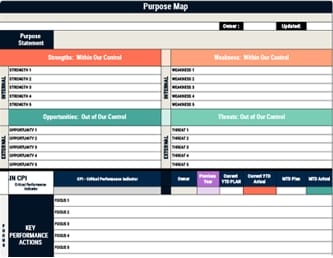
To delegate outcomes without losing visibility, build an outcomes scoreboard that makes expectations visible through numbers your team can read without you interpreting them.
Replace tracking hours with measuring impact—momentum, progress, and decisions owned.
Then keep oversight focused on outcome checkpoints rather than controlling implementation details, so your team pulls itself forward instead of waiting to be pushed.
Push Credit Down So Your Team Pulls Themselves Forward
Most department heads unknowingly create what you might call “credit gravity”—a pattern where recognition flows upward to the leader while agency and ownership drain away from the people who actually produced the results.
When you take credit while withholding decision-making power, ownership disappears without accountability, and your team waits to be pushed instead of pulling themselves forward.
You reverse this by shining the spotlight on your team’s delivered outcomes, connecting their effort to the scoreboard rather than to your status.
Tie recognition directly to clarity and progress visibility—when people know the goal and can see momentum, they don’t need you controlling every step.
Using real-time data on visual scoreboards makes progress and performance deviations obvious enough for fast, team-led decisions.
During high-pressure moments, resist the instinct to claim wins or deflect blame.
Give recognition precisely when it’s hardest, and trust compounds.
Replace Critique With Curiosity When Results Miss the Mark
Pushing credit down builds trust when things go well, but the real test of your leadership shows up when results miss the mark. Replace “You didn’t meet expectations” with curiosity prompts like “What got in the way?” to reduce defensiveness and increase ownership. Regular check-ins and feedback help teams surface blockers early and keep strategy execution aligned with clear priorities.
When outcomes fall short, use these three moves to coach instead of critique:
- Ask “why” four or five times to drill past surface explanations and uncover the root cause, so you’re diagnosing the system rather than blaming the person.
- Treat the miss as a clarity signal by asking what expectations or next steps were invisible to the team, because accountability dies without clarity.
- Lead with “What did we learn?” so your team iterates on what’s working or missing instead of shutting down under personal blame.
Coach Ownership Through a Weekly 1:1 Rhythm
Because ownership doesn’t develop through occasional check-ins or end-of-quarter reviews, you need a weekly 1:1 rhythm that turns accountability into a habit rather than an event. Use the COACH framework—Contract on what outcomes matter, set clear Objectives, observe Action, then coach for Change—so every conversation centers on momentum and measurable impact rather than task lists or hours logged.
Start each meeting by asking, “What got in the way?” to surface blockers early and create psychological safety. Pair that conversation with visual management cues that make progress, blockers, and next actions visible in real time from week to week. When you protect this time as sacred and track progress visibly week over week, something shifts: your department heads stop waiting to be pushed and start pulling themselves forward.
That’s independence, not dependency—and it’s where real ownership lives.
Signs Your Department Heads Are Actually Owning Outcomes
Beyond the weekly rhythm of coaching conversations, you’ll start to notice specific behavioral shifts when your department heads genuinely own outcomes rather than just manage tasks.
- They run scoreboards instead of status meetings: You’ll see them tracking measurable progress publicly, making expectations and momentum visible to the entire team without being prompted by you.
- They diagnose systems rather than blame people: When outcomes slip, they ask “what got in the way?” and identify friction in processes, treating missed goals as signals to improve workflows rather than opportunities to assign fault.
- They increase initiative around them: Their team members self-organize, lead follow-ups, and pull themselves forward because ownership feels safe and clearly defined—people don’t wait to be pushed.
This is usually strongest when leaders connect daily work to performance metrics, so strategy and execution stay linked in a way teams can actually act on.
Frequently Asked Questions
What Are the 3 P’s of Organizational Performance?
The 3 P’s of organizational performance are People, Procedure, and Priorities****.
You need People to establish accountability and capability, Procedure to ensure frictionless execution without unnecessary steps, and Priorities to turn activity into measurable outcomes through visible goals.
When you don’t manage all three together, clarity dies, ownership disappears, and momentum stalls—leaving you stuck addressing symptoms rather than building a system that drives performance forward.
What Are Three Traits a Bad Manager Has?
Like a telegraph operator sending garbled messages, a bad manager avoids accountability by dodging hard conversations and never asking “why” when things break down.
You’ll notice they micromanage inputs—tracking hours and adding steps—instead of making outcomes visible through clear scoreboards.
They also lead with ego, taking credit under pressure while blaming others when results fall short, which kills ownership across the team.
Conclusion
You can’t steer a department forward if you’re busy spinning every wheel yourself. When you define measurable outcomes, delegate results instead of tasks, and coach with curiosity rather than critique, you hand your team the responsibility they need to grow while keeping visibility on what matters. Start with one shift this week, whether it’s a clearer scoreboard or a better 1:1 rhythm, and build from there.