

When Toyota transformed its manufacturing floors by empowering workers to halt production lines at the first sign of defects, it demonstrated what operational excellence looks like in practice. You’ve likely heard the term tossed around in boardrooms, but understanding its five core pillars—and knowing which one to tackle first—can mean the difference between genuine improvement and wasted effort. The framework isn’t complicated, but the sequence matters more than you’d expect.
Key Takeaways
- Operational Excellence is a business philosophy focused on continuous improvement, waste reduction, and delivering maximum value to customers.
- The five pillars include strategy development, performance management, leadership and culture, process excellence, and technology integration.
- Strategic leadership establishes clear purpose, values, and goals while empowering teams and fostering cross-functional collaboration.
- Implement proven methodologies like 5S, Kanban, Six Sigma, and Kaizen to systematically reduce waste and improve quality.
- Connect daily work to strategic goals using measurable KPIs, balanced scorecards, and real-time visual management tools.
What Is Operational Excellence and Why Does It Matter?
Operational excellence represents a thorough business philosophy where organizations commit to continuously improving their operations while minimizing waste, streamlining processes, and delivering the highest possible value to customers. When you adopt this approach, you’re not simply making occasional adjustments; you’re transforming how your entire organization thinks about and executes work.
This philosophy matters because it creates a sustainable competitive advantage that’s difficult for competitors to replicate. Strong organizational alignment can amplify these gains, with aligned organizations able to grow revenue 58% faster than their peers. You’ll need commitment from every level of your organization to build a culture where continuous improvement becomes second nature. The results speak for themselves: reduced operational costs, enhanced product quality, increased customer satisfaction, and stronger market positioning. By embracing operational excellence, you’re positioning your organization to adapt quickly to changing market conditions while maintaining consistent performance standards.
How the Five Pillars Drive Sustainable Performance
Every successful operational excellence initiative rests on five interconnected pillars that work together to create lasting organizational change: strategy development, performance management, leadership and culture, process excellence, and technology integration. When you align your organization’s purpose, values, and objectives through strategic planning, you create a foundation for continuous improvement that guides every decision.
You’ll need robust performance management systems that leverage data-driven insights to track progress and identify optimization opportunities. Building a leadership team committed to excellence while fostering employee empowerment enables frontline problem-solving and innovation throughout your organization.
Process excellence requires you to systematically analyze and improve workflows, eliminating waste and reducing complexity. Finally, integrating technology automates repetitive tasks and enhances efficiency, transforming operational excellence into your competitive advantage. Connected operating models also establish a single source of truth that eliminates departmental silos and supports faster, more agile planning.
Why Strategic Leadership Shapes Every Other Pillar
While all five pillars contribute to sustainable performance, strategic leadership stands apart because it determines how effectively the other four pillars function and interact with each other. When you establish clear organizational purpose, values, and goals at the leadership level, you create the foundation that shapes process optimization, technology integration, and every other operational element. To maintain organizational alignment, many leaders use OKRs to translate long-term vision into measurable key results across departments.
Your leadership commitment directly influences resource allocation, governance structures, and how well daily operations align with long-term strategy. You’ll find that strategic leaders promote cross-functional collaboration by connecting high-level objectives to the practical improvement efforts of frontline employees. By empowering your team, fostering continuous learning, and implementing progress-tracking mechanisms, you build a culture where operational excellence thrives.
Executives who translate abstract principles into tangible results through systematic implementation consistently achieve greater success with their initiatives.
How to Eliminate Waste Without Sacrificing Quality
Because waste reduction and quality improvement often seem like competing priorities, many organizations hesitate to pursue aggressive efficiency initiatives, but lean manufacturing principles demonstrate that you can achieve both goals simultaneously through systematic process optimization. You’ll find that waste often causes quality problems rather than preventing them.
Start by implementing the 5S system to organize your workspace, which eliminates time wasted searching for tools while reducing errors from disorganization. Use Kanban systems to visualize workflow bottlenecks and prioritize tasks based on actual customer demand.
To keep improvement work visible and action-oriented, use a visual management board designed around the 31-second rule so teams can spot deviations and decide next steps immediately.
Apply Six Sigma‘s data-driven approach to identify root causes of defects, addressing problems at their source rather than inspecting quality into finished products. Embrace Kaizen by empowering your employees to make continuous small improvements that compound into significant operational gains.
Making Customer Value Everyone’s Job
Eliminating waste and improving quality ultimately serve a larger purpose: delivering value to your customers. Operational excellence demands that everyone in your organization understands what customers truly need and actively works to deliver it. You’ll need to engage directly with customers to uncover their pain points and preferences, then align your processes accordingly. Use mobile-first tools to ensure frontline teams receive clear, inclusive updates and can share real-time feedback that helps you act faster on customer-impacting issues.
To make customer value everyone’s responsibility, focus on these key actions:
- Empower all employees to think from the customer’s perspective when making decisions
- Establish customer-centric metrics and KPIs that guide organizational behavior
- Gather regular customer insights through surveys, feedback sessions, and direct conversations
- Foster accountability where each team member owns their contribution to the customer experience
When you create this shared focus, you’ll sustain operational excellence long-term.
KPIs That Connect Daily Work to Strategic Goals
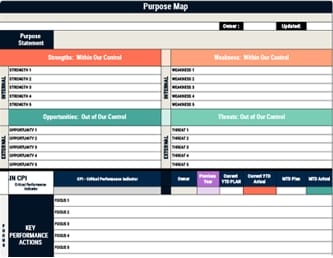
The right KPIs transform abstract strategic goals into concrete daily actions that every employee can understand and execute. You’ll want to establish measurable indicators that directly link what happens on the shop floor or in the office to your organization’s broader objectives, ensuring everyone sees how their work contributes to success. Anchor your measurement system with a few Critical Performance Indicators so teams don’t drown in metrics and stay focused on the vital outcomes that define winning.
Align your KPIs across departments so teams collaborate rather than work in silos. You should adopt a balanced scorecard approach that tracks financial performance, customer satisfaction, internal processes, and learning metrics simultaneously. This thorough view prevents you from optimizing one area while neglecting others.
Leverage real-time data and visual management tools to monitor performance continuously, allowing you to make rapid adjustments when numbers drift off target. Review your KPIs regularly to confirm they’re still driving the behaviors and outcomes you need.
When to Automate and When Technology Gets in the Way
Tracking the right KPIs gives you visibility into performance, but you’ll eventually face decisions about which processes to automate and which ones benefit from human judgment.
Automation works best for repetitive, high-volume tasks that are prone to human error, allowing your team to focus on strategic work. However, automating a broken process only amplifies its flaws, so you should optimize workflows before introducing technology. To keep automation aligned with outcomes, build in regular reviews using performance metrics so you can refine processes as goals evolve.
Consider these guidelines when evaluating automation opportunities:
- Apply Robotic Process Automation (RPA) to rules-based tasks after thoroughly examining the specific use case
- Use predictive analytics and AI when they directly support your strategic objectives
- Balance technology with people and process considerations to avoid creating new inefficiencies
- Recognize that overreliance on technology can hinder rather than enhance operational performance
Your First 90 Days: What to Tackle First
When you’re stepping into a new operational leadership role, your first 90 days set the foundation for everything that follows, so you’ll want to approach this period with both urgency and strategic discipline. Start by conducting a thorough assessment of the organization’s current state, identifying quick-win opportunities and critical gaps that need immediate attention.
Next, establish a clear vision and roadmap for operational excellence that aligns with strategic objectives while securing buy-in from leadership and stakeholders. To connect strategy to day-to-day execution, define aligned objectives using OKRs so every team understands how their work supports the broader plan. Implement foundational management systems, including standardized processes, performance metrics, and communication channels that support continuous improvement.
You’ll also need to empower frontline employees through targeted training programs that build problem-solving capabilities. Finally, demonstrate tangible results by tackling low-hanging fruit and implementing visible improvements that generate momentum and confidence in your operational excellence initiative.
Five Operational Excellence Mistakes That Stall Progress
Stumbling into common pitfalls can derail even the most promising operational excellence initiatives, and understanding these mistakes before they occur gives you a significant advantage in maintaining momentum.
Lacking clear vision and leadership commitment — Without visible executive support, your teams won’t prioritize operational excellence principles, and adoption will stall before gaining traction.
Leadership commitment isn’t optional—it’s the foundation that determines whether operational excellence thrives or dies.
Neglecting employee engagement — You can’t sustain continuous improvement when your workforce isn’t invested in the process or empowered to contribute ideas.
Allowing siloed thinking to persist — Departmental barriers block the cross-functional collaboration that’s essential for optimizing processes effectively.
Relying on outdated tools and weak measurement systems — You’ll struggle to make data-driven decisions and track meaningful progress without modern technologies and effective feedback loops guiding your efforts.
Applying the DMAIC approach can strengthen process improvement efforts by systematically reducing defects and improving quality over time.
Frequently Asked Questions
What Are the Principles of Operational Excellence?
The principles of operational excellence you’ll want to embrace include respecting every individual, practicing humility, aiming for perfection, and thinking scientifically while focusing on processes.
You should also assure quality at the source, improve flow and pull, think systematically, and understand your organization’s purpose while creating constancy of purpose.
These principles support continuous improvement, data-driven decision-making, and empower you to identify and solve problems effectively.
What Is the Operational Excellence Pillar?
The operational excellence pillar refers to a framework of core elements you’ll need to master for organizational success, including strategic alignment, leadership practices, frontline execution, and technological enablement.
You’re fundamentally building systems that promote problem-solving at every level while standardizing best practices throughout your organization. This pillar also encompasses workflow optimization, customer-centric processes, and people development strategies that empower employees through training programs designed to build operational capabilities.
What Is the Framework of Operational Excellence?
The Operational Excellence framework consists of four key pillars you’ll need to understand: strategy development, performance management, leadership and culture, and process excellence.
These pillars are supported by foundational principles including respecting every individual, practicing humility, aiming for perfection, and thinking scientifically.
When you implement this framework, you’re creating a structured approach that aligns your organization’s purpose and values while fostering continuous improvement throughout all operations.
How to Start Operational Excellence?
To start operational excellence, you’ll want to assess your organization’s current processes and identify areas needing improvement while setting measurable goals that align with your business strategy.
You should establish a dedicated team with strong leadership commitment, develop employee capabilities through Lean and Six Sigma training, and implement a continuous improvement culture.
Finally, leverage data and technology to enhance visibility and enable smarter decision-making.
Conclusion
You’ve now got the blueprint to transform your organization’s performance from the ground up. When you align these five pillars with strategic leadership and customer-focused thinking, you’ll move mountains in operational efficiency. Start with your first 90-day priorities, measure what matters through meaningful KPIs, and empower your teams to eliminate waste systematically. The journey requires commitment, but sustainable excellence awaits those who begin today.