

You’ll stabilize operations in 90 days by first diagnosing true bottlenecks, then attacking a few levers that move throughput, quality, and cost, while structuring weekly sprints for visible progress. You’ll standardize work instructions, elevate safety and compliance, upskill the frontline with practical L&D, and install KPIs that expose waste, not vanity. Finally, you’ll systematize processes, data, and tech so quick wins become BAU—once you decide where day one starts.
Key Takeaways
- Start with a 30-day diagnostic: map revenue loss to root causes, validate anecdotes with data, and set baselines with clear KPIs and KPAs.
- Build a 90-day plan: diagnose, deliver quick wins, then institutionalize routines with weekly sprints, daily checks, and monthly KPI reviews.
- Focus on throughput-driving KPIs: first-pass yield, on-time delivery, changeover time, and safety incidents; retire vanity metrics and course-correct quickly.
- Systematize operations: standardize SOPs, data governance, and documentation; use explainable AI to validate documents and prioritize high-impact fixes.
- Elevate safety and compliance: anchor to OSHA, run micro-audits, track leading indicators, and tie accountability to owners, RACIs, and incentives.
Diagnose Before You Act: Finding the Real Bottlenecks
Before you move a single lever, pause to diagnose the real constraints that are choking performance, because acting fast on the wrong problem is the fastest way to waste time and cash.
Start by recognizing Turnaround Rule #1: speed without accuracy fails, which is why 70% of turnaround attempts miss the mark. Map revenue loss to its root drivers, asking whether margin erosion comes from cost growth, a shift in product-market fit, or customer experience breakdowns that push buyers away.
Collect evidence, don’t guess. Pair customer insights with front-line feedback to triangulate where processes, quality, or service are failing.
Validate anecdotes with data from complaints, scrap and rework rates, lead times, and on-time delivery. Once you see the true bottlenecks, you can target analysis and sequence actions effectively.
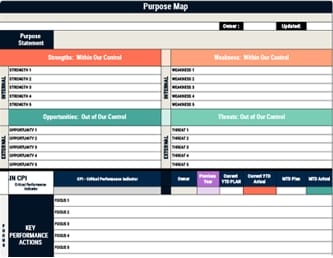
Anchor your diagnosis by defining a few Critical Performance Indicators and the supporting KPIs they rely on, then translate them into daily KPAs so teams manage causes, not just measure outcomes.
Prioritize the Few Levers That Move Manufacturing KPIs
Two levers beat twenty: concentrate your turnaround on the handful that reliably move manufacturing KPIs—pricing, revenue model, go-to-market, and customer retention—because spreading effort across dozens of minor fixes dilutes impact and delays recovery.
Focus first on pricing discipline, using contribution margin and win-loss data to adjust tiers, discounts, and surcharges so every order earns its keep.
Tighten your revenue model by aligning terms, volume breaks, and service levels with real delivery costs, reducing unprofitable variability.
Sharpen go-to-market by directing sales toward fast-cycle, high-yield SKUs and customers with stable demand signals.
Protect retention through proactive service recovery, clear communication on lead times, and targeted quality fixes.
Track only metrics that matter—throughput, schedule adherence, first-pass yield, backlog health, and gross margin per line—so decisions reliably lift KPIs.
Reinforce these levers with aligned OKRs and governance rhythms that connect frontline actions to top-level goals, ensuring accountability and adaptive course-correction.
Build a 90-Day Action Plan With Weekly Sprints
You’ve picked the few levers that move KPIs; now turn them into a 90-day action plan with weekly sprints that convert intent into measurable results.
Structure the plan into three 30-day phases. In the first 30 days, diagnose the current state with a clear SWOT, map constraints to your chosen levers, and set baseline metrics that matter.
In the next 30 days, deliver quick wins, tighten meeting cadences to speed decisions, and adjust budgets to remove bottlenecks.
In the final 30 days, shift to BAU, lock in cadence, and track progress against the strategic plan to sustain gains. Use OKRs to align weekly sprints with strategic objectives and ensure cross-functional visibility of progress.
1) Define weekly sprint goals, owners, start/finish dates, and acceptance criteria.
2) Review leading and lagging metrics weekly, kill vanity KPIs.
3) Escalate blockers within 24 hours, document decisions, and update the roadmap.
Standardize Content and Documents for Shop-Floor Reliability
Although every plant has its quirks, shop-floor reliability starts with standardizing the content and documents people rely on to run, maintain, and improve the line, because consistent information reduces errors, speeds decisions, and keeps compliance tight.
Begin by mapping critical documents—work instructions, change notices, machine settings, and quality checks—then consolidate them into a single, controlled format with clear versioning, ownership, and effective dates.
Validate each document against established rules, such as approved templates, mandatory data fields, and traceable revisions, to preserve integrity and avoid contradictory guidance.
Use explainable AI to automate validation, flag gaps, and show why a document passes or fails, so engineers and supervisors trust the output.
Retire legacy formats that cause delays, enable cross-functional access, and implement standardized naming, metadata, and workflows to reduce administrative overhead and legal risk.
Align this documentation work within a broader Business Operating System to ensure roles, processes, and continuous improvement cycles keep the standards current and effective.
Elevate Compliance and Safety to Reduce Risk Now
Because risk reduction hinges on disciplined execution, elevate compliance and safety by treating them as production-critical processes with clear standards, measurable outcomes, and rapid feedback loops.
Make safety production-critical: set standards, measure outcomes, and enforce rapid feedback to reduce risk.
Anchor your program to OSHA requirements, then translate rules into simple behaviors, visible controls, and real-time verification. Use an LMS to deliver consistent content, prove completion, and flag overdue training before audits expose gaps.
Prioritize PPE and LOTO proficiency, since these controls directly cut incidents, downtime, and cost.
1) Establish a compliance calendar that maps OSHA topics, site risks, and renewal cycles, then automate reminders and escalate misses within 24 hours.
2) Run weekly micro-audits on PPE and LOTO execution, capture nonconformances with photos, and close them with timestamped corrective actions.
3) Track leading indicators—training completion, audit pass rate, and near-miss quality—to predict and prevent failures.
To sustain adoption, pair these tactics with mobile-first communication and real-time feedback so frontline workers feel heard, leveraging employee engagement metrics to monitor progress and reinforce trust.
Upskill the Frontline: L&D Programs That Stick
When frontline training sticks, it’s built like production: define the critical skills, standardize delivery, verify outcomes, and iterate fast.
Start by mapping essential competencies—compliance, safety, leadership, and core communication—directly to job roles, then sequence learning so each module builds toward safe, repeatable execution.
Use an LMS to automate onboarding, deliver consistent content, and log completions, which reduces compliance risk while reinforcing safety practices.
Layer in critical thinking drills and scenario-based communication exercises that mirror real line decisions, so workers practice judgment, not just recall.
Develop leaders through coaching, delegation, and feedback routines that promote respect and cross-team coordination.
Close loops with brief assessments, floor observations, and learner feedback, then adapt content and cadence to performance gaps, sustaining relevance and long-term growth.
Integrate continuous learning cycles and reinforce Six Sigma DMAIC to reduce process defects and drive sustainable improvements in operational performance.
Implement Metrics That Matter, Not Vanity KPIs
Strong training only pays off if you measure what actually improves the business, so replace vanity stats with KPIs tied to throughput, first-pass yield, on-time delivery, changeover time, and safety incidents. You need metrics that drive decisions, not dashboards that look impressive; focus on indicators that link to revenue growth, customer retention, and operational efficiency, then hold teams accountable to visible targets and timelines. Build a 90-day action plan with clear baselines, weekly checkpoints, and owners, and course-correct when trends deviate. Review results against goals and market shifts, retire low-value measures, and double down on high-impact areas to sustain momentum. 1) Define targets and thresholds, set daily and weekly review cadence. 2) Assign owners, publish progress, and escalate blockers quickly. 3) Rebalance resources toward bottlenecks, verify gains with financial impact. Aligned organizations that tie operations to strategy see faster growth and profitability, so integrate KPI reviews with organizational alignment checks to ensure vertical and horizontal coherence.
Systematize for Scale: Processes, Data, and Technology
Although every turnaround starts with quick wins, you scale only by systematizing how work flows, how data is governed, and how technology supports both.
Define standard operating procedures for each value stream, document handoffs and checks, and lock in version control so operators and supervisors follow the same steps, reducing errors and rework.
Build a data governance framework that assigns ownership, clarifies definitions, and sets access rules, ensuring integrity for reporting and regulatory needs.
Leverage analytics to spot trends in scrap, downtime, and yield, then prioritize improvements based on impact and feasibility.
Implement enabling tools, such as an LMS, to standardize training, verify competency, and automate compliance, which stabilizes performance across shifts.
Choose scalable systems and integrations, so you adapt quickly without sacrificing operational excellence.
To reinforce consistency and agility, implement an alignment cadence that links shop-floor routines to leadership priorities through clear communication and shared values.
From Quick Wins to BAU: Embedding Operational Discipline
Because quick wins fade without structure, you now convert them into Business As Usual by hardwiring operational discipline across people, processes, and performance routines.
You standardize the improvements, define owners, and lock in rhythms that keep performance visible and adjustable, ensuring client experience stays consistent while momentum doesn’t stall.
In the final 30 days, you also formalize CEO touchpoints and structured reviews, translating insights into targeted course corrections and clear next steps. Engaging stakeholders early and continuously fosters ownership and reduces resistance, strengthening strategy-execution alignment as you institutionalize these routines.
1) Establish a cadence: run weekly tiered meetings, daily Gemba checks, and monthly KPI reviews, using a single source of truth to track plan versus actual and trigger corrective actions.
2) Institutionalize accountability: assign initiative owners, publish RACI charts, and tie results to incentives and development.
3) Build continuous tracking: implement dashboards, exception thresholds, and quarterly strategy refreshes to sustain scalability and financial discipline.
Frequently Asked Questions
How Do We Secure Executive Sponsorship Without Disrupting Current Initiatives?
Secure executive sponsorship by mapping your proposal to strategic goals, quantifying benefits, and clarifying resource needs that won’t cannibalize active projects.
Brief leaders with a one-page case, highlight quick wins, and define decision checkpoints. Use a RACI to prevent overlap, and schedule governance cadences that sync with existing steering meetings.
Identify a senior champion, set clear success metrics, and stage work in pilots, so you validate value before scaling and avoid disruption.
What Budget Range Should We Plan for the 90-Day Program?
Plan a budget between $75,000 and $250,000 for a 90‑day effort, scaling with footprint, complexity, and required expertise.
You’ll allocate roughly 40–60% to on‑site consulting and analysis, 15–25% to data tools and diagnostics, 10–20% to training and change management, and the balance to travel and contingencies.
If you need rapid savings validation or multi‑site support, target the upper range; for a focused pilot or single line, budget near the lower bound.
How Do We Handle Union Considerations During Rapid Process Changes?
Engage the union early, share the business case, and map proposed changes against the CBA to flag mandatory subjects of bargaining.
Establish a joint rapid-response team, set clear decision timelines, and use effects bargaining when you can’t negotiate the decision itself.
Document interim MOUs, lock in safety and training provisions, and define impact mitigation like bumping, overtime rules, and pay protection.
Communicate frequently, track grievances, and escalate unresolved items through agreed dispute paths.
What Change-Management Cadence Keeps Multi-Plant Stakeholders Aligned?
Use a weekly operating rhythm: a 30-minute daily tiered huddle for issues, a 60-minute weekly cross-plant review for KPIs, risks, and decisions, and a monthly governance meeting for strategy, resourcing, and escalations.
Standardize agendas, metrics, and templates, and publish a single action log with owners and dates.
Rotate facilitation, lock calendars, and timebox topics.
Close the loop with pre-read dashboards, post-meeting minutes within 24 hours, and clear change-control checkpoints.
How Do We Select an External Partner Versus Building Capabilities In-House?
Like choosing tools from a toolbox, you select an external partner when speed, scarce expertise, or high-stakes risk demand proven playbooks, clear SLAs, and measurable ROI within set milestones.
You build in-house when capabilities are core, durable, and tied to competitive advantage, supported by talent, systems, and governance.
Run a make‑buy scorecard: urgency, complexity, IP sensitivity, cost over 24–36 months, change readiness, and knowledge retention, then pilot and compare outcomes.
Conclusion
In ninety days, you’ll move from firefighting to rhythm, like a production line humming after a clean setup. Diagnose bottlenecks, pick the few levers that shift KPIs, and run weekly sprints that lock in quick wins. Standardize documents, raise compliance and safety, and upskill the frontline so procedures hold under pressure. Track actionable metrics, not vanity numbers, then systematize processes, data, and tech. Finally, convert wins into BAU, embedding operational discipline that sustains stability and scales performance.