
The theory that continuous improvement compounds over time holds up—but only when you treat it as a built-in system rather than a one-off project. If you’re running improvement efforts without a repeatable process, you’re likely watching gains fade as fast as they appear. What separates organizations that sustain momentum from those that stall comes down to five deliberate steps and one critical cycle most teams skip.
Key Takeaways
- Continuous improvement must be a repeatable system—define, measure, analyze, implement, standardize—not a one-time event that quietly reverts.
- Every cycle starts by defining the real problem with baseline data before rushing toward solutions.
- Root causes are uncovered using structured methods like the 5 Whys, ensuring fixes address origins rather than symptoms.
- Validated improvements are standardized into SOPs and shared across teams so gains compound instead of staying isolated.
- PDCA cycles treat each new standard as a starting point, driving deliberate, measurable progress aligned with strategic goals.
Why Your Continuous Improvement Process Needs a System
When you treat continuous improvement as a one-off event rather than a repeatable system, the gains you make rarely stick because there’s no structured way to circle back, measure what changed, and confirm the change actually moved the needle on time, quality, cost, or efficiency.
A system gives you a consistent loop—define the process, gather baseline metrics, analyze root causes, implement changes, then standardize what works—so you’re running the same logic every cycle instead of starting from scratch.
It also prevents solution rushing by forcing your team to agree on a shared process definition and collect accurate data before jumping to fixes.
When you standardize each gain, improvements compound across teams rather than quietly reverting to old habits.
Integrating visual management tools into this system adds real-time feedback and transparency, making it easier to spot inefficiencies, engage employees, and sustain each improvement cycle.
The Five Steps of a Continuous Improvement Process
Now that you understand why a system matters, let’s break down the five steps that actually make up that system so you can apply them to any process you’re looking to improve.
Five steps. Any process. One repeatable system built to drive real, measurable improvement.
Step 1: Identify**** — Use data and feedback to pinpoint where a process is underperforming, focusing on measurable impacts like time, cost, quality, or efficiency.
Step 2: Set Goals**** — Define clear, measurable targets tied to the same metrics you used to establish your baseline.
Step 3: Design Initiatives**** — Map the process to reveal root causes, then build actionable plans that address gaps, redundancies, and poor decision points directly.
Step 4: Implement & Refine** — Execute changes, monitor results against expectations, start with quick wins, and iterate based on what you observe. This is also where you begin connecting improvements to your broader Business Operating System** so they actually change how work gets done day-to-day instead of becoming one-off fixes.
Step 5: Standardize**** — Document improvements, update SOPs, and repeat the cycle.
Define the Problem Before You Chase Solutions
How often have you seen a team rush to implement a fix, only to realize weeks later that they solved the wrong problem entirely?
Before you analyze causes or brainstorm solutions, you need to describe the problem as a story that every stakeholder understands, covering what’s going wrong and why it matters.
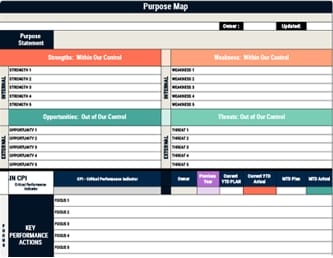
Frame your improvement opportunity around measurable value like time saved, quality gained, or costs reduced so you’ll recognize “better” when you achieve it. Align your problem definition with a small set of Critical Performance Indicators so you’re clear which outcomes truly define success before you start changing anything.
Collect baseline data on those metrics before choosing a solution path, and prioritize problem areas by their largest negative impact on the measures you’ve defined.
If multiple issues likely exist, don’t force a single solution prematurely—clarify the full scope first, then let the data guide your next move.
Measure What Matters With the Right Data
Once you’ve defined the problem and locked in your baseline, the next step is choosing exactly what to measure and how to measure it consistently.
Without the right metrics measured the right way, you’re just guessing—not improving.
Pick a small set of metrics that directly map to impact—cycle time, defect rate, effort per outcome, throughput, and output per person are reliable starting points.
You’ll need a standardized collection method so your “before vs. after” comparisons hold up.
Use your process map to pinpoint where variation occurs, because that’s where bottlenecks, gaps, and redundancies hide.
If you’re running a PDCA cycle, measurement is your “Check” step—you’re confirming whether the change worked, not guessing.
Run a pilot first, compare results against your targets using the same metrics, then scale what’s proven.
As you refine what and how you measure, connect those metrics to aligned objectives so every improvement clearly supports your broader strategic goals and accountability structure.
Find Root Causes and Prioritize by Impact
Before you jump to solutions, you need to dig past the obvious symptoms and uncover what’s actually driving the problem—because fixing a symptom without addressing its root cause guarantees the issue will return.
Use a structured method like the “5 Whys” or process mapping to trace failures back to their origin, identifying where gaps, redundancies, or unclear ownership create repeat breakdowns.
Once you’ve identified potential root causes, rank them by measurable impact on your key metrics—time, cost, quality, or productivity—not by who’s reporting the loudest.
Determine whether you’re dealing with one dominant cause or several contributing factors.
Then target the highest-impact cause first, develop a quick-win pilot fix, and re-check your results against the same metrics before standardizing.
This root-cause focus also helps close the costly strategy execution gap that undermines long-term performance across organizations.
Test Solutions With Quick Wins First
Knowing the root cause is only half the battle—you still need to prove that your proposed fix actually works before rolling it out across the entire process.
Start by selecting the simplest, safest solutions that directly target your highest-impact root causes, then pilot them on a limited scope so you can measure time, quality, and cost against your baseline data.
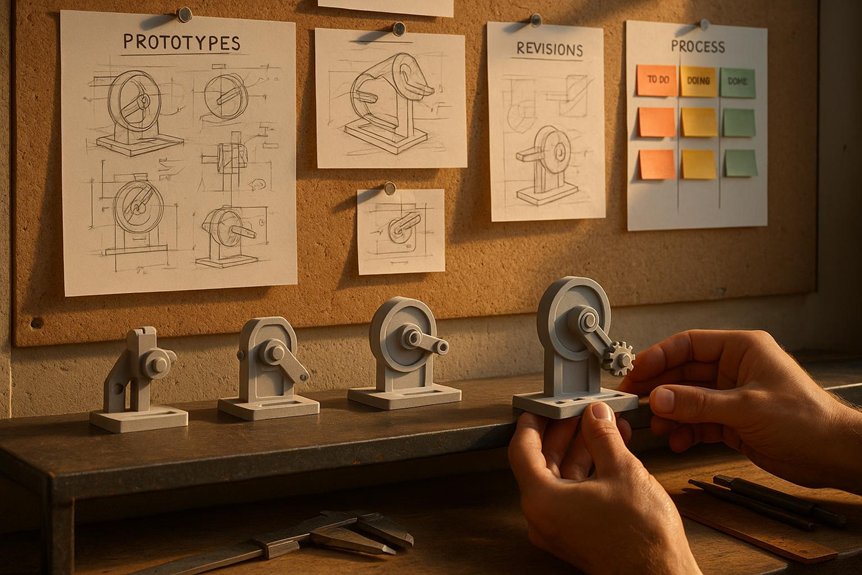
Use simple visual management boards to track these pilot metrics in real time so teams can quickly see what’s working and what needs adjustment.
- Crowdsource options from frontline workers, but filter ruthlessly—only test fixes tied to the prioritized root causes you’ve already validated.
- Treat each quick win as one cycle in a repeating loop: if the data improves, standardize the change; if not, adjust and retest.
- Time your pilots to rapid improvement events held every few months so validated wins compound rather than reset each quarter.
Standardize What Works Across the Organization
Lock in every validated improvement by documenting it as a standard operating procedure that captures the process’s inputs, outputs, responsibilities, and decision points you mapped earlier, so teams across the organization can replicate proven steps instead of reinventing them each time a similar problem surfaces.
Before rolling out changes broadly, communicate the what, why, and how to all stakeholders so adoption doesn’t create extra workload or confusion.
Start with small pilots, then standardize across departments only after monitoring confirms consistent gains like fewer defects, reduced hand-offs, and shorter cycle times.
Use the same metrics you tracked before—time, quality, cost, and efficiency—to verify the change worked, then update your baselines so the new standard reflects current best performance.
Re-check performance regularly and adjust the SOP when data reveals drift or fresh opportunities.
By standardizing and sharing improvements across teams, you reinforce organizational alignment so strategy, structure, and day-to-day execution stay tightly connected as the company evolves.
Keep the Continuous Improvement Process Cycling With PDCA
Standardizing what works gives you a reliable baseline, but that baseline isn’t a finish line—it’s the starting point for the next round of improvement, and the PDCA cycle (Plan, Do, Check, Act) is the framework that keeps that forward motion deliberate and measurable. By connecting PDCA cycles to your strategic alignment efforts, each improvement round reinforces organizational goals instead of creating isolated, one-off changes.
A standard isn’t a finish line—it’s the launchpad for your next improvement cycle.
- Plan and Do at small scale first: Define the problem, set a measurable target, then run a pilot so you collect real data without disrupting your broader workflow.
- Check with the metrics you already defined: Compare results against expectations using time, quality, cost, or productivity data—don’t rely on gut feel.
- Act by updating your baseline: Standardize what worked, adjust what didn’t, and feed those findings directly into your next Plan cycle so improvements compound rather than stall.
Frequently Asked Questions
What Is the Process of Continuous Improvement?
You start by clearly defining the problem and measuring current performance across metrics like time, quality, and cost.
Next, you analyze data to find root causes, then develop and test solutions—beginning with quick wins.
Using the PDCA cycle (Plan–Do–Check–Act), you’ll implement changes, monitor results against your baseline, and standardize what works before repeating the cycle to compound gains over time.
Conclusion
Companies that adopt structured continuous improvement processes see up to 25% higher productivity within the first year, and those gains compound as each cycle raises the baseline. You’ve got the framework—define, measure, analyze, test, and standardize—so your next step is running your first PDCA cycle on a real problem this week. Don’t wait for perfection; start small, lock in what works, and let the system build momentum.