

You align teams fast by creating a clear golden thread from strategy to daily work, starting with concise outcomes, then setting 3–5 SMART goals per team with visible owners and RACI. Put every goal in one shared system, run weekly check-ins tied to your Strategy Map, and use dashboards to expose dependencies. Track leading and lagging metrics, intervene with coaching before resources, and standardize monthly and quarterly reviews—so the next step becomes obvious but often overlooked.
Key Takeaways
- Cascade a concise vision into 3–5 SMART goals per team, with clear owners and measurable outcomes to create a visible golden thread.
- Centralize goals and metrics in one dashboard; show upstream/downstream links and color-coded status for 1-3-10 second clarity.
- Run weekly, monthly, and quarterly check-ins with a fixed agenda: progress vs. key results, blockers, dependencies, and decisions.
- Define leading and lagging metrics, ownership, and update cadence; act on triggers after two weak weeks with coaching first.
- Align incentives, recognition, and promotions to goal progress; publish progress updates to reinforce accountability and momentum.
Define Strategic Alignment and Outcomes in 2 Minutes
Why does strategic alignment matter? You need every team pulling in the same direction, so you translate the company’s mission into clear outcomes that guide daily work.
In two minutes, define alignment as the harmony between your strategy and what people do each day, then state the outcomes you expect across leadership, managers, and frontline roles.
Use a concise vision statement, and cascade goals so each level understands responsibilities, decisions, and resource priorities.
Explain the “golden thread”: SMART objectives connect individual tasks to company priorities, making impact visible and measurable.
Clarify cross-functional roles to cut silos and raise accountability, naming owners and partners.
Commit to regular check-ins, dashboards, and data-driven reviews, which surface progress, trigger timely adjustments, and sustain alignment over time.
Add color-coded indicators on visual dashboards to make deviations instantly visible and drive quick, accountable action.
Set 3–5 SMART Goals per Team (Aligned to Company Priorities)
How do you keep teams focused and aligned without drowning them in competing priorities? Set 3–5 SMART goals per team, tied directly to company priorities, so people know what matters now and what can wait. Define each goal as Specific, Measurable, Achievable, Relevant, and Time-bound, which creates a transparent golden thread from daily work to strategic outcomes and prevents vague efforts that drift. To strengthen alignment and agility, regularly assess performance data and use frameworks like OKRs to promote transparency and accountability across teams. Write goals with clear metrics, owners, and deadlines, then publish them in a centralized, accessible platform where everyone can see status. Add visible progress updates to reinforce accountability and encourage timely course corrections. Review goals quarterly, retire what no longer serves the strategy, and refine targets that need sharper focus. This cadence sustains momentum, concentrates resources, and enables precise progress tracking.
Cascade Goals to Align Daily Work to Strategy
Fortunately, you can turn strategy into daily action by cascading goals from the company vision down to departments, teams, and individuals, creating a clear golden thread that shows how each task advances strategic outcomes. Start by translating high-level priorities into SMART objectives at each layer, ensuring they’re specific, measurable, achievable, relevant, and time-bound, so daily work becomes focused and testable. Align incentives and recognition with these goals, reinforcing behaviors that move key metrics. Use transparent dashboards and regular check-ins to show progress and surface gaps early. Incorporate regular governance rhythms to review progress, maintain accountability, and adapt plans as conditions change.
Cascade vision into SMART goals, creating a golden thread from strategy to daily actions and measurable progress.
- Translate vision into department, team, and individual SMART goals with clear owners.
- Map daily tasks to strategic outcomes, documenting the golden thread for visibility.
- Align rewards, promotions, and public recognition to goal progress.
- Review cascaded goals quarterly, adjusting priorities as strategy evolves.
Enable Cross-Team Collaboration and Clear Ownership
Sometimes the fastest way to execute strategy is to make collaboration and ownership unmistakable, so teams know exactly where to engage and who’s accountable for results. Start by defining roles and responsibilities with a RACI-like matrix, clarifying who’s responsible, accountable, consulted, and informed across departments, which removes ambiguity and speeds decisions.
Set joint objectives and OKRs that cascade from the strategic plan, tying each team’s key results to shared outcomes, so dependencies are explicit and trade-offs are transparent.
Hold regular cross-functional check-ins, using shared dashboards to surface progress, blockers, and handoffs in real time.
Centralize communication and task tracking in tools like Slack, Jira, or Asana to coordinate milestones.
Finally, recognize cross-team wins to reinforce collaboration and sustained ownership.
To sustain momentum, incorporate regular feedback loops and an Organizational Alignment Survey to assess alignment effectiveness and identify areas for improvement.
Put Every Goal in One Place Everyone Sees
With collaboration and ownership clarified, you need a single source of truth for goals so every team can see priorities, dependencies, and progress without chasing updates. Centralizing goals in one accessible platform reduces confusion, aligns language, and shows how daily work maps to strategic objectives. Use a single-view dashboard to display a small, stable set of goals per team—ideally 3–5 annually—so people focus on impact instead of expanding scope. Aligned organizations can grow revenue 58% faster and be 72% more profitable, underscoring the value of maintaining a single source of truth and reinforcing the impact of strong vertical and horizontal alignment.
1) Define a clear hierarchy: enterprise objectives, team goals, and linked projects or tasks, ensuring each item has an owner and measurable outcomes.
2) Visualize alignment with dashboards and strategy maps, letting contributors see upstream and downstream connections instantly.
3) Publish progress updates on a monthly cadence, with weekly project status to maintain momentum.
4) Track cross-department dependencies in real time, surfacing risks early.
Redesign Weekly, Monthly, Quarterly Check-Ins to Stay Aligned
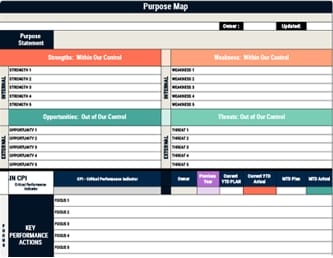
How do you turn routine meetings into a reliable system that keeps strategy and execution in lockstep? Start by anchoring weekly, monthly, and quarterly check-ins to your enterprise Strategy Map and OKRs, so every discussion links work to outcomes. Use a consistent agenda: progress against key results, blockers, cross-team dependencies, and decisions needed, then capture follow-ups with clear owners and due dates. Incorporate regular outcome reporting using Balanced Scorecards so teams maintain transparency, accountability, and timely adjustments across all check-in cadences. Run weekly check-ins to review leading work items tied to OKRs, updating KRAs so accountability stays visible. Use centralized dashboards with automated data to show real-time status, reducing debate and speeding action. Hold monthly reviews to assess trends and resource shifts across functions, confirming the roadmap still supports priorities. In quarterly sessions, reassess incentives, metrics, and priorities, resolve misalignment, and pivot plans deliberately.
Use Leading/Lagging Metrics and Feedback to Course-Correct
A simple rule of thumb keeps strategy and execution aligned: track leading metrics to steer in real time, and use lagging metrics to verify you’re on course. You forecast with inputs like weekly task completion, interim milestones, process adherence, and resource utilization, then validate with outputs such as revenue and customer satisfaction. Build a golden thread from strategy to roles, so every person sees how their indicators ladder up, and tighten feedback loops with weekly check-ins and dashboards that surface actionable insights before targets slip. Add visual management routines that apply the 1-3-10 second rule so teams can instantly see status, pinpoint issues, and know the next action during weekly reviews. 1. Define leading and lagging metrics, mapping each to strategic objectives and teams. 2. Cascade leading indicators to roles, clarifying ownership and update cadence. 3. Set thresholds and triggers; act after two weak weeks with coaching or resources. 4. Balance inputs and outputs to prevent local optimization.
Frequently Asked Questions
How Do We Align Teams During Mergers or Reorganizations?
Start by setting a clear vision, define roles, and map decision rights, then communicate timelines and nonnegotiables. Create a common operating cadence with shared OKRs, integrated roadmaps, and unified metrics, so teams see how their work connects.
Stand up cross-functional squads for critical workflows, appoint single-threaded owners, and resolve overlaps fast. Provide playbooks, change champions, and training, and use weekly forums to surface risks, track dependencies, and reinforce progress with transparent dashboards.
What Tools Support Concise Video Updates at Scale?
Use Loom, Vimeo Record, and Zoom Clips for quick recording and easy sharing, then standardize distribution with Slack Clips, Microsoft Stream, or Google Drive. You’ll scale updates by templating scripts, setting a two-minute cap, and batch-recording. Add auto-captions and chapters using Descript or Kapwing, and maintain a searchable library in Notion or Confluence. Track reach with view analytics, embed summaries, and set a weekly cadence with clear owners and deadlines.
How Can Leaders Model Alignment Behaviors Visibly?
Model alignment by setting clear priorities, repeating them consistently, and tying decisions to them in real time, so people see how trade-offs work. Share your roadmap, metrics, and decision logs openly, and invite questions to surface gaps. Demonstrate cross-functional collaboration by co-owning goals, attending partner standups, and resolving conflicts promptly. Close loops visibly, acknowledge missteps, and adjust plans publicly, reinforcing that alignment is continuous, evidence-based, and tied to outcomes.
How Do We Prevent Change Fatigue While Accelerating Execution?
You prevent fatigue by narrowing scope, sequencing work, and enforcing recovery. Define must-win outcomes, kill or pause low-impact initiatives, and time-box experiments. Create predictable cadences: weekly priorities, biweekly demos, monthly retros with stop-start-continue decisions.
Protect capacity with WIP limits, no-meeting focus blocks, and planned slack for learning. Communicate why, what, and when, repeat messages across channels, and celebrate small wins, while surveying pulse weekly and adjusting workload quickly.
What Governance Handles Conflicting Priorities Across Executives?
You use an enterprise prioritization council, a single backlog, and a tiered decision-rights matrix. Establish clear OKRs, weight them with a scoring model, and require executives to trade off within quarterly portfolio reviews. Escalate stalemates to a defined arbiter, typically the COO, using RACI to lock owners and approvers. Publish decisions in a living roadmap, enforce change control, and tie funding and incentives to the agreed priorities to prevent backdoor commitments.
Conclusion
You can align teams fast by defining outcomes, setting 3–5 SMART goals per team, cascading them to daily work, and assigning cross-functional ownership with clear RACI. Put every goal in one visible system, redesign weekly and quarterly check-ins around the Strategy Map, and use leading and lagging metrics to correct early. Organizations that set specific goals are 3.5x more likely to report strong performance, so you’ll accelerate execution when you track dependencies, surface blockers, and coach before reallocating resources.