

When a problem keeps coming back, you’re not fixing it—you’re managing symptoms. Root cause analysis gives you a structured way to trace failures back to their true origin, so you can eliminate them for good instead of patching the same issue on repeat. The difference between teams that break the cycle and those that don’t often comes down to choosing the right RCA tool for the situation, and most people get that part wrong.
Key Takeaways
- Match the RCA tool to the problem: Five Whys suits simple linear issues, while fishbone diagrams handle complex multi-cause situations.
- Five Whys uses repeated evidence-based questioning to trace symptoms back to underlying root causes without speculation.
- Fishbone diagrams organize potential causes into categories like people, processes, technology, environment, and policies for structured analysis.
- Pareto charts rank causes by frequency or impact, helping teams prioritize the critical few factors driving most problems.
- FMEA proactively scores potential failures by severity, occurrence, and detection to prioritize corrective actions before harm occurs.
Why RCA Prevents Recurring Problems
One fundamental reason root cause analysis prevents recurring problems is that it systematically targets the underlying issues driving an incident rather than just patching the visible symptoms, and this distinction matters because prevention is more preferable than continually reacting to harmful effects after they’ve already occurred.
When you conduct a structured investigation, you’ll classify contributory factors across categories like organisational management, personnel, technology, environment, and access barriers, which helps you pinpoint what’s actually changeable.
Research from maternal deaths investigations shows that serious outcomes frequently stem from recognizable failures, with failure to recognise patient seriousness appearing in 71% of cases and failure to follow recommended practice at 53%.
Integrating RCA insights into planning reinforces strategy-execution alignment, ensuring identified root causes translate into actionable changes that are measured and sustained.
How Root Cause Analysis Works, Step by Step
Understanding why RCA works is valuable, but knowing how to actually carry one out gives you the practical foundation to apply it. You’ll begin by defining the exact problem and collecting evidence through documentation review, case-note analysis, and interviews with everyone involved.
Next, you’ll identify contributory factors using structured causal reasoning like the Five Whys technique, where you ask evidence-based “why?” questions until you reach the underlying causes. You can also map these factors visually with an Ishikawa (fishbone) diagram, organizing them into categories such as organizational management, personnel, technology, environment, and access barriers.
Once you’ve identified potential causes, your team validates findings through independent clinical judgments followed by consensus discussion, then determines avoidability relative to the specific circumstances of the incident. To strengthen execution, teams often track findings and corrective actions using performance dashboards to ensure accountability and continuous improvement.
Which RCA Tool Fits Your Problem?
With several RCA tools available, choosing the right one depends on the nature of your problem and what you’re trying to accomplish.
The best RCA tool is the one that fits your specific problem—match the method to the challenge.
If you’re dealing with a straightforward or recurring issue, the 5 Whys method works well because it traces a linear chain of cause and effect using evidence-based answers.
When your problem involves multiple cause categories—such as people, processes, technology, environment, and policies—a Fishbone diagram helps you brainstorm and organize possibilities.
If you need to prioritize which causes to address first, a Pareto chart ranks them by frequency or impact so you can focus on the crucial few.
For proactive prevention, FMEA scores potential failure modes before they cause harm, while Fault Tree Analysis maps how combined failures produce safety-critical events.
To ensure RCA insights lead to action, integrate findings into performance management systems that track progress and reinforce accountability across teams.
The 5 Whys: RCA’s Simplest Investigation Tool
To use this method effectively, you should:
- Write a clear problem statement that defines exactly what happened before you begin asking questions.
- Base every answer on evidence—what actually occurred—rather than speculation or assumptions.
- Work as a team to keep questions focused so your countermeasures connect directly to the identified root cause.
- Align your findings with broader business goals to support organizational alignment, ensuring solutions contribute to overall performance and strategic success.
RCA Fishbone Diagrams for Multi-Cause Problems
The Ishikawa diagram—also called a fishbone or cause-and-effect diagram—gives your team a structured way to brainstorm and organize the many possible causes behind a complex problem. Incorporating visual indicators can further enhance clarity by making patterns and bottlenecks easier to spot during analysis. You’ll write your problem statement at the diagram’s “head,” then add possible causes along branching “bones” grouped into categories like personnel, technology, environment, organizational management, and barriers to access.
Each branch can be expanded into sub-causes, which you’ll then verify against documentation and interviews rather than relying on speculation.
Once you’ve mapped everything out, pair your fishbone with a Pareto analysis to identify the essential few categories driving most incidents.
Finally, translate those grouped causes into specific, actionable recommendations that management can implement to prevent recurrence.
Pareto Charts in RCA: Find the Vital Few Causes
Once you’ve mapped out your fishbone diagram and identified multiple contributing causes, you’ll need a way to figure out which ones matter most—and that’s where a Pareto chart comes in. This tool ranks cause categories by frequency using descending bars paired with a cumulative-percentage line, letting you spot the “vital few” causes driving most of your problem.
A Pareto chart helps you cut through the noise and zero in on the causes that actually matter most.
To build one, follow these steps:
- Segment your evidence into categories and count how often each cause appears in your failure data.
- Order categories from highest to lowest frequency, labeling the left y-axis for count and the right y-axis for cumulative percentage.
- Identify the cutoff point where roughly 80% of incidents are explained by the top few categories.
This focus sharpens your corrective actions and resource allocation. Integrating Pareto insights into dashboards with real-time data visualization helps teams quickly act on the most impactful causes.
FMEA: Catch RCA Failures Before They Happen
While most RCA tools kick in after something’s already gone wrong, Failure Mode and Effects Analysis (FMEA) flips the script by helping you anticipate and neutralize potential failures before they cause harm.
You’ll rank each failure mode by three factors—severity, occurrence likelihood, and detection capability—to generate a risk priority number that tells you exactly where to focus corrective actions first.
FMEA is particularly valuable in high-risk environments like healthcare, where you can systematically test whether your safeguards, protocols, and detection steps will actually catch the failure points your RCA identified.
Each recommended action links directly to its risk score, so you can track how specific changes reduce overall risk and verify that your preventive measures are genuinely working.
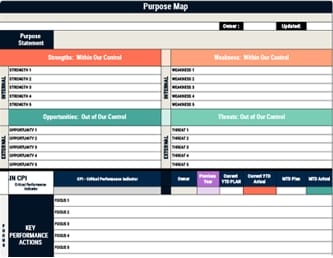
To ensure follow-through, these actions can be embedded into daily routines as Key Performance Actions, making risk reduction observable, coachable, and consistently executed.
Three Advanced RCA Methods for Complex Failures
When standard root cause analysis falls short—particularly with failures that keep recurring or involve multiple interacting causes—you need methods built for that level of complexity.
- PROACT RCA targets chronic, recurring failures through five evidence-driven steps (the “5 Ps”), including preserving evidence, building logic trees, and tracking corrective actions to deliver measurable bottom-line improvement over time.
- Fault Tree Analysis (FTA) works top-down and deductively, mapping how combinations of smaller causes culminate in a single high-consequence event, which makes it ideal for exhaustive prevention in safety-critical systems.
- FMEA proactively ranks potential failures using severity, occurrence, and detection scores so you can prioritize corrective actions before harm occurs.
Together, these methods move you beyond describing what happened toward systematically designing controls that eliminate repeated failure patterns. Integrating these approaches with organizational frameworks like OKRs helps ensure that corrective actions stay aligned with broader strategic objectives and are consistently executed across teams.
RCA Mistakes That Let Root Causes Slip Through
Even the most rigorous RCA framework can’t compensate for the mistakes teams make during the process itself, and these errors are exactly what allow root causes to slip through undetected.
When you speculate during “5 Whys” instead of grounding each answer in evidence, you risk inventing hypothetical causes that dead-end before reaching true root causes.
Similarly, if you rely on a single incident to draw broad conclusions, you’ll miss system-level patterns that only emerge across multiple cases.
You should also avoid treating recommendations as final deliverables, since variable quality and organizational constraints often limit their impact.
Prioritize ruthlessly using Pareto-style analysis to focus on the essential few contributing factors, and maintain thorough documentation through case reviews and interviews to support every conclusion with verifiable evidence.
Teams that adopt connected approaches with a single source of truth are better positioned to validate RCA findings across departments and avoid silo-driven misdiagnosis.
Frequently Asked Questions
What Software Tools Best Support Root Cause Analysis Documentation and Collaboration?
You’ll find that tools like Sologic, TapRooT!, and Causelink are purpose-built for RCA documentation, offering structured templates and evidence tracking.
For collaboration, Miro and Microsoft Visio support fishbone and fault tree diagrams across teams, while Jira and Confluence help you track corrective actions and share findings.
If you’re on a budget, Lucidchart and Google Workspace provide accessible alternatives for real-time collaborative analysis.
How Long Does a Typical Root Cause Analysis Take to Complete?
You could spend what feels like an eternity on a root cause analysis, but realistically, you’ll complete most investigations within a few days to several weeks, depending on the problem’s complexity and scope.
Simple issues might take 1–3 days, while complex systemic failures can require 4–8 weeks of thorough investigation.
You should factor in data collection, team availability, and stakeholder review cycles when estimating your timeline.
Which Industries Are Legally Required to Perform Formal Root Cause Analyses?
Several industries require you to perform formal root cause analyses by law, including nuclear energy (regulated by the NRC), aviation (mandated by the FAA and NTSB), pharmaceuticals and medical devices (enforced by the FDA), oil and gas, healthcare, and occupational safety sectors governed by OSHA.
You’ll also find mandatory RCA requirements in environmental compliance under EPA regulations and in railroad operations regulated by the Federal Railroad Administration.
How Do You Train Employees With No Analytical Background in RCA?
You’ll want to start with simple, visual tools like the 5 Whys and fishbone diagrams, since they don’t require statistical knowledge and build intuitive thinking.
You should pair hands-on workshops with real workplace problems rather than abstract exercises, so employees connect analytical steps to outcomes they’ve actually experienced, reinforcing retention through practical application.
What Certifications or Credentials Exist for Root Cause Analysis Practitioners?
You can pursue several recognized credentials, including the ASQ Certified Quality Engineer (CQE), which covers RCA methodologies, or TapRooT’s Root Cause Analysis certification, which focuses specifically on structured investigation techniques.
The Certified Reliability Engineer (CRE) credential also incorporates RCA principles.
Additionally, organizations like ARMS Reliability and Sologic offer practitioner-level certifications that validate your ability to conduct thorough investigations across industries like manufacturing, healthcare, and aviation safety.
Conclusion
You now have the framework to diagnose problems systematically, select the right tool for each situation, and prevent failures from recurring. Whether you’re tracing a single cause with the Five Whys, mapping multiple contributors with a fishbone diagram, or prioritizing fixes with a Pareto chart, each method sharpens your analysis and strengthens your outcomes. Apply these techniques consistently, document your findings thoroughly, and turn every failure into lasting improvement.