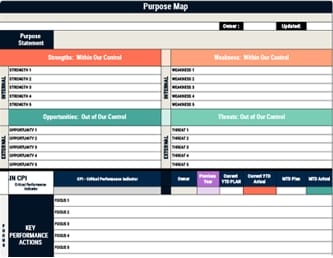


You bridge the strategy–execution gap by translating long-term aims into incremental, measurable outcomes, then building operating plans that assign tasks, owners, and dates, supported by the right skills, structures, and incentives. You review progress against clear KPIs, adjust priorities quickly, and use iterative methods to learn and reallocate resources. When you make accountability visible and cadence predictable, plans become action, risks surface earlier, and performance compounds—if you also tackle a few common pitfalls first.
Key Takeaways
- Translate long-term ambitions into quarterly and monthly milestones with a few KPIs; review results and adjust targets based on evidence.
- Build action-oriented operating plans specifying tasks, owners, timelines, success metrics, escalation paths, and decision rights.
- Align skills, structure, and incentives with priorities; close capability gaps through reskilling, coaching, and redeploying ineffective managers.
- Cascade strategy into measurable KPIs tied to review cadences and compensation to drive focused accountability and execution.
- Use adaptive, iterative methods: run low-risk pilots, set decision rules, map phases to owners, and refine based on market data.
Understanding the Strategy–Execution Disconnect
Although strategy design often feels like progress, the real problem is the widening gap between what leaders decide and what teams actually do, and you can spot it in a few predictable patterns.
You see the strategy execution gap when strategic plans sound compelling yet stall in translation, because planning processes emphasize slides and consensus over clear ownership, sequencing, and capabilities.
Over half of executives doubt they’ve a winning strategy, and two-thirds report missing skills for effective execution, which signals readiness issues rather than vision problems.
Doubt in strategy is common; execution skills, not vision, hold organizations back.
Watch for excessive discussion with few actionable steps, missed deadlines, and rework cycles that mask weak implementation plans and knowledge gaps.
You often trade short-term comfort for long-term results, unintentionally rewarding inertia over disciplined, accountable execution.
Setting Incremental, Measurable Goals
Because strategy only moves forward through concrete progress, you should translate long-term ambitions into incremental, measurable goals that define exactly what gets done, by whom, and by when, so teams can maintain focus and build momentum.
Break big objectives into quarterly and monthly milestones that fit your capacity, because strategic execution rarely follows a straight line, especially early on. Set realistic year-over-year targets that acknowledge learning curves, resource ramps, and market uncertainty, preventing derailing promises.
Define a small set of KPIs for each milestone to enable precise performance measurement, guarantee alignment to enterprise outcomes, and expose tradeoffs. Review results on a regular cadence, adjust targets and tactics based on evidence, and retire metrics that no longer matter, so your incremental goals stay relevant and resilient to changing conditions.
Building Accountability With Action-Oriented Operating Plans
Translate strategy into action by drafting operating plans that specify who does what, by when, and how success will be measured, so accountability is embedded in daily work rather than left to interpretation.
You convert strategic planning into clear tasks, owners, timelines, and resources, ensuring each step advances your business strategy and strengthens execution discipline.
Define KPIs for every objective, tie them to review cadences and appropriate compensation levers, and make thresholds unambiguous so teams know what good looks like.
Build a bias for action by predefining escalation paths, decision rights, and checkpoints that enable timely course corrections.
Engage frontline to executive levels in shaping the plan, securing buy-in and clear responsibilities.
Inspect plans regularly, test assumptions against market shifts, and refine actions to sustain accountable performance.
Aligning Skills, Structure, and Incentives for Delivery
When strategy moves from slides to execution, you need to align skills, structure, and incentives so the right people are in the right roles, supported by clear accountability and rewards that reinforce delivery.
Start by mapping critical capabilities to your business priorities, then adjust resource allocation so high-impact work gets the strongest talent.
Map critical capabilities to priorities, then channel top talent toward the highest-impact work.
Close gaps by re-skilling teams, pairing training with hands-on coaching, and don’t hesitate to redeploy or replace managers who can’t adapt, since stalled leadership undermines momentum.
Clarify decision rights and handoffs to reduce friction, and publish who owns what outcomes.
Translate strategy into KPIs that cascade across levels, tie them to compensation, and review them routinely.
This linkage concentrates focus, strengthens accountability, and keeps execution teams aligned on measurable results.
Planning for Action With Adaptive, Iterative Methods
Although long-range plans still matter, you’ll execute better by adopting an adaptive, iterative rhythm that cycles through sense making, deciding, doing, and revising as market signals emerge.
Use this cadence to connect planning to daily strategy execution, so you can learn quickly and redirect resources before risks grow. Start by clarifying how you’ll gather market data, then set crisp decision rules, fund small tests, and review results on a fixed tempo.
- Map the four phases to owners, artifacts, and deadlines to prevent drift.
- Build cross-team communication channels to surface insights and eliminate bottlenecks.
- Run small, low-risk pilots, expand only after evidence shows traction.
- Assess execution capabilities regularly to spot process and alignment gaps.
- Convert lessons into updated backlogs and next-step commitments, keeping momentum.
This approach makes adaptation systematic, not chaotic.
Measuring Progress and Evolving the Plan Continuously
Building on your adaptive cadence, you now need a measurement system that makes learning visible and action-ready, not ornamental. Define performance indicators that map directly to strategic objectives, so you’re measuring progress against outcomes that matter, not vanity metrics.
Translate each objective into a few KPIs with clear owners, baselines, targets, and review intervals, then use dashboards for real-time visibility.
Build continuous feedback loops that connect data to decisions, running regular assessments of both goals and execution capabilities to spot gaps, remove blockers, and recalibrate priorities.
Engage stakeholders across functions in these reviews to strengthen accountability and surface practical insights. Leverage technology to automate data collection, standardize definitions, and flag anomalies, enabling faster, data-driven pivots that keep strategy execution aligned with evolving market conditions.
Frequently Asked Questions
How to Bridge the Gap Between Strategy and Execution?
Bridge the gap by translating strategy into a few measurable objectives, cascading them into team plans with clear owners, timelines, and leading indicators.
Schedule regular direction-setting to align priorities, then run short execution cycles, review progress weekly, and adjust based on data.
Use simple scorecards and strategy software for real-time visibility, surface risks early, and remove blockers promptly.
Encourage cross-functional collaboration, document decisions, and tie incentives to outcomes, not activities.
What Is the Strategy Execution Gap?
The strategy execution gap is the river between your blueprint and the bridge you actually build. You define clear aims, yet actions stall, discussions multiply, and deadlines slip, because plans stay top‑down, static, and misaligned with reality.
You see competing priorities, burned‑out teams, and resources scattered, while market needs evolve. To close it, translate objectives into concrete, iterative work, align owners and timelines, communicate relentlessly, and run feedback loops that refine priorities and adjust capacity.
What Are the Four P’s of Strategy Execution?
The four P’s are Purpose, Priorities, Plans, and Performance.
You define Purpose to align mission and vision with strategic goals, then set clear Priorities to focus effort and avoid initiative overload.
You convert goals into detailed Plans, specifying owners, timelines, resources, and dependencies.
Finally, you manage Performance by tracking KPIs, reviewing results, and making timely adjustments.
When you cycle these P’s consistently, you create alignment, accountability, and repeatable execution discipline.
What Are the Five Pillars of Strategy Execution?
They’re clear strategic alignment, actionable and measurable goals, effective resource allocation, continuous communication, and a culture of accountability.
Like building a bridge, you start by aligning every level to the same destination, then set specific, time-bound goals that reveal progress, allocate tools, budget, and skills where they matter most, keep communication flowing so priorities stay visible, and reinforce accountability so people own outcomes, adjust quickly, and sustain execution discipline across teams.
Conclusion
You close the gap when you convert strategy into specific steps, set short, measurable milestones, and schedule steady check-ins that surface slippage quickly. You’ll build credibility by crafting clear, accountable operating plans, aligning skills, structure, and incentives, and choosing adaptive methods that let you course-correct without chaos. Measure what matters with concise KPIs, review results rigorously, and refresh priorities regularly, so plans become practiced performance and sustained success, turning bold blueprints into consistent, concrete, and compounding results.