

If you want growth without chaos, you need a simple management structure that assigns clear owners, sets a weekly cadence, and enforces transparent accountability. You’ll define roles for every initiative, anchor progress to 5–7 KPIs, and use published agendas with timeboxes to keep meetings tight. Pair that with 1:1 coaching to turn metrics into action, and dashboards to surface blockers fast. Done right, you scale from a few reps to dozens—without the wheels coming off.
Key Takeaways
- Assign a single owner per initiative with measurable goals, deadlines, and a simple RACI to eliminate ambiguity.
- Establish a weekly cadence with a fixed day/time, timeboxed agenda, and prepublished data to drive consistent execution.
- Integrate OKRs to translate strategy into measurable key results, surfacing commitments and reducing micromanagement.
- Track 5–7 KPIs weekly on a shared dashboard, comparing targets to actuals and adjusting actions accordingly.
- Use 1:1s to convert KPI gaps into coaching and next steps, reinforcing accountability through written actions and deadlines.
Build Accountability, Not Micromanagement: Your Cadence Principles
Although accountability can be mistaken for tight control, your cadence should make commitments visible, link them to outcomes, and remove the need for micromanagement by clarifying who does what, by when, and how progress will be shown. You model accountability daily by stating clear expectations, assigning owners, and confirming the result you expect, which narrows performance gaps because people understand roles and required actions. You treat accountability as habit, not event, by using consistent, structured touchpoints that track commitments and show progress plainly. You require brief routing submissions that surface risks early, then use one-on-one coaching to target obstacles without hovering. You highlight success stories to reinforce standards, while ongoing coaching enables teams to self-correct, protecting cadence integrity without sliding back into control. Incorporating OKRs into your cadence reinforces alignment by turning strategic objectives into measurable key results that keep commitments visible and progress transparent.
Set a Weekly Cadence: Agendas, Timeboxes, and Prep
You’ve defined accountability; now make it run on rails by setting a weekly cadence that locks in when the team meets, what gets covered, and how decisions move forward. Pick a consistent day and time so everyone plans around it, then anchor the agenda to your goals and KPIs, such as referrals, pipeline progression, and obstacle resolution. Timebox 5–7 items with fixed durations, and reserve a short buffer for cross‑team blockers, ensuring you close loops rather than carry confusion forward. Publish the agenda and data at least 24 hours in advance, and require participants to review and add context, so the meeting focuses on decisions. Assign a leader to run the room, a note‑taker to capture outcomes, and item owners to present updates and commit to next steps. To reinforce execution rigor, build in brief check‑ins on aligned OKRs and governance rhythms so every team sees progress against strategic objectives and accountability remains visible.
Define Roles and Ownership for Every Initiative
Why wait for confusion to surface when you can prevent it by defining roles up front? Assign a single owner for every initiative, attach a measurable goal and deadline, and set expectations for how decisions get made. Align the owner with your org chart so managers drive cross-team outcomes while ICs own well-defined deliverables, then document supporting roles using a simple RACI to remove ambiguity. Map each initiative to a daily, weekly, or monthly cadence, matching the pace of work and the risk of delay. Establish a review cycle where owners report status, flag blockers, and propose adjustments, keeping momentum and accountability tight. Strengthen alignment by linking each initiative’s goals to broader OKRs to promote transparency, accountability, and agility across teams.
One owner, one goal, one deadline—clear roles, right cadence, routine reviews keep momentum.
- One owner, one goal, one deadline
- RACI for clarity at each stage
- Cadence matched to initiative risk
- Roles aligned to org structure
- Routine reviews to adapt fast
Make Performance Visible With 5–7 Weekly KPIS
How do you make performance unmissable without drowning the team in numbers? Select 5–7 weekly KPIs that reveal progress at a glance, tie directly to your cadence goals, and clarify accountability across teams. Focus on activity levels, conversion rates, pipeline health, and milestone progress, since these inputs and outcomes indicate whether execution is on track and where attention must shift. Aligned organizations can grow revenue faster and be more profitable, so choosing KPIs that reinforce organizational alignment strengthens focus and execution. Define each KPI with a precise formula, an owner, and a weekly target, then standardize how it’s captured so trends are trustworthy. Review the set in your weekly cadence, compare actuals to targets, and decide on specific adjustments for the next sprint, avoiding side metrics that dilute focus. Use a single, shared dashboard, keep historical views visible, and retire or replace any KPI that no longer drives outcomes.
Coach Within the Cadence: 1:1s, Obstacles, and Wins
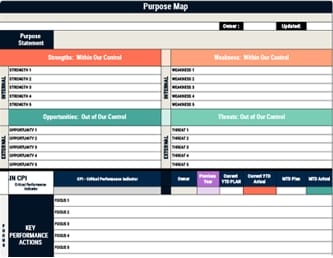
When done well, 1:1s become the engine of your cadence, translating weekly KPIs into targeted coaching, clear priorities, and fast obstacle removal. You use them to turn performance signals into specific actions, asking direct questions, documenting commitments, and revisiting outcomes the next week. Integrate a tight CPI→KPI→KPA loop so 1:1s connect outcomes to drivers and daily Key Performance Actions that are observable and coachable.
Keep the agenda simple: review wins, surface obstacles, align on priorities, and agree on next steps with owners and dates, so progress compounds.
- Start with wins to confirm what worked, extract repeatable behavior, and reinforce alignment with team goals.
- Review KPIs to pinpoint gaps, then coach on skills, resources, or process changes.
- Name obstacles explicitly, explore root causes, and decide the fastest removal path.
- Capture action items in writing, assign owners, and set deadlines.
- Close by confirming support needs and how you’ll measure next week’s success.
Scale Your Cadence From 3 to 30+ Reps Without Breakage
Curiously, the same cadence that works for three reps can scale to thirty and beyond if you formalize it early, document the flow, and protect manager bandwidth as headcount rises. Start with a weekly routing submission for target accounts and goals, captured in a shared template, so every rep reports the same way and every manager reviews consistently. Hold a firm manager-to-rep ratio of 5–7, adding frontline managers before the team outgrows them, and use phased onboarding plus coaching for new leaders to uphold standards. Anchor the rhythm with KPI-driven reviews and agenda templates that force cross-team collaboration with operations and clinical leaders. Track qualitative and quantitative signals—CRM usage, goal attainment, and obstacle resolution—and adjust meeting frequency, content, and escalations before cracks form. As you scale, reinforce this cadence by aligning objectives with OKRs to translate strategy into measurable execution across teams.
Frequently Asked Questions
How Do We Adapt Cadence for Remote or Async Teams Across Time Zones?
You adapt cadence by defining a core overlap window, splitting meetings into rotating time slots, and shifting status updates to async channels with clear deadlines. Standardize templates for standups, decisions, and handoffs, and use recorded video for context. Set SLAs for responses, batch work into weekly cycles, and anchor key rituals monthly. Automate timezone-aware reminders, publish a shared calendar of rituals, and review cadence quarterly to rebalance load and equity.
What Tools Best Support Documenting Roles, Decisions, and Follow-Ups?
Use a RACI matrix in Notion or Confluence to document roles, then standardize decision logs with the DACI framework in the same workspace, linking to source docs. Track follow-ups in Jira or Asana with clear owners, due dates, and acceptance criteria, and automate reminders via Slack or email. For governance, store meeting minutes and decisions in Confluence pages, versioned and tagged, while using Google Drive for final artifacts and Loom for quick context videos.
How Should Compensation Align With Cadence-Driven Outcomes?
Tie compensation to the outcomes each cadence targets, not the meetings themselves. You set base pay for role scope, then layer variable pay on cadence-specific KPIs: weekly sprint delivery, monthly milestone attainment, quarterly strategic impact. Use tiered thresholds with accelerators for exceeding targets, and clawbacks for reversals. Weight team metrics alongside individual ones to prevent sandbagging, align payout timing with verification cycles, and publish transparent scorecards so expectations, evidence, and rewards stay synchronized.
How Do We Onboard New Hires Into the Established Cadence Quickly?
You onboard new hires fast by giving a clear 30-60-90 plan, pairing them with a buddy, and front-loading a concise playbook of rituals, tools, and decision rights.
You run a kickoff workshop to simulate a full cycle, then shadow-live-run the next two cycles with checklists and dashboards.
You standardize agendas, templates, and SLAs, automate reminders, and hold brief retros after each cadence event, capturing gaps, updating materials, and confirming readiness with scorecards.
How Do We Sunset Initiatives and Reassign Owners Without Disruption?
Treat each initiative like a relay race baton, and plan a clean handoff. First, define exit criteria and confirm milestones met. Next, run a 2–4 week transition: document goals, decisions, risks, and stakeholders, then hold a live walkthrough. Assign a new owner with clear RACI, timelines, and SLAs, and freeze scope during transfer. Update roadmaps, dashboards, and alerts, then decommission assets, monitor KPIs for 30–60 days, and run a brief postmortem with action items.
Conclusion
Treat your management system like a well-marked trail: roles are trailheads, KPIs are mile markers, and your weekly cadence is the steady rhythm of your steps. You set single ownership for each initiative, keep agendas tight, and surface data so decisions move forward, not sideways. You coach in 1:1s to clear fallen branches, then scale the same path for more hikers without erosion. Do this consistently, and your team climbs higher with fewer detours and less noise.