

Most B2B manufacturers still pour their biggest marketing dollars into trade shows that generate a stack of business cards and very little pipeline—yet LinkedIn gives you direct access to the procurement leaders, plant managers, and supply chain directors who actually sign purchase orders. If you’ve struggled to connect your shop-floor expertise with the right buyers online, this playbook breaks down exactly how to target, engage, and convert them using LinkedIn’s most effective tools.
Key Takeaways
- LinkedIn hosts over 65 million active decision-makers, and 80% of B2B social leads originate there, making it essential for manufacturers.
- Define your ICP using firmographics and layer job titles to target procurement directors, supply chain VPs, and engineering influencers directly.
- Optimize your LinkedIn profile as a landing page with outcome-driven headlines, proof points, case studies, and a clear call to action.
- Follow a 70/20/10 content mix—educational posts, engagement-driven content, and direct offers—aligned to procurement and operational priorities.
- Use LinkedIn Lead Gen Forms to keep prospects on-platform, typically delivering 2–5x higher conversion rates than external landing pages.
Why LinkedIn Beats Trade Shows and Cold Email for Manufacturers
Most B2B manufacturers still pour significant budgets into trade shows and cold email campaigns, yet LinkedIn consistently outperforms both channels for lead generation—and the numbers make it clear why.
With over one billion members and more than 65 million active decision-makers, LinkedIn gives you direct access to procurement managers, operations leaders, and engineering influencers through precise targeting by job title, seniority, and industry.
LinkedIn puts you in front of 65 million decision-makers—targeted by title, seniority, and industry—without waiting for a trade show.
Roughly 80% of B2B social leads originate on LinkedIn, while trade shows capture limited, time-bound contacts and cold email depends on deliverability and sender reputation.
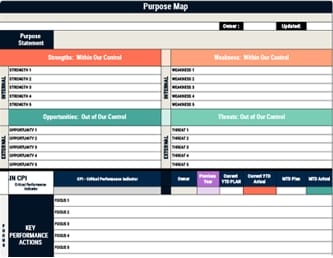
You can also test and optimize paid campaigns within weeks, tracking cost-per-qualified-lead directly in your CRM—a rapid experimentation loop that trade shows and cold outreach simply can’t match. By integrating LinkedIn campaign data into visual management boards, manufacturers can monitor real-time performance and quickly adjust messaging, targeting, or budget based on clear, color-coded indicators.
Define Your Ideal Client Profile for LinkedIn Lead Generation
Every effective LinkedIn lead generation campaign starts with a clearly defined Ideal Client Profile (ICP)—a detailed blueprint of the companies and individuals you actually want to reach, built on firmographic data like industry vertical, company size, geographic location, and annual revenue range rather than vague assumptions about who might buy.
You’ll also want to layer in precise job titles and seniority levels—think procurement directors, supply chain VPs, and operations leaders—because targeting specific decision-influencers rather than just final decision-makers lets you tailor messaging to each role’s priorities and KPIs.
Identify buying triggers such as capacity expansions, supplier consolidation, or new ERP rollouts to align your outreach with active intent signals.
Then embed these ICP criteria directly into Sales Navigator filters, lead lists, and retargeting segments. By making your ICP explicit and consistently applied, you’re also strengthening organizational alignment between sales and marketing so campaigns, messaging, and follow-up processes all support the same revenue goals.
Turn Your LinkedIn Profile Into a Lead-Generating Landing Page
Once you’ve locked in your Ideal Client Profile and know exactly who you’re targeting, the next step is making sure your own LinkedIn profile is built to convert those prospects when they inevitably click through to check you out—because they will. Start with a professional headshot and a banner that reinforces your value proposition for manufacturing decision-makers. Your headline should communicate outcomes, not just your job title—think “Helping discrete manufacturers reduce lead time by 30%” instead of “Sales Manager.” Structure your About section using a fast-scan format: Hook the reader with their pain point, present your solution, back it with proof like measurable results, and close with a clear call to action. Pin case studies, testimonials, or a booking link in your Featured section to give prospects an immediate next step. You can also incorporate visual management tools as simple graphics or dashboards in your profile to highlight real-time performance metrics and continuous improvement wins that matter to manufacturers.
Create LinkedIn Content That Manufacturing Buyers Trust
Because manufacturing buyers are skeptical by default and do their homework long before they ever talk to a vendor, your LinkedIn content needs to earn credibility through substance rather than salesmanship.
Structure your content pillars around decision-maker priorities like procurement efficiency, supply chain resilience, and operational cost reduction, then follow the 70/20/10 rule—70% educational posts, 20% engagement-driven content, and 10% direct offers.
Prioritize proof formats that manufacturing audiences actually trust.
Case studies and testimonials rank among the highest-performing B2B content assets because they validate real outcomes without sounding promotional.
Publish resources—whitepapers, webinars, short demos—that answer urgent business questions rather than generic topics.
Post consistently so LinkedIn’s algorithm rewards your relevance, and align your content themes with keywords your target roles actively search for.
To sustain performance, build content series that repeatedly address how manufacturers can use process optimization and people development to improve efficiency, reduce defects, and drive operational excellence over time.
Find Decision-Makers With Sales Navigator
How do you cut through LinkedIn’s network of over a billion members to find the specific procurement directors, plant managers, and engineering leads who actually have buying authority at your target accounts?
Sales Navigator’s advanced filters let you narrow by job title, seniority level, industry, company size, geography, and keywords simultaneously.
Create saved searches—for example, “Head of Procurement” in UK manufacturing firms with 200–1,000 employees—and review them weekly to maintain a fresh pipeline without guesswork.
Once you’ve identified prospects, add them to lead lists and sequence your engagement: follow, like, and comment on their content before sending a connection request.
Turn on trigger alerts for job changes, promotions, and posting activity so you always have a timely, relevant reason to start a conversation.
Consistently targeting the right decision-makers on LinkedIn directly supports organizational alignment, ensuring sales activity maps tightly to your company’s strategic goals and ideal customer profile.
Write LinkedIn Messages That Manufacturing Prospects Answer
Finding the right decision-makers through Sales Navigator is only half the equation, because even the most precisely targeted outreach falls flat if your message reads like a copy-paste sales pitch.
Before you send a single connection request, spend 15–20 minutes daily commenting meaningfully on your prospects’ posts so your name is already familiar when your message arrives.
Keep your first-touch request under 300 characters and reference something specific—a post they shared, a mutual connection, or a recent industry event.
This turns your outreach into a natural continuation of an existing interaction rather than a cold interruption.
Once they accept, resist the urge to pitch immediately.
Instead, open with a problem-aware question that invites dialogue without pressuring them to book a call.
Just like Tesla, Airbnb, and PayPal aligned their execution with strategy, your outreach should stay tightly connected to your broader strategic organizational alignment so every message supports the same clear, focused positioning in your prospects’ minds.
Build LinkedIn Ad Campaigns for the Manufacturing Sales Funnel
Once your organic outreach engine is running, paid LinkedIn campaigns let you scale visibility and lead capture across every stage of the manufacturing sales funnel—from first impression to closed deal.
Structure your campaigns in three stages: Attract with awareness-focused video or industry insights, Convert using a lead magnet delivered through LinkedIn Lead Gen Forms, and Nurture by retargeting website visitors with case studies or webinar invitations. Lead Gen Forms keep prospects on-platform, which typically delivers 2–5x higher conversion rates than sending cold traffic to external landing pages. Start with a test budget of £1,000–£3,000 per month and allow 4–6 weeks for performance to stabilize. Run A/B tests on creatives and targeting—narrowing by job title, seniority, and functions like procurement or operations—and optimize around cost per qualified lead rather than surface-level engagement metrics. To avoid measurement overload, define a small set of LinkedIn-specific Key Performance Indicators that directly support your most important CPIs, such as cost per sales-qualified opportunity and revenue influenced by paid campaigns.
How Much Should B2B Manufacturers Spend on LinkedIn Ads?
Because LinkedIn’s average cost per click runs substantially higher than other paid platforms, B2B manufacturers need to budget with precision rather than guesswork.
Start with £1,000–£3,000 per month, which gives you enough volume over several weeks to identify which audiences and creatives actually produce qualified leads.
- Measure cost per qualified lead, not cost per click, because engagement metrics won’t reliably translate into revenue until you’ve validated lead quality through your CRM.
- Commit to 4–6 weeks of A/B testing across creative, copy, and targeting before you judge whether performance has stabilised.
- Plan for 2–3 months of iteration, since remarketing and funnel-based offers compound results over time rather than delivering them instantly.
- Connect your CRM from day one so you’re tracking true ROI against pipeline, not vanity metrics.
As you scale spend, build simple visual management boards that tie your LinkedIn metrics to pipeline and revenue so everyone can see, in real time, whether your ad budget is moving the business forward.
Measure LinkedIn Lead Generation ROI for Manufacturers
Connect your LinkedIn Campaign Manager to your CRM before you spend a single pound on ads, because without that link you’ll end up measuring clicks and impressions that tell you almost nothing about whether your campaigns actually generate revenue. Track each ad interaction through to MQL/SQL status, sales conversations, opportunities, and closed deals so you can report cost-per-qualified-lead rather than cost-per-click. Run four-to-six-week A/B testing cycles on creative and targeting, then evaluate performance over two to three months once lead costs stabilize. Track both first-touch and remarketing contributions separately, since B2B buying journeys involve multiple steps. Attribute leads from each campaign type—webinar registrations, lead magnet downloads, Lead Gen Forms—to actual closed revenue using MQL-to-SQL conversion and time-to-opportunity as your quality benchmarks. To keep performance improving over time, plug these metrics into a simple continuous monitoring rhythm so you’re regularly reviewing results, reallocating budget, and refining campaigns based on what’s actually driving qualified pipeline.
Avoid These LinkedIn Mistakes That Destroy Manufacturer Leads
Even when your LinkedIn strategy follows every best practice on paper, a handful of common mistakes can quietly drain your budget and tank your lead quality before you realize anything’s gone wrong.
- Sending generic connection requests: If you’re not referencing a specific post or mutual context within roughly 300 characters, your response rates will drop sharply—and pushy “close the deal” language makes it worse.
- Targeting too broadly: Without a defined ICP covering industry, company size, geography, and seniority, you’ll pay more per lead while attracting fewer qualified prospects.
- Skipping remarketing: Manufacturers need multiple touches, so failing to retarget website visitors and nurture engaged leads kills pipeline momentum even when initial metrics look promising.
- Tracking vanity metrics only: Likes and comments don’t reveal ROI—connect LinkedIn to your CRM and measure cost per qualified lead and downstream revenue. Aligning your LinkedIn tactics with clearly defined, measurable objectives ensures your strategy stays tied to performance metrics instead of surface-level engagement.
Frequently Asked Questions
How Can Employee Advocacy Programs Amplify Linkedin Lead Generation for Manufacturers?
You can amplify LinkedIn lead generation by equipping your employees with shareable content, pre-approved messaging guidelines, and clear engagement goals that extend your brand’s reach beyond the company page.
When your engineers, sales reps, and leadership consistently share industry insights and company updates, they tap into diverse professional networks you wouldn’t otherwise access, which builds trust and generates warmer inbound leads because prospects prefer connecting with people over faceless brands.
What Linkedin Groups Should B2B Manufacturers Join to Find Qualified Leads?
You should join industry-specific LinkedIn groups like Manufacturing Network, Industrial Marketing, and Supply Chain Professionals, where 27% of B2B buyers actively participate in group discussions before making purchasing decisions.
You’ll also want to target niche groups aligned with your specialties, such as CNC machining, automation, or lean manufacturing, because these smaller communities often contain more qualified leads who are actively seeking solutions to specific production challenges.
How Do You Nurture Linkedin Leads With Automated Email Drip Campaigns?
You’ll nurture LinkedIn leads by exporting their contact information into a CRM, then enrolling them in automated email drip campaigns that deliver progressively deeper value—starting with educational content, moving to case studies, and ending with a direct consultation offer.
You should segment your sequences based on industry, role, or engagement level so each lead receives relevant messaging that addresses their specific manufacturing challenges and moves them toward a purchasing decision.
Which UTM Tracking Strategies Best Measure Linkedin Traffic for Manufacturing Companies?
You’ll want to build UTM parameters into every LinkedIn link using consistent naming conventions—set `utm_source` as “linkedin,” `utm_medium` as “social” or “paid_social,” and `utm_campaign` to reflect the specific initiative, like “cnc-machining-whitepaper.”
Add `utm_content` tags to differentiate individual posts or ad creatives.
Feed this data into Google Analytics and your CRM so you can trace which LinkedIn activities drive qualified manufacturing leads through your pipeline.
How Should Manufacturers Repurpose Trade Show Content for Linkedin Lead Generation?
You should break trade show presentations into short carousel posts. Convert booth demos into video clips with captions. Transform product spec sheets into downloadable lead magnets behind LinkedIn Lead Gen Forms.
Repurpose panel discussions into quote graphics or article summaries that tag speakers and attendees, which extends your reach through their networks.
Repurpose live Q&A sessions into poll-driven posts also sparks engagement and captures prospect data efficiently.
Conclusion
Think of LinkedIn as your digital factory floor: you’ve installed the machinery (your profile), sourced raw materials (your ICP), and calibrated the controls (Sales Navigator and ads). If you leave the line idle, nothing ships. You’ll only generate qualified leads when you run the operation consistently, measure output through your CRM, and refine each stage over two to three months. Start production today.