

Understand who sets vision, who translates plans, and who runs execution, and you’ll clarify ownership across your organization. You should assign top leaders strategy, policy, and capital allocation, give middle managers roadmaps, budgets, and cross-functional coordination, and hold operational managers to schedules, workflows, and real-time performance. Align KPIs with these roles, set governance cadences, and enforce clean handoffs. When you do, accountability tightens, visibility improves, and course corrections speed up—so the next step is deciding who owns what, exactly.
Key Takeaways
- Top-level management sets vision, policies, strategy, governance, and allocates capital; owns enterprise KPIs like growth, profitability, and long-term ROI.
- Middle management translates strategy into departmental plans, budgets, milestones, and resource allocation; resolves cross-functional conflicts and tracks leading indicators.
- Operational management turns plans into daily schedules, assigns tasks, enforces SOPs, and manages real-time workflows to hit throughput, quality, and on-time targets.
- Governance defines decision rights, approval thresholds, reporting cadences, and dashboards that align objectives and trigger timely escalations across levels.
- KPIs cascade via OKRs: enterprise outcomes at the top, departmental execution metrics in the middle, and short-interval operational controls at the frontline.
The Three Levels of Management: Definitions and Examples
How do the three levels of management fit together to keep a business on track? You can think of them as a coordinated system: top-level defines direction, middle-level designs the route, and lower-level drives daily execution. At the top, roles like CEO, CFO, and COO articulate the mission and long-term goals, then prioritize major resources to support those aims. In the middle, department or regional leaders translate that strategy into concrete plans, set measurable targets, allocate teams and budgets, and monitor progress against milestones. On the front line, supervisors and team leads assign tasks, maintain quality and productivity, troubleshoot issues, and report performance upward. When these levels align goals and communicate clearly, you improve efficiency, keep employees engaged, and deliver consistent client outcomes. To reinforce this alignment, leaders can adopt frameworks like OKRs to promote transparency, accountability, and measurable progress across all levels.
Top-Level Management: Vision, Policy, and Capital Allocation
Top-Level Management: Vision, Policy, and Capital Allocation
Why does top-level management matter so much to a company’s trajectory? Because you set the destination, the rules of the road, and how fuel gets used. You define the vision, mission, and long-term goals, ensuring the organization pursues a coherent future rather than drifting with daily pressures.
You establish company-wide policies that shape culture and priorities, clarifying what gets measured, rewarded, and scaled.
As CEO, CFO, or COO, you own strategic direction and governance, not routine execution. You decide where capital flows, approving major investments, budgets, and significant expenditures, balancing growth bets with risk controls. Your directives translate strategy into guardrails and objectives for the rest of the organization, enabling middle and lower levels to convert intent into action while keeping decisions aligned with enterprise value. Closing the execution gap is crucial, as companies that master strategy execution significantly outperform those that do not.
Middle Management: Plans, Budgets, and Resource Coordination
When strategy leaves the boardroom and meets the calendar, middle management turns intent into executable plans, budgets, and coordinated work. You translate high-level goals into short- and medium-term roadmaps, define milestones, and set ownership so teams know what to deliver and when. You produce departmental budgets that balance ambition with constraints, then allocate people, time, and capital to priority work, resolving conflicts across functions to maintain alignment. You supervise department managers and their teams, ensure their activities ladder to strategic objectives, and establish clear measures so progress is visible. You gather performance data, synthesize it into concise reports for senior leaders, and adjust plans as operational feedback reveals risks or opportunities. As a department manager, regional director, or operations lead, you serve as the essential link between strategy and execution. To strengthen alignment and productivity, adopt vertical and horizontal alignment practices that clarify top-down objectives while enhancing cross-team collaboration.
Operational Management: Daily Execution and Performance Control
Sometimes overlooked but always decisive, operational management owns the daily execution that turns plans into output, translating strategic and tactical directives into clear tasks, schedules, and standards for frontline teams. You set shift plans, assign work, and coordinate people, materials, and tools so each unit hits today’s targets without sacrificing quality. You monitor workflows in real time, resolve bottlenecks quickly, and coach staff on procedure adherence, ensuring consistent service or production.
You maintain efficiency and productivity by enforcing standard operating procedures, checking quality at each step, and adjusting resources when demand fluctuates. You supervise frontline performance through clear instructions, timely feedback, and practical support. You track short-interval metrics—throughput, rework, delays, and utilization—to spot variation early, correct it fast, and keep deliverables on schedule and specifications. To enhance real-time control and team engagement, use visual management boards with color-coded indicators so deviations are obvious and prompt action becomes routine.
Who Owns What: Decisions, Budgets, and KPIs by Level of Management
You’ve seen how operational managers run the day’s work; now map that execution to who owns decisions, budgets, and KPIs at each level so authority and accountability line up.
At the top level, you own strategic choices, long-term goals, and company-wide budgets, approving multi-year investments and setting corporate KPIs like growth and profitability.
Own strategic choices, set long-term goals, approve multi-year budgets, and define enterprise KPIs for growth and profitability.
In the middle, you convert strategy into tactics, build departmental budgets, and define performance KPIs that translate corporate goals into plans for functions, teams, and regions.
At the operational level, you execute daily budgets, assign tasks, and track throughput, quality, and on-time delivery to hit targets.
Decision ownership flows downward: the top sets direction, the middle interprets and plans, and the lower level executes, while KPIs narrow from enterprise to department specifics.
To reinforce clarity across levels, use OKRs to connect strategic objectives with measurable key results, ensuring alignment from enterprise goals down to team execution.
Governance and Handoffs Between Levels of Management
How do strategic decisions become actionable work without getting lost in translation? You establish governance that clarifies who decides, who executes, and who monitors, then you document accountability throughout the chain. Senior leaders set direction and policies, you translate them into departmental plans, and frontline managers schedule tasks, allocate resources, and resolve immediate issues. To keep handoffs tight, define approval thresholds, standardize templates, and require regular reporting so insights and risks flow both ways. Use dashboards and scheduled reviews to align expectations and trigger escalations before problems harden. Incorporate governance rhythms with regular progress tracking to ensure performance visibility and timely course corrections.
- Define objectives, scope, and success criteria before assigning owners.
- Map RACI for each initiative to remove ambiguity.
- Standardize handoff packets with plans, risks, and timelines.
- Schedule cadence reviews with issue escalation paths.
- Track commitments in shared dashboards and close the loop.
KPIs That Matter at Each Level of Management
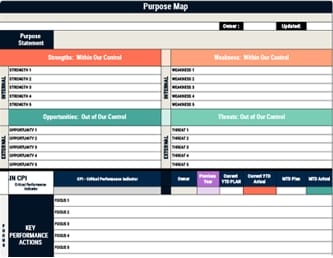
Why do some organizations consistently execute strategy while others stall? You align KPIs to management levels and monitor both outcomes and leading indicators. At the top level, you own strategic KPIs—revenue growth, EBITDA margin, and long-term ROI—because they signal whether the strategy is creating durable value, while leading indicators like backlog growth and headcount utilization expose risks early. In the middle, you translate strategy into motion by tracking department productivity, cycle time, and cross-functional delivery reliability, pairing them with training completion rates and resource utilization to forecast constraints. At the lower level, you drive execution using on-time task completion, first-pass yield, and daily output against targets, while monitoring backlog health to prevent surprises. Match dashboards accordingly: strategic, operational, and detailed task-level. Tie each level’s KPIs to a few Critical Performance Indicators at the top and reinforce them with daily Key Performance Actions to ensure execution, visibility, and accountability.
Tools and Cadences by Level of Management (Top, Middle, Operational)
Curiously, the tools and cadences that keep a business aligned change by management level, and you should design them on purpose to match each group’s decisions and time horizons. At the top, use strategic roadmaps, portfolio dashboards, and quarterly or semiannual reviews to set direction, approve investments, and recalibrate resources. In the middle, rely on program plans, Gantt charts, and monthly operating reviews to translate strategy into cross-functional projects, manage risks, and track milestones. At the operational level, apply daily standups, task boards, and real-time performance metrics to drive execution, fix issues quickly, and sustain productivity. Keep communication flowing upward and downward so insights inform strategy and priorities stay clear. Incorporate visual management practices—such as real-time data dashboards and clear performance indicators—so teams at every level can spot deviations within seconds and act decisively.
- Top: roadmaps, annual plan, QBRs
- Middle: program Gantts, MORs
- Operational: daily standups, KPIs
- Cross-level dashboards
- Escalation paths and handoffs
Frequently Asked Questions
How Do Cross-Functional Squads Fit Into Traditional Management Levels?
They fit as delivery units that cut across silos while still aligning to existing tiers. You embed squad members from multiple functions, keep a product owner accountable for outcomes, and let line managers handle careers, pay, and skills. You set guardrails from senior leadership, delegate prioritization to product management, and empower squads to decide how work gets done. You measure value with shared OKRs, manage risks via chapters, and coordinate through lightweight rituals.
What Management Level Owns Company Culture and Employee Experience?
Senior leadership owns company culture and employee experience, but you share responsibility across all management layers. Why treat it as one team’s job when culture is shaped daily by decisions, communication, and recognition?
You set clear values, fund programs, and align incentives, while middle managers translate principles into routines, feedback, and fair workload.
Frontline leads reinforce norms, model behavior, and resolve friction.
You measure results using engagement scores, retention, onboarding quality, and internal mobility.
How Do Startups Without Managers Apply These Ownership Principles?
You apply ownership by defining clear domains, even without managers, and assigning accountable owners for each. Use roles, not titles, to cover strategy, product, customers, finance, and culture. Document responsibilities, decision rights, and metrics, then adopt lightweight rituals: weekly reviews, retros, and incident postmortems.
Implement RACI for major projects, rotate stewardship to avoid bottlenecks, and codify norms in a handbook. When conflicts arise, use a decision framework and escalate to founders.
How Should Remote-First Organizations Adapt Level Responsibilities?
You should map responsibilities to asynchronous workflows, codify decision rights, and make outcomes traceable. Define clear owners for domains, SLAs for response times, and escalation paths across time zones. Use written RFCs for proposals, lightweight rituals for alignment, and dashboards for visibility. Equip leads to coach through documentation quality, not presence. Standardize handoffs, automate status updates, and log decisions. Finally, measure accountability by artifacts delivered, customer impact, and cycle times, not online activity.
Who Owns Ethical AI, Data Privacy, and Regulatory Compliance Initiatives?
You own line-level execution, but executive leadership owns accountability, with the board’s risk committee providing oversight. You partner with Legal for regulatory interpretation, Security for controls, and Data Governance for stewardship, while Product and Engineering implement privacy-by-design and responsible AI practices. You appoint an AI ethics lead, run cross-functional reviews, maintain data inventories, and track KPIs.
You document decisions, perform DPIAs and model audits, train staff, and escalate material risks promptly.
Conclusion
You’ve now mapped who owns vision, plans, and execution, which is ironic since clarity often feels like control, yet it mainly enables faster course corrections. You’ll set strategy at the top, translate it in the middle, and run it on the floor, tying decisions, budgets, and KPIs to explicit handoffs. Use simple cadences, visible dashboards, and crisp governance to keep alignment steady, because the real power isn’t in more meetings, it’s in fewer surprises and accountable follow-through.