

If you’ve ever felt like your entire day disappears into a black hole of emergencies, you’re not alone—and Leader Standard Work is designed to pull you out. It’s a structured set of daily, weekly, and monthly leadership habits that replace reactive firefighting with deliberate, repeatable routines built on PDCA thinking. When you understand how these habits connect gemba walks, tiered huddles, and visual dashboards, the way you lead operations changes permanently—starting with what happens next.
Key Takeaways
- Leader Standard Work replaces reactive firefighting with repeatable daily routines like gemba walks, huddles, and KPI reviews.
- Daily habits follow a walk-huddle-board cycle using visual dashboards tracking safety, quality, delivery, and cost at a glance.
- The SCR framework—Symptom, Cause, Remedy—drives leaders beyond surface observations toward root-cause actions during gemba walks.
- PDCA is practiced daily through walking the gemba, reviewing visual KPIs, and coaching countermeasures until continuous improvement becomes habit.
- A four-week rollout defines standards, builds the calendar, standardizes execution with visuals, and embeds coaching for sustained adherence.
What Is Leader Standard Work and Why Does It Matter?
When leaders rely on a patchwork of text messages, emails, paper inspections, whiteboards, and spreadsheets to manage daily operations, sustaining high management standards becomes nearly impossible because no single system holds anyone accountable to a consistent routine.
Leader Standard Work solves this by structuring your daily, weekly, and monthly leadership activities—gemba walks, recurring meetings, KPI reviews, and communication cascades—into a repeatable framework that reduces variation in how you manage.
The core shift is moving you from reactive firefighting to proactive operational control.
LSW defines exactly how you detect problems and follow up on corrective actions, embedding a problem-solving cadence like PDCA into your daily rhythm so issues surface early rather than after escalation.
You should treat LSW as a living routine, not a static checklist.
It also reinforces consistency through tools like performance dashboards that enable continuous monitoring and timely adjustments.
Five Building Blocks of Leader Standard Work
Now that you understand what Leader Standard Work is and why it shifts you from reactive firefighting to proactive control, you need to know the five building blocks that give LSW its structure: gemba walks, recurring meetings, strategic planning, communication cascades, and KPI monitoring.
Leader Standard Work is built on five pillars: gemba walks, recurring meetings, strategic planning, communication cascades, and KPI monitoring.
Each block serves a distinct purpose.
Gemba walks take you to the shop floor to observe work firsthand and surface anomalies through structured problem-solving.
Recurring meetings align your team to targets at daily, weekly, and monthly intervals.
Strategic planning translates high-level objectives into day-to-day priorities.
Communication cascades push expectations and updates up, down, and across the organization in a controlled rhythm.
KPI monitoring ensures you’re reviewing leading and lagging metrics regularly through visual management so you detect problems early.
Incorporating visual systems guided by the 1-3-10 rule ensures that performance status, problems, and required actions are understood almost instantly.
From Firefighting to Proactive Control With LSW
Because most managers spend their days reacting to problems that have already spiraled—jumping between urgent calls, chasing down root causes after the damage is done, and scrambling to keep production on track—they never build the structured habits that would prevent those problems in the first place.
LSW breaks this cycle by scheduling your daily and weekly routines—daily huddles, KPI reviews, and gemba walks—so you’re surfacing issues early rather than discovering them after they’ve escalated.
When you standardize what you check and when, you reduce variability in your own leadership behavior.
You’re reviewing leading indicators, following up on countermeasures, and confirming they’re actually preventing recurrence.
Integrating visual management tools into these routines enhances transparency, making problems and performance visible in real time so action can be taken immediately.
The shift from reactive to proactive doesn’t happen overnight, but each repeated routine builds the discipline that replaces firefighting with deliberate control.
Gemba Walks, Huddles, and Visual Dashboards in Practice
Stepping onto the production floor with a clipboard and good intentions won’t accomplish much unless you’ve structured what you’re looking for, how you’ll respond to what you find, and where those findings feed back into your team’s daily rhythm.
During gemba walks, you’ll use the SCR framework—Symptom, Cause, Remedy—to move beyond surface observations and drive root-cause actions on the spot.
Stop describing symptoms on your clipboard — name the cause and assign the remedy before you leave the floor.
Those findings then flow directly into your daily huddles, where you’ll spend roughly five minutes reviewing the top five issues to fix on the shift.
Visual dashboards displaying QCT and HR indicators let you confirm performance at a glance without chasing reports. Incorporating real-time data visualization ensures teams can quickly identify deviations and act before issues escalate.
Together, this walk-huddle-board cycle standardizes how you manage safety, quality, delivery, and cost signals consistently across every shift.
Daily, Weekly, and Monthly LSW Routines
The walk-huddle-board cycle gives you a reliable daily heartbeat, but it only covers what’s happening right now on the floor—you also need structured weekly and monthly routines that pull the lens back so you can spot trends, verify that countermeasures are actually holding, and keep your team’s efforts aligned with broader business objectives.
Each day, your five-minute huddle and gemba walk use at-a-glance visual boards to track safety, quality, delivery, and cost so you can act before the shift ends.
Weekly, you move into tiered accountability meetings where you review leading and lagging indicator trends and confirm whether SCR-based remedies are sticking.
Monthly, you align those results against the business plan, adjusting priorities and resources accordingly.
When you digitize this cadence, administrative time can drop roughly twenty-five percent, freeing capacity for continuous improvement. To strengthen this cadence, incorporate clearly defined KPIs supported by Balanced Scorecards so teams can consistently measure progress and adjust execution.
What Leader Standard Work Looks Like at Every Level
Although every leader in a lean organization follows the same core principle—replacing reactive firefighting with repeatable, disciplined routines—what those routines actually contain shifts materially as you move from the shop floor to the executive suite. Embedding stakeholder engagement early in these routines ensures alignment between strategic intent and day-to-day execution.
Lean leadership isn’t one-size-fits-all—the discipline stays constant, but the routines evolve from shop floor to boardroom.
Frontline leaders run daily huddles and visual board checks centered on leading indicators like safety, quality, and delivery status, clearing small barriers that slow the current shift.
Mid-level managers operate on a weekly cadence, reviewing performance trends through dashboards that balance leading and lagging KPIs while coaching frontline leaders to keep improvement work aligned with business goals.
Senior leaders adopt monthly or periodic routines focused on strategic direction, organizational health, and risk rather than process-level details.
Across all tiers, Gemba walks and structured countermeasure follow-ups confirm that corrections actually hold.
Lean and Six Sigma Principles Inside Leader Standard Work
Understanding how routines differ by organizational level sets the stage for a deeper question: what management principles actually power those routines from the inside?
Leader Standard Work embeds Lean and Six Sigma directly into your daily leadership behavior. Effective execution improves when teams are guided by strategic alignment that connects daily actions to broader organizational goals.
You’re practicing PDCA every time you walk the gemba, review visual KPIs, and coach your team on countermeasures—this makes continuous improvement a habit rather than a project.
LSW also reinforces respect for people through recurring communication events at daily, weekly, and monthly intervals that surface issues early and develop problem-solving capability.
On the Six Sigma side, you’re scheduling regular data reviews and applying DMAIC-style thinking to drive measurable corrective actions.
Together, these principles replace reactive firefighting with disciplined improvement cycles, aligning Lean’s rapid learning with Six Sigma’s defect-reduction and control mindset.
How to Implement Leader Standard Work in Four Weeks
Because Leader Standard Work only delivers results when it moves from concept to daily habit, a focused four-week rollout gives you the structure to build that habit without overwhelming your leadership team or stalling in the planning phase.
In week one, you’ll define what good looks like across safety, quality, delivery, cost, and team development, then translate those outcomes into daily, weekly, and monthly routines with clear frequencies.
Week two builds your LSW calendar, scheduling recurring activities like daily huddles, gemba walks, and KPI reviews so leadership time shifts from reactive firefighting to planned management.
Week three standardizes execution through visual dashboards and checklists that work across shifts.
Week four focuses on coaching adherence, measuring routine completion, and refining your standard based on actual improvements. This approach reinforces a culture of continuous improvement by regularly reviewing and refining leadership routines based on performance and feedback.
Tracking LSW Results With KPIS and Coaching Loops
With your routines standardized and your team executing daily, weekly, and monthly activities, the next step is connecting that disciplined execution to measurable outcomes so you can see whether Leader Standard Work is actually driving improvement.
Track KPIs tied to safety, quality, delivery, cost, and team capability during your tiered meetings so performance is visible at a glance.
When a KPI trends off target, run a quick review on the gemba to identify the symptom, cause, and remedy, then follow up to confirm your countermeasure prevents recurrence.
Measure both routine adherence and KPI correlation over time, because completing gemba walks means nothing if results don’t improve.
Use repeated KPI reviews to refine your standard work document rather than reverting to firefighting.
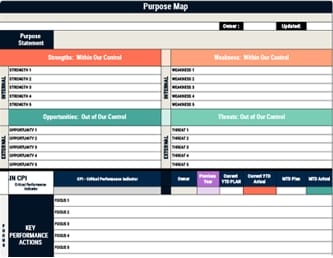
Align these KPI reviews within a CPI→KPI→KPA loop to ensure daily actions are directly driving the critical outcomes that define success.
Why Digital Tools Keep Leader Standard Work Alive
Even the most disciplined Leader Standard Work routines will gradually deteriorate over time if they rely on scattered tools like paper checklists, sticky notes, whiteboard reminders, and email threads that nobody regularly updates.
Digital daily management platforms solve this by consolidating your routines into one trackable system where huddles, gemba walks, KPI reviews, and coaching observations are standardized and readily visible to everyone who needs them.
Visual dashboards on quality, cost, time, and HR indicators let you review performance at a glance, so problems become apparent before they escalate.
Role-specific access ensures you’re completing what you must do daily, not just what’s convenient.
These platforms can reduce administrative time by up to 25%, freeing you for gemba-driven problem solving instead of paperwork.
By reinforcing organizational alignment, these tools ensure that daily leader activities stay tightly connected to strategic goals, improving consistency, communication, and overall performance.
Frequently Asked Questions
What Are the Four Key Elements of Leader Standard Work?
The four key elements of Leader Standard Work are routines, skills, tools, and accountability.
You’ll use routines to standardize recurring tasks like daily KPI reviews and gemba walks, develop skills such as coaching and priority setting to move from reactive to proactive leadership, leverage tools like visual management boards and tiered meetings to execute those routines, and close the loop with accountability by following up on corrective actions through disciplined PDCA cycles.
What Are the 5 C’s of Leadership?
The 5 C’s of leadership are character, clarity, assurance, communication, and coaching. You’ll model expected behaviors through character, translate KPIs into daily focus through clarity, and build repeatable routines that establish confidence across your team.
Communication ensures priorities and countermeasures cascade consistently through huddles and tiered meetings, while coaching strengthens your team’s problem-solving ownership so they don’t default to firefighting when issues arise.
What Are the 4-5 Qualities of a Good Leader?
You’ll want to develop these four to five qualities:
technical competence so you can credibly review KPIs and standards,
coaching ability so you’re developing your team’s problem-solving skills rather than just directing tasks,
accountability through monitoring leading indicators and following up on countermeasures,
consistency in maintaining clear standards across shifts using checklists and visual boards,
and people development through structured training methods like skill matrices that raise everyone’s capability over time.
Conclusion
Think of Leader Standard Work as the compass you carry through a dense forest—without it, you’ll wander reactively from crisis to crisis, but with it, you’ll follow a clear, deliberate path toward operational excellence. By committing to daily gemba walks, structured huddles, and consistent KPI reviews, you’re not just managing work—you’re embedding PDCA into your leadership rhythm so problems surface early and solutions stick permanently.