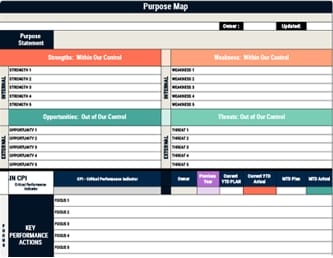


If you want your team to move faster with less friction, define one winning goal that everyone can recite, measure, and act on daily; translate the vision into a few SMART, cascading objectives; make priorities visible through simple tools and weekly rituals; and clarify cross-functional roles to prevent duplication and delay. With shared metrics, tight feedback loops, and real-time course corrections, you’ll focus effort where it matters most—next, you’ll choose which bold trade-offs reveal outsized impact.
Key Takeaways
- Define a plain-language vision and one winning goal that anchors choices, priorities, and trade-offs across teams.
- Translate the vision into 3–5 SMART, outcome-focused objectives with clear owners, measures, and timelines.
- Make goals visible via shared OKRs and dashboards, showing status, KPIs, dependencies, and accountability.
- Run monthly goal check-ins and weekly project updates to surface progress, risks, and needed decisions quickly.
- Celebrate wins and conduct blame-free retros to learn, adjust metrics, and reinforce alignment and repeatable behaviors.
Why One Winning Goal Multiplies Team Impact
One goal, clearly defined and shared, multiplies your team’s impact because it concentrates attention, reduces friction, and accelerates execution.
One shared goal focuses attention, cuts friction, and accelerates execution for outsized impact.
When you commit to a single winning goal, you channel effort into fewer, higher-value activities, which raises productivity and improves output quality through aligned work and fewer conflicting priorities.
You also speed decisions, since trade-offs become clearer and teams can say no to distractions without hesitation.
Because only 24% of teams operate on mission-critical work, choosing one goal helps you prioritize what truly moves the needle and cut wasted energy.
Extending the same goal across departments encourages collaboration, reduces duplicated efforts, and makes resources go further.
Finally, by reviewing and refining the goal regularly, you adapt to shifting priorities while preserving momentum and impact.
Add one aligned objective and key result (OKR) per team to connect the single winning goal to daily work, supported by regular governance rhythms for visibility and accountability.
Crafting a Clear, Compelling Vision Everyone Remembers
Clarity starts with a vision that functions as your team’s north star, stated in plain language, specific enough to guide choices, and concise enough to repeat from memory. You need a statement people can recall without slides, because recall drives alignment and cuts waste that stalls projects. Keep it jargon-free, meaningful, and focused on the outcome you want customers and the organization to experience, not the internal activities you perform. Make it memorable through storytelling that ties the vision to real users, concrete moments, and observable success, since narrative improves retention and relevance. Reinforce it regularly across meetings, channels, and artifacts, using the same words to prevent drift. Invite teams to repeat it, apply it to decisions, and retire work that doesn’t move you toward it. When teams share a clear, repeatable vision, organizations see stronger alignment that can drive faster revenue growth and higher profitability.
Turning Vision Into SMART, Cascading Goals
Even a strong vision won’t drive outcomes until you convert it into a short set of SMART, cascading goals that spell out who does what, by when, and how success will be measured.
Start by translating the vision into 3–5 annual goals per team, making each Specific, Measurable, Achievable, Relevant, and Time-bound, so people understand the expected result, the metric, and the deadline.
Turn vision into 3–5 SMART annual team goals with clear results, metrics, and deadlines.
Cascade these goals by creating a golden thread: define company outcomes, align department targets, then map individual responsibilities, ensuring clear ownership and dependencies.
Use OKRs to express outcomes and key results transparently, connect contributions across teams, and reveal tradeoffs early. Companies like Spotify and Tesla show that aligning strategy and execution through clear objectives and routine reviews—supported by tools like OKRs and cross-functional collaboration—drives innovation and sustained performance.
Review goals quarterly, assess progress against metrics, and adjust scope or timing as priorities shift, maintaining alignment without losing accountability.
Choosing Fewer, Bolder Objectives That Stretch the Team
While ambition can tempt you to chase many priorities at once, you’ll get farther by committing to 3–5 bold, measurable objectives that force meaningful tradeoffs and concentrate effort where it matters most.
Choose goals that stretch the team beyond comfort, yet remain achievable with focused execution, because tension drives innovation and better performance. Link each objective to the organizational vision so people decide faster, align resources, and understand why their work matters.
Define clear measures for success to reduce confusion and enable objective prioritization across functions.
Review progress quarterly, adjusting targets or tactics as company priorities shift, so momentum stays high without scattering attention.
Use shared objectives to break silos, coordinate dependencies, and streamline delivery, ensuring teams pull in the same direction and produce stronger outcomes.
To reinforce cohesion and track progress effectively, adopt OKRs that translate strategic intent into measurable key results and regular reviews.
Making Goals Visible With Tools, Rituals, and Rhythm
Bold objectives only deliver results when everyone can see them, understand their role, and track progress in plain sight.
So you should make goals visible with simple tools, steady rituals, and a predictable cadence. Centralize goals on an accessible platform that shows owners, milestones, and status, because a single source of truth reduces confusion and speeds decisions.
Maintain momentum with monthly goal check-ins that assess outcomes, risks, and next steps, and pair them with brief weekly project updates to keep stakeholders informed. Use video tools like Loom for concise, personalized updates, which often cut through email noise and, in sales contexts, have lifted win rates by 20%.
Protect accountability through recurring, goal-focused meetings that review metrics, surface blockers, and confirm priorities. Keep communication structured and consistent.
Add a simple metrics dashboard to display key KPIs in real time, leveraging visual management to boost transparency and enable faster issue resolution.
Aligning Daily Work and Calendars to Top Priorities
Because priorities only matter if they shape what fills your hours, align daily work and calendars to top goals by turning strategy into time-bound commitments you can see and defend.
Block calendar segments for mission-critical tasks, protect them like meetings, and move lower-impact work to overflow slots, since only a quarter of teams consistently do this well.
Translate top goals into weekly deliverables, then into daily task lists that reference the relevant objective or key result, so you can judge trade-offs quickly and avoid scattered effort.
Use visible frameworks, like OKRs, to map each task to outcomes, reinforcing focus and motivation.
Hold monthly priority check-ins to reassess goals, re-block calendars, and retire work that no longer advances the target, maintaining a dynamic, accountable cadence.
To sustain this focus, schedule quarterly reviews that tie calendar blocks and weekly deliverables to performance metrics tracked in your Business Operating System, ensuring ongoing alignment and measurable progress.
Cross-Functional Collaboration and Role Clarity
Even as teams chase a single winning goal, you only release real speed when cross-functional partners communicate clearly and know exactly who owns what.
Start by defining roles and responsibilities in writing, assigning a single accountable owner for each deliverable while documenting contributors, dependencies, and decision rights, because this prevents overlap and guarantees timely handoffs.
Use collaborative tools like Slack for rapid questions and Asana for task visibility, creating shared boards that reflect the unified goal and highlight priority paths.
Reduce silos by naming interfaces between functions, specifying what information moves, when it moves, and in what format.
Encourage recognition of joint wins, noting contributions from multiple departments, since visible credit strengthens trust and commitment, reinforcing disciplined collaboration toward the single winning goal.
To sustain momentum, align team goals with organizational objectives and track progress with measurable KPIs through regular reviews to reinforce accountability and operational excellence.
Check-Ins, Feedback Loops, and Real-Time Course Corrections
While plans set direction, disciplined check-ins, feedback loops, and rapid course corrections keep execution on track by turning signals into timely action. Schedule monthly check-ins to review priorities, progress, and risks, and use them to surface obstacles early, reallocate effort, and clarify ownership.
Keep updates concise yet specific, highlighting what moved, what stalled, and what decisions you need, so the team sees how their work advances the single winning goal.
Build feedback loops that combine team reviews and one-on-one alignment, inviting candid input on what’s working and what must change. Encourage open communication to strengthen trust, enabling constructive debate and faster decisions.
When signals indicate drift, make small course corrections immediately, adjust scope or sequencing, and confirm new commitments, ensuring accountability and sustained momentum. Add simple, shared metrics to each initiative so progress is visible and adjustments are grounded in performance metrics that connect strategy to execution.
Using Data and Analytics to Track Progress and Drive Decisions
Two practices turn activity into outcomes: define the right metrics and review them on a reliable cadence.
You start by translating the single winning goal into a small set of measurable indicators, such as leading signals for pipeline health or cycle time, and lagging results like revenue or adoption. Use analytics tools to connect these metrics to owners, milestones, and thresholds, so you can see individual and team contributions against targets. Incorporate color-coded indicators on visual dashboards to enable quick, intuitive assessments and faster responses when metrics deviate from standards.
Translate the single winning goal into clear metrics, owners, milestones, and thresholds to track real progress.
Schedule recurring reviews that surface trends, not just snapshots, then adjust plans early when data shows slippage or unexpected momentum.
Share dashboards openly to build trust, align priorities, and encourage informed debate. Ask teams to explain variances with evidence, specify corrective actions, and confirm dependencies, which fosters accountability, improves collaboration, and keeps decisions anchored to company goals.
Celebrating Wins, Mining Failures, and Sustaining Momentum
Momentum thrives when you turn progress into shared rituals: celebrate visible wins, study misses without blame, and keep everyone moving in the same direction.
You reinforce alignment by recognizing milestones, both big and small, because public acknowledgment creates community, signals what matters, and motivates repeatable behaviors.
Share success stories that connect directly to strategy, and make the line of sight obvious: here’s the aligned action, here’s the measurable impact.
Build resilience by mining failures systematically.
Run a weekly, blame-free review where the team surfaces risks, examines assumptions, and extracts lessons, then documents one improvement to test next week.
Use lightweight certificates or badges to recognize individual and team contributions, linking each to business objectives.
Close every cycle by clarifying next steps, owners, and dates to sustain momentum.
Aligned organizations can adapt faster and improve customer satisfaction by using OKRs to translate strategy into measurable results and maintain transparent, continuous communication.
Frequently Asked Questions
How Do We Handle Dissenters Who Disagree With the Single Winning Goal?
Address dissenters by inviting specific objections, requesting evidence, and clarifying decision criteria, then test assumptions together through brief experiments or data reviews.
If concerns reveal risks, refine the goal or adjust milestones, documenting trade-offs.
When disagreement is principled but persistent, offer role realignment, escalation paths, or an agreed exit.
Communicate the final decision, rationale, and success metrics, set review checkpoints, and hold everyone accountable for committed behavior despite remaining reservations.
What Governance Structure Ensures Goal Continuity During Leadership Changes?
Hit the ground running: you guarantee continuity with a chartered strategy council, a written goal charter, and tiered OKRs tied to multi-year horizons.
You seat cross-functional leaders and independent directors, require supermajority votes to change the goal, and mandate public decision logs.
You lock incentives to long-term milestones, embed the charter in onboarding, and run quarterly health checks.
You also use succession plans and shift playbooks to preserve context during handoffs.
How Are Budgets Allocated When Priorities Conflict With the Winning Goal?
You allocate budgets by prioritizing initiatives that measurably advance the winning goal, then funding compliance, risk, and essential operations.
You require a clear business case, defined KPIs, and time-bound milestones, cutting or deferring projects that don’t move the goal’s metrics.
You run a quarterly portfolio review, apply a stage-gate for new spend, and use zero-based budgeting on discretionary items, ensuring trade-offs are explicit, reversible, and transparently documented.
How Do We Onboard New Hires Into the Goal Quickly and Effectively?
Start by giving a concise briefing on the goal, success metrics, and customer impact, then map how each role contributes.
Provide a one-page playbook, a KPI dashboard, and a 30-60-90 day plan tied to goal outcomes.
Run a kickoff workshop with scenario walkthroughs, decision guardrails, and common pitfalls.
Assign a mentor, set weekly check-ins, and review early artifacts for alignment.
Reinforce with quick quizzes, exemplars, and a public progress tracker.
What Legal or Compliance Risks Arise From Extreme Goal Focus?
You risk compliance breaches when single-minded goals push shortcuts, so you must monitor for privacy violations, misleading claims, unfair labor practices, and unsafe quality tradeoffs.
You could trigger insider trading or antitrust issues if aggressive targets drive improper info sharing or collusion.
You also face retaliation and whistleblower risks if dissent is chilled.
Mitigate by setting guardrails, separating incentives from prohibited conduct, auditing decisions, documenting judgments, training managers, and empowering escalation without penalty.
Conclusion
Align your team on one winning goal, translate it into SMART, cascading objectives, and keep progress visible with clear roles, regular check-ins, and simple dashboards. Use cross-functional rituals to remove blockers quickly, adjust plans with data, and document lessons so improvements stick. Remember, “measure twice, cut once,” because disciplined clarity reduces waste and accelerates delivery. If you commit to fewer, bolder bets and sustain a steady operating rhythm, you’ll focus effort, multiply impact, and consistently ship meaningful outcomes.