

Only 1 in 10 mid‑market firms consistently beat their peers, and you do it by diagnosing your stage, exposing bottlenecks, and making five connected decisions you revisit quarterly. You’ll benchmark pricing, product configuration, and geographies, set crisp segments and channels, then align offers and sales motions with real‑time dashboards. Finally, you’ll scale what works through repeatable capabilities, standardized systems, and a disciplined change cadence—because what you choose next determines whether momentum compounds or stalls.
Key Takeaways
- Diagnose your growth stage, map unit economics and customer mix, and surface operational bottlenecks to align priorities and pace.
- Make five connected choices—where to play, how to win, capabilities, systems, and cadence—anchored in data and profitability.
- Prioritize segments, geographies, channels, and products with strong demand, fit, and unit economics; deprioritize distractors.
- Integrate pricing, offers, and sales motions by segment; use data-driven tiers, bundles, and channels matched to buying behavior.
- Scale critical capabilities and modern systems, reduce back-office complexity, and run a disciplined OKR-driven change cadence with visual KPI management.
Diagnose Your Mid-Market Growth Stage and Gaps
Where are you on the mid‑market growth curve, and what’s holding you back from the next step? Start by locating your company in Emergence, Expansion, Maturity, or Reinvention/Decline, since each stage demands different priorities, structures, and pace. Map revenue trends, customer mix, win rates, and unit economics to confirm your stage, then surface “growing pains” that signal constraints, such as process inefficiencies, data quality gaps, and back‑office bottlenecks that slow scale. Strengthen organizational alignment to translate strategy into clear roles, shared values, and communication that boosts engagement and performance across teams. Run a diagnostic that ties strategy to capabilities: assess technology, processes, and skills against current objectives, and quantify the gaps that impede throughput and decision speed. Use external assessments and data to benchmark and target investments, whether in pricing discipline, product configuration, or geographic expansion. Update strategy routinely to sustain momentum and reduce stagnation risk.
Mid-Market Strategy: The 5 Decisions You Must Nail
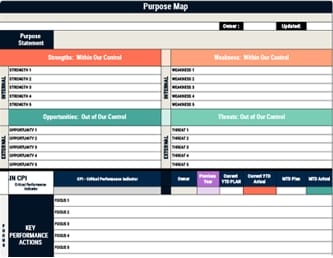
You’ve pinpointed your growth stage and gaps; now turn that insight into action by making five connected choices that set the boundaries and focus of your strategy. Treat them as a system, not a checklist, and anchor each one in data, profitability, and your distinctive capabilities to avoid over-portfolioing and diluted messaging. Use external benchmarks and internal assessments, then stress-test economics and scalability before you commit, and revisit often as markets, competitors, and regulations shift. To sustain alignment and adaptability as you execute, translate these choices into clear, real-time visuals using visual management boards so teams can monitor KPIs, spot deviations quickly, and drive timely corrective action.
- Define the markets you’ll play in, linking demand signals to your core strengths and margin goals.
- Specify the offerings you’ll provide, trimming scope to sustain clear economics and roadmap focus.
- Target segments with tailored value propositions and pricing proof.
- Prioritize geographies after regulatory, cost-to-serve, and fit analysis.
- Select channels by segment behavior, capacity, and acquisition efficiency.
Where We’ll Play: Segments, Geographies, and Channels
How do you decide where to concentrate scarce resources so growth compounds instead of stalls? Start by defining the customer segments where demand is visible, your value proposition is strong, and competitors are vulnerable, then deprioritize segments that dilute focus. Select geographies using a simple screen: market size and growth, regulatory and cultural fit, and your operational readiness to sell, deliver, and support at scale. Prioritize products and services with the best unit economics and runway, aligning roadmaps to the needs of your chosen segments.
Choose channels where buyers already research, evaluate, and purchase, and revisit channel economics quarterly, pruning low‑ROI routes. Use a data-to-action framework that links insights to changes by segment, such as tailored configuration, messaging, and packaging, echoing PointClickCare’s disciplined approach. To sustain momentum and adaptability, establish regular governance rhythms that track progress, surface interdependencies across segments, and inform timely adjustments to priorities.
How We’ll Win: Pricing, Offers, and Sales Motions
Why do winning mid‑market teams treat pricing, offers, and sales motions as one integrated system rather than isolated tactics? You align what you sell, how you price it, and how you sell it to prove value by segment, then you remove friction from purchase to realized outcomes. Use data to set segment‑specific tiers and usage‑based models, bundle configurations that match needs, and select channels where each buyer actually engages. PointClickCare shows how tailoring offers, pricing, and motions by segment drives growth, especially when contracts flex for independent facilities.
Winning mid‑market teams integrate pricing, offers, and motions to prove value by segment and accelerate outcomes.
- Define target segments, articulate differentiated value, and map the buyer journey.
- Bundle core and optional features, with flexible terms that de‑risk adoption.
- Apply regional and size‑based price tiers using data.
- Align channels to segment buying behavior.
- Link pricing, configuration, and implementation to accelerate value.
Adding structured communication rhythms and feedback loops creates accountability that keeps pricing, offers, and sales motions aligned during execution.
Scale What Matters: Capabilities, Systems, and Change Cadence
Ultimately, scaling what matters means aligning the capabilities you invest in, the systems you standardize on, and the cadence of change you enforce so growth compounds without breaking the business. You should prioritize capabilities that unlock repeatable expansion, such as advanced manufacturing or technology for throughput, an optimized supply chain for reliable fulfillment, and data‑driven decision‑making to support rapid entity additions and regional launches. Standardize on modern, cloud‑based, in‑memory enterprise applications to create a single source of truth across finance, HR, payroll, analytics, and planning, because unified data reduces back‑office complexity and improves dashboard reliability. Establish a disciplined change cadence with clear milestones, governance, and delegated leadership, so teams deliver steady transformation while day‑to‑day operations stay productive and customers remain served. Implement regular alignment reviews using OKRs to keep strategic goals, roles, and cross‑functional execution in sync as change scales.
Frequently Asked Questions
How Should We Structure Board Governance for Mid-Market Pace and Oversight?
Structure governance with a small, skilled board, clear committee charters, and a meeting cadence that separates strategy from oversight. You’ll set quarterly strategy sessions, monthly operating dashboards, and ad‑hoc risk reviews. Define decision rights with RACI matrices, mandate pre‑reads, and track action logs. Appoint an independent chair, rotate committee leadership, and run executive sessions. Use KPI scorecards, risk heat maps, and compliance calendars, and schedule annual board evaluations and succession planning.
What KPIS Should Our Leadership Team Review Weekly Versus Monthly?
Review weekly: bookings and pipeline movement, revenue run‑rate, cash balance and burn, gross margin, backlog and delivery milestones, top churn/expansion signals, critical incidents, hiring pipeline, and leading indicators like NPS pulse or ticket volume, so you can react fast.
Review monthly: GAAP revenue and EBITDA, full cash flow, cohort retention, LTV/CAC and payback, unit economics by segment, forecast accuracy, strategic initiatives progress, product adoption, and risk/compliance status.
How Do We Build a Succession Plan for Critical Leadership Roles?
Treat succession like building a relay team: you map roles, define competencies, and identify two internal successors per role. You assess readiness with skills matrices, 9‑box potential grids, and performance data, then create individualized development plans with stretch assignments, mentors, and cross‑functional rotations. You set clear timelines, risk triggers, and emergency backfills, document decision rights, and run annual simulations. You track progress quarterly, update pipelines, and align incentives to retain named successors.
What Operating Cadences Align Cross-Functional Leaders Without Meeting Overload?
Use a tiered cadence: a 15‑minute daily async check-in via a shared dashboard, a 45‑minute weekly cross-functional stand-up focused on blockers and interdependencies, and a 90‑minute biweekly priorities review tied to KPIs and risks.
Add a monthly two-hour roadmap sync for cross-team sequencing and a quarterly half-day strategy review.
Standardize agendas, pre-reads, and decision logs, rotate facilitators, and enforce timeboxes, so you maintain alignment, surface issues early, and avoid meeting sprawl.
How Do We Budget for Experimentation While Maintaining Profitability Guardrails?
Allocate a fixed experimentation fund, like 2–5% of revenue, tiered by margin, and cap spend per test. Define profitability guardrails: minimum gross margin per unit, break-even horizon, and maximum downside loss. Use stage gates—cheap discovery, limited pilot, scaled rollout—advancing only with preset metrics. Require kill criteria and post-mortems. Fund tests from Opex, not core COGS, and rebalance quarterly. Track portfolio ROI, and pause funding if trailing EBITDA dips below target.
Conclusion
You diagnose your stage and gaps, you choose the five connected decisions, and you align where you’ll play and how you’ll win, so you can scale what matters with discipline. You benchmark pricing and offers, you focus segments and geographies, and you standardize motions and systems, ensuring transparency through real-time dashboards. You build repeatable capabilities, you set a steady change cadence, and you close bottlenecks fast, turning strategy into execution, and execution into durable, compounding growth.