

By coincidence, you’re likely tackling efficiency just as your organization needs clearer goals, so start by aligning objectives with your vision, defining measurable outcomes, and choosing a BPM tool that models and tracks progress. You then build psychological safety, set OKRs, and map core processes with swimlanes to expose bottlenecks. Empower cross-functional teams to run rapid, frontline experiments tied to dashboards, because the next move—prioritizing what to fix first—will determine your momentum.
Key Takeaways
- Align OpEx goals to your vision; define measurable KPIs, baselines, and a realistic 18–36 month roadmap with clear governance and accountability.
- Build a continuous improvement culture with psychological safety, small experiments, visible learning, and empowered cross-functional teams trained on BPM tools.
- Create a process master list; map inputs, outputs, customers, interdependencies, and handoffs; prioritize using a weighted 1–5 scoring matrix.
- Model priority workflows with swimlane diagrams, clarify roles and decisions, validate with consumers, and connect work to OKRs and governance rhythms.
- Remove bottlenecks first; run rapid fixes at handoffs; track cycle time, queue length, and first-pass yield in dashboards tied to strategy.
Define Objectives, Vision, and Success Metrics
Clarity starts with aligning your operational excellence objectives to the organization’s vision, then translating that alignment into specific, measurable goals and a realistic plan. You should define outcomes that matter to the business, such as faster cycle times, lower error rates, and stronger regulatory compliance, and tie each to clear KPIs and baselines. Select a BPM strategy and tooling, like ADONIS, that supports modeling, monitoring, and continuous measurement, ensuring you can track progress against targets. Communicate the objectives and metrics across all levels so teams share the same direction, understand priorities, and know how success will be judged. Establish governance with defined roles, decision rights, and an 18–36 month phased roadmap that sets milestones, allocates resources, and enforces accountability. To reinforce alignment and transparency, consider adopting the OKRs framework to break strategic objectives into measurable key results and promote accountability across teams.
Build a Culture of Continuous Improvement
With objectives, KPIs, and governance defined, you now need to make continuous improvement part of daily work, not an occasional project. Create psychological safety so employees can surface inefficiencies and test ideas without fear, and make learning visible through open reviews, small experiments, and rapid feedback. Empower cross-functional teams, give front-line staff decision rights within clear boundaries, and ensure ideas are captured, evaluated, and piloted in real workflows. Build shared capability by training people on OpEx principles and BPM tools like ADONIS, so everyone speaks the same language and can model, analyze, and validate changes. Sustain momentum with routines, recognition, knowledge sharing, and visual management that tie progress to leadership accountability. Use visual management boards with color-coded indicators and real-time data to make deviations immediately visible and drive timely action through performance dashboards.
Make improvement daily work: safe experimentation, empowered teams, shared methods, visible learning, and leadership-tied accountability.
1) Daily huddles, weekly kaizen, and monthly showcases
2) Idea intake, triage, and pilot playbooks
3) Skills matrices, microlearning, and tool sandboxes
4) Visual boards, impact metrics, and executive reviews
Identify, Prioritize, and Map Core Processes
Before you improve anything, establish a clear picture of how work actually flows by identifying, prioritizing, and mapping your core processes end to end. Start by building a process master that inventories every value-chain process, such as regulatory compliance and new product development, and record inputs, required inputs, major activities, outputs, customers, and key metrics like cycle time, error rates, and delays. Highlight interdependencies across departments, vendors, and customers, documenting how processes connect and hand off.
Next, apply a process prioritization matrix. Define success criteria tied to strategic goals, score each process using 1–5 anchors, and apply weights from 0.5 to 1.5 to rank improvement focus, targeting the vital few for quick wins. Then model selected processes with swimlane diagrams showing departments, third parties, handoffs, decisions, and value versus non-value steps. To sustain improvements, schedule regular reviews and use performance metrics within your Business Operating System to align process changes with evolving goals.
Assemble Cross-Functional Teams and Model Workflows
Armed with prioritized process maps, you now form a cross-functional team to model how work really happens and to secure broad ownership of improvements. Bring together an executive sponsor, a process owner, key suppliers, frontline participants, and at least one process consumer, since this mix balances authority, expertise, and user expectations. Use swimlane diagrams to map the current state, giving each department a lane and including third parties, so handoffs, responsibilities, and delays become visible. Label every activity with a functional title, add a short narrative, and mark inputs, outputs, decisions, and suspected bottlenecks to distinguish value-added from non-value-added work. Establish regular governance rhythms with aligned OKRs to connect top-level strategy with day-to-day process improvements and track progress.
- Define roles and decision rights early.
- Facilitate sessions that center frontline insights.
- Capture evidence for every handoff and delay.
- Validate models with consumers before proceeding.
Eliminate Bottlenecks and Implement Targeted Improvements
How do you turn mapped workflows into measurable gains? Start by locating the true bottleneck: the slowest activity or the resource running at the highest utilization, since relieving it lifts overall throughput. Quantify the stakes with downstream flow visualization and rolled throughput yield; remember that two 98% steps deliver 96% RTY, while five drop to 90.4%, so small defects compound quickly. Prioritize fixes at the bottleneck and its handoffs to cut waiting and stop rework from flowing upstream. Use root-cause tools like 4M1D and 5 Whys to separate symptoms from causes, then design targeted, actionable changes. Implement small, rapid improvements with frontline staff, standardize what works, and track impact using clear KPIs such as cycle time, queue length, and first-pass yield to build momentum. To sustain gains and connect improvements to strategy, align changes with OKRs and use regular communication loops so teams stay focused on the same outcomes.
Monitor, Reward, and Sustain Operational Excellence
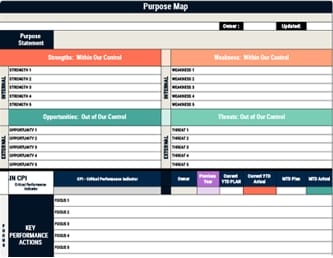
Why let hard-won gains fade when you can lock them in with disciplined monitoring, clear rewards, and repeatable routines that make excellence the default? Build a formal KPI dashboard that links leading and lagging indicators to each initiative, so you can see trends early, verify impact, and correct quickly. Reinforce the right behaviors through a structured reward system that blends quick recognition with meaningful career and financial incentives. Hold monthly governance reviews to confirm ROI, rebalance priorities, and retire low-value work. Standardize performance reviews and use visual management to surface status, bottlenecks, and next steps. Sustain momentum by running regular kaizen events, codifying problem-solving cycles, and curating a living lessons repository. Strengthen execution by aligning a few Critical Performance Indicators with supporting KPIs and daily Key Performance Actions to create a CPI→KPI→KPA feedback loop that sustains results.
Frequently Asked Questions
How Do We Budget and Forecast ROI for Process Improvement Initiatives?
You budget and forecast ROI by defining scope, quantifying baseline costs, and estimating improvement impacts on labor, cycle time, error rates, and rework. Translate gains into dollars, include implementation, change management, and ongoing support costs, then build a time-phased cash flow. Use conservative, base, and optimistic scenarios, discount future benefits, and compute payback, NPV, and IRR. Validate assumptions with pilots, track leading metrics, and set thresholds to stop, pivot, or scale.
Which Digital Tools Integrate Best With Our Existing Tech Stack?
You should prioritize tools that align with your stack’s core platforms. If you’re on Microsoft 365, choose Power Automate, Power BI, and Dynamics connectors; for Google, use AppSheet, Looker Studio, and Workspace Add-ons. With AWS or Azure, prefer native serverless integrations. For CRM-centric stacks, select Salesforce Flow, MuleSoft, or HubSpot Ops Hub. Validate fit using REST/GraphQL support, SSO/SCIM, webhooks, prebuilt connectors, data governance features, error handling, and clear SLAs.
How Do We Handle Regulatory Compliance Changes During Improvements?
You handle regulatory changes by treating them like surprise pop quizzes: prepare, don’t panic, and show your work. You establish a compliance owner, map impacted processes, and create a living requirements register with citations and effective dates. You run gap analyses, update policies, and embed controls into workflows and checklists. You train staff, version documents, and log approvals. You pilot changes, monitor KPIs and audit trails, and schedule periodic reviews with legal counsel.
What Change Management Tactics Reduce Frontline Resistance Quickly?
Use rapid, face-to-face briefings, clarify the “why,” and link benefits to daily pain points, so people see immediate value. Identify influencers, equip them with talking points, and let them demo quick wins. Provide simple job aids, short trainings, and on-the-spot coaching, reducing uncertainty fast. Invite feedback through daily huddles, close the loop visibly, and adjust. Remove friction—align schedules, metrics, and incentives—while enforcing a clear, time-bound rollout with active supervisor support.
How Do We Benchmark Against Industry Leaders Effectively?
Benchmark by selecting clear, comparable metrics, then source solid, third‑party data from analyst reports, trade groups, and audited benchmarks. Define peer sets by size, geography, and model, so you’re aligning like with like, and normalize definitions to avoid skewed comparisons. Build a baseline, set quartile targets, and run gap analyses to pinpoint process, people, and technology gaps. Validate findings with stakeholder interviews, then launch pilots, track improvements, and refresh benchmarks quarterly.
Conclusion
You now have a clear path: align objectives with vision, set measurable success metrics, and select a BPM tool that lets you model, monitor, and adjust as if using a reliable pocket calculator from the future. Build psychological safety, empower cross-functional teams, and maintain a process inventory. Map workflows with swimlanes, expose bottlenecks, and implement targeted, frontline-driven improvements tied to OKRs. Finally, review dashboards regularly, reward disciplined execution, and iterate continuously so gains compound and operational excellence becomes your default.