

If you’re a COO or CEO evaluating execution coaching, you need to know that most firms sell credentials and frameworks, not outcomes. The difference between a coaching engagement that transforms your leadership bench and one that quietly drains budget comes down to how you structure the buying decision before you ever speak to a provider. What follows is a practical sequence for filtering firms, setting measurable baselines, and building a pilot that earns—or kills—a longer commitment.
Key Takeaways
- Define measurable outcomes upfront—like decision quality at 90 days and retention at 12 months—before evaluating any firm.
- Confirm three preconditions exist: leader authority to act, organizational support for change, and willingness to be challenged.
- Prioritize ROI/outcome-led partners over credential-led or methodology-led firms for mid-market execution impact.
- Use pointed evaluation questions to expose generalists who lack proof of measurable business results from past engagements.
- Structure a 6–12 week pilot with behavior targets, bi-weekly accountability sessions, and go/no-go decisions tied to milestones.
Outcome Clarity Comes Before Coaching Firm Shortlists
Before you compile a shortlist of coaching firms, define the specific outcomes you’ll measure—decision quality at 90 days, direct-report retention at 12 months, targeted shifts in 360-degree feedback scores—because starting without that clarity turns coaching into an open-ended reflection exercise rather than a driver of business impact.
Once you’ve named those outcomes, apply a “three conditions” lens: confirm the leader has genuine authority to act, the organization will support the changes coaching produces, and the individual is willing to be challenged.
If any condition is missing, even the best coaching firm won’t deliver results.
This step protects your investment by ensuring the outcomes you’ve defined are actually achievable before you evaluate a single provider’s credentials, methodology, or pricing structure.
This discipline also strengthens organizational alignment by connecting coaching goals to clear strategy, shared values, and measurable business results.
Three Coaching Firm Models and Which Fits Mid-Market
Once you’ve locked in the outcomes you’ll measure and confirmed the three conditions are met, the next step is understanding how coaching firms actually differ in what they sell—because the model a firm operates from shapes whether your investment drives execution or just fills a calendar with sessions.
Credential-led firms anchor value in coach certification and process rigor, but coaching excellence alone doesn’t guarantee board-level impact.
Coaching credentials signal quality, but certifications alone won’t move the needle in the boardroom.
Methodology-led firms differentiate through proprietary frameworks like standardized 360s and competency models, which drive consistency but can force-fit your reality instead of adapting to it.
ROI/outcome-led execution partners measure what matters—decision quality at 90 days, direct-report retention at 12 months, and targeted 360 score shifts.
For mid-market leaders carrying a thinner bench, that third model typically fits best because it builds collective capability where each executive’s development directly converts into organizational results.
The strongest partners also reinforce execution through cross-functional collaboration, helping leaders align decisions, ownership, and day-to-day operations with strategic goals.
Five Questions That Expose Credentialed Generalists
Knowing the three coaching-firm models gives you a framework for evaluation, but the real test happens when you sit across from a prospective partner and ask questions designed to separate depth from packaging.
The five questions below target the specific gaps where credentialed generalists typically fall short: measurable business outcomes, coach-to-executive matching rigor, onboarding diagnostics, organizational context integration, and methodology transparency.
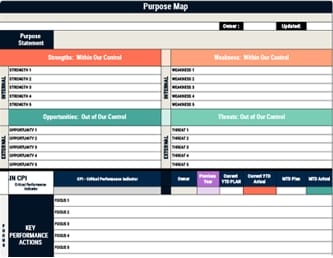
A credible execution coaching partner should also explain how it uses tools like strategy maps and clear KPIs to connect coaching work directly to strategic goals and measurable operational outcomes.
Each question is built to surface whether a firm operates from a standardized playbook or adapts its approach to your strategic reality.
You’re not looking for polished answers—you’re listening for specificity, evidence of past application, and honest acknowledgment of the conditions required for coaching to actually produce execution-level results rather than just development conversations that sound productive but change nothing operationally.
What Strong Executive Coaching Onboarding Looks Like
The moment you shift from evaluating a coaching firm to actually engaging one, the onboarding process becomes your clearest signal of whether you’ve chosen an execution partner or a credentialed generalist.
Strong onboarding establishes a data-first baseline before any development work begins, typically combining multiple assessments—ProfileXT, Genos Emotional Intelligence, a 360-degree feedback process, and LEAD NOW!—to surface patterns you can’t see from your own vantage point. This baseline should also clarify how the leader’s goals connect to broader organizational alignment, since coaching is most effective when individual behavior change supports shared strategic objectives.
From there, expect your coach to:
- Convert findings into only 3–4 behavior-based priorities with milestones and success criteria checkable at roughly 90 days
- Formalize a coaching agreement defining scope, confidentiality, success metrics, cadence (often bi-weekly), and engagement duration (commonly 6–12 months)
- Identify the correct coaching mode—developmental, performance, change, or team—based on your specific situation and organizational context
Red Flags That Signal a Bad Coaching Engagement
Before you sign any coaching agreement, you’ll want to know which warning signs separate a rigorous execution partner from a firm that simply sells hours dressed up as development.
Watch for proposal sameness—if the pitch isn’t tailored to your specific authority, organizational conditions, and measurable leadership gaps, you’re buying generic reflection.
Be skeptical when a firm emphasizes its proprietary framework over genuine understanding of your industry and market dynamics.
Question session-based pricing that isn’t tied to outcomes like decision quality at 90 days or team alignment shifts.
Reject guarantees of results, since coaching outcomes depend on your willingness to act and your organization’s enablement.
Finally, demand references from clients in your industry and size bracket with comparable authority—without them, you can’t validate credible business impact.
Strong execution partners should also show how they support strategic alignment, since research suggests 70% of strategic plans fail due to poor execution.
How to Structure a Pilot Before Full Commitment
Because signing a full coaching contract without evidence of fit puts your time and credibility at risk, you’ll want to structure a 6–12 week execution coaching pilot that includes a written agreement defining scope, confidentiality, and measurable success milestones—such as decision quality at 90 days and observable shifts in delegation or communication behavior.
During the pilot, you should:
- Require 3–4 measurable leadership behavior targets derived from baseline data like 360 feedback, rather than vague goals like “improve execution.”
- Set bi-weekly sessions with a defined accountability system that tracks goal completion and removes roadblocks.
- Have 2–3 stakeholders observe the coach’s dialogue quality on a real operational decision to validate how quickly insight converts to action.
Tie your go/no-go decision to pilot-specific outcomes that map to longer-term metrics, including direct-report retention indicators and early decision-quality evidence. To strengthen the pilot, use OKRs to connect short-term coaching milestones to broader strategic alignment and measurable execution progress.
Frequently Asked Questions
What Is the 80/20 Rule in Coaching?
The 80/20 rule in coaching means roughly 80% of your measurable performance improvement comes from about 20% of your priority behaviors—specifically decision-quality habits, delegation patterns, and accountability routines that directly move your KPIs.
You shouldn’t try fixing everything at once; instead, you’ll want to identify and focus on the few high-leverage actions that compound into the majority of your results over time.
What Are the 7 C’s of Executive Presence?
Imagine commanding every room before you even speak—that’s executive presence. The 7 C’s you’ll want to master are composure, connection, charisma, confidence, credibility, character, and command.
Each one builds on the others, so you can’t afford to neglect any single element. When you develop all seven together, you’ll project the kind of authority and trustworthiness that makes people follow your lead instinctively.
Conclusion
You’ve now got the framework to separate partners who deliver measurable execution lift from those who offer little more than expensive conversations. Define your outcomes first, pressure-test credentials with pointed questions, and let a structured pilot do the talking before you write a larger check. When you treat coaching selection with the same rigor you’d apply to any operational investment, you’ll find the partnership that actually moves the needle.