

Most mid-market companies don’t have a collaboration problem—they have an alignment problem disguised as one. You’re running the same plays, using the same CRM, and attending the same meetings, yet marketing and sales still operate with fundamentally different definitions of what a qualified lead looks like. The real breakdown isn’t communication; it’s the invisible gap between what leadership assumes is shared and what frontline teams actually experience every day.
Key Takeaways
- A perception gap exists where 82% of executives claim alignment while only 65% of frontline staff agree.
- Misalignment causes 79% of marketing leads to never convert and up to half being ignored by sales.
- Fragmented messaging across channels erodes buyer credibility by over 50% and increases post-sale churn risk.
- Shared goals and a single source of truth replace departmental metrics that create funnel bloat.
- Weekly cross-functional check-ins and incentives tied to revenue outcomes sustain alignment beyond initial structural fixes.
Why Cross-Functional Collaboration Breaks Down at Mid-Market Companies
Although most leadership teams assume their departments are rowing in the same direction, the data tells a different story—82% of C-suite executives report strong sales and marketing alignment, yet only 65% of the frontline professionals doing the actual work agree, revealing a perception gap that silently undermines coordinated execution.
This disconnect isn’t just philosophical; it produces measurable damage.
When you’re operating with misaligned incentives and fragmented systems, 79% of marketing leads never convert, sales reps ignore up to half of passed leads, and only 9.1% of salespeople rate those leads as “very high quality.”
Your buyers spend just 17% of their journey with vendors, meaning every inconsistent handoff or mixed message hits harder because you have fewer chances to build trust.
This is why stakeholder involvement early in strategy development matters, because teams that help shape decisions are more likely to execute them consistently across functions.
The Revenue Leak From Cross-Functional Misalignment
Because the perception gap described above isn’t merely an internal frustration—it’s a revenue problem with a price tag—you need to quantify what misalignment actually costs before you can justify the effort to fix it.
When your marketing team chases lead volume while your sales team chases quota, you get funnel bloat: 79% of marketing leads never convert, and reps ignore up to 50% of passed leads because they don’t match real buyer conversations.
The downstream damage compounds quickly—60–70% of B2B content goes unused by sales, poorly aligned companies see roughly 4% annual revenue declines, and highly aligned competitors outperform them by 72% in profitability.
That internal friction doesn’t stay internal; it exports confusion directly into your customer experience, raising churn likelihood before deals even close.
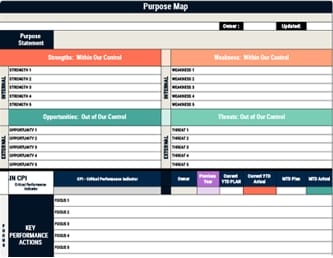
To fix it, leaders need a shared performance system built around a few Critical Performance Indicators that define success across functions, then supporting KPIs and daily actions that keep teams aligned.
How Internal Friction Exports Confusion to Your Buyers
That revenue leak doesn’t stay buried in your internal dashboards—it surfaces in every interaction your buyers have with your company, and they feel it even when they can’t name it.
Your buyers spend 83% of their decision time in digital channels, which means fragmented messaging between marketing emails and sales pitches gets amplified rather than smoothed over.
When sales ignores up to 50% of marketing-qualified leads and only 9.1% of reps consider those leads high quality, prospects endure repeated re-qualification and slower follow-up that signals disorganization.
Buyers expect one cohesive brand interaction, but your internal friction forces them to repeat account information across channels—eroding credibility by over 50% and increasing churn risk after the deal closes.
You’re exporting your alignment problem directly into their buying experience.
Creating a strategy map can help mid-market teams visualize where handoffs, goals, and messaging are misaligned before that confusion reaches the buyer.
Shared Goals and Shared Data as the Cross-Functional Foundation
When your marketing team chases lead volume while your sales team chases closed revenue, you don’t have a disagreement—you have two departments optimizing for different definitions of success, and that structural mismatch explains why 79% of marketing leads never convert into sales.
The fix isn’t more meetings—it’s shared goals built on shared data.
You need a Single Source of Truth where every customer interaction, from calls and texts to dispositions and notes, lives in one place through deep CRM integration.
When teams measure the same reality using common metrics on common records, alignment becomes structural rather than aspirational.
Companies that achieve this report 72% more profitability and 208% more revenue from marketing initiatives, proving that shared data isn’t optional infrastructure—it’s the foundation cross-functional collaboration requires.
Using visual management boards with clear, color-coded KPI tracking can make shared data more actionable across teams by helping everyone spot performance gaps and respond in real time.
Leadership Habits That Make Cross-Functional Alignment Last
Shared data and shared goals give you the structural foundation, but structure alone doesn’t sustain itself—leadership habits do. You need repeatable rituals that close the gap between executive perception and frontline reality, because 82% of C-levels claim alignment while 65% of sales and marketing staff report it’s lacking. Add performance dashboards to those rituals so teams can continuously monitor progress, surface execution gaps early, and adapt before misalignment spreads.
Structure sets the foundation, but repeatable leadership habits close the gap between executive perception and frontline reality.
- Run structured cross-functional check-ins weekly, reviewing lead-stage performance against shared ICP criteria rather than vanity volume metrics.
- Mandate transparent decision-making so both teams understand why priorities shift and resources move.
- Require consistent messaging across every handoff, since inconsistent value propositions erode trust by over 50% and increase mid-market churn risk.
- Tie incentives to enterprise outcomes like revenue quality and closed-won impact, not departmental activity counts that drive pipeline waste.
Frequently Asked Questions
What Are the 3 C’s of Collaboration?
The 3 C’s of collaboration are Clear goals, Common metrics, and Continuous communication.
You need all three working together because when any one breaks down, alignment fractures—marketing chases lead volume while sales chases revenue, teams can’t agree on what “qualified” means, and fragmented internal updates create a confusing customer experience.
You’ll rebuild them by establishing a single source of truth and shared dashboards that keep everyone tracking the same real-time outcomes.
What Are the 5 P’s of Collaboration?
Think of the 5 P’s as the pillars holding your revenue engine together: Purpose aligns every team around shared outcomes, People builds cross-functional trust and ownership, Process creates seamless handoffs across the buyer journey, Platform gives you a single source of truth with real-time data, and Performance unifies your goals so you’re measuring what actually matters instead of rewarding conflicting behaviors.
Conclusion
You’ve identified the misalignment, mapped the friction points, and now you’re standing at the edge of a decision that will determine whether your teams keep bleeding revenue quietly or finally operate as one coordinated unit. The question isn’t whether cross-functional collaboration matters—it’s whether you’ll implement shared definitions, unified data, and consistent check-ins before your buyers notice the cracks that your competitors are already exploiting.