

Change is the undercurrent that either carries your operation forward or pulls it under. If you’re leading a team through a shift, you can’t afford to lean on a polished strategy deck while ignoring the people who’ll make or break execution. Most change efforts fail not because the plan’s wrong, but because leaders misread their team’s readiness, skip the emotional work, and confuse managing tasks with leading people. What follows is a framework built to fix that.
Key Takeaways
- Effective change requires both change leadership to build belief and change management to structure execution through milestones, training, and adoption plans.
- Assess organizational readiness by evaluating operational capacity, emotional preparedness, legacy system anchors, and change fatigue before launching any initiative.
- Anchor every change effort to one clear, measurable objective that guides communication sequencing, training design, and post-rollout measurement.
- Establish governance rhythms including a signed project charter, formal change-request process, and consistent accountability cadence to prevent scope creep.
- Operationalize adoption using ADKAR to map individual needs across awareness, desire, knowledge, ability, and sustained reinforcement after go-live.
Why Most Change Management Efforts Fail
Despite what many leaders assume, change management efforts don’t typically fail because the strategy itself is flawed—they fail because the people side of the equation breaks down.
Research shows up to 70% of transformation initiatives miss their intended results, and only 26% of organizations successfully implement change even when formal programs exist.
The gap between planning and execution widens when you don’t invest in training, sponsorship, and frontline support—your employees will question the initiative’s purpose and default to familiar workflows.
Without a clear vision connecting effort to outcomes, momentum stalls regardless of how much you communicate.
This disengagement fuels active resistance, with 28% of employees pushing back against top-down directives and change fatigue making workers 54% more likely to leave.
Organizations that prioritize organizational alignment see stronger engagement and significantly better execution of change initiatives.
Change Leadership vs. Change Management: Know the Difference
Understanding why change efforts fail is only half the picture—the other half is recognizing that how you lead through change and how you manage change aren’t the same thing, even though most operational leaders treat them interchangeably.
Change leadership is about mobilizing people by shaping belief through a compelling narrative that answers “Why are we doing this?”
Change management is the structured execution—milestones, training, implementation plans—that drives adoption.
You need both.
Frameworks like Kotter’s model focus on building urgency and coalitions, which is leadership work, while ADKAR maps individual adoption through Awareness, Desire, Knowledge, Ability, and Reinforcement, which is management work.
Without leadership, your management steps produce compliance instead of commitment.
With only 42% of leaders rated as effective sponsors, this distinction isn’t academic—it’s operational.
Strong change outcomes also depend on aligning efforts across teams through strategic alignment, ensuring that leadership intent and execution stay connected throughout the organization.
Assess Your Team’s Change Management Readiness
How ready is your team—really—before you push forward with another change initiative?
Start by running a change-readiness assessment that evaluates both operational capacity and leadership emotional capacity, measuring whether your sponsors have the confidence and stability to champion what’s ahead.
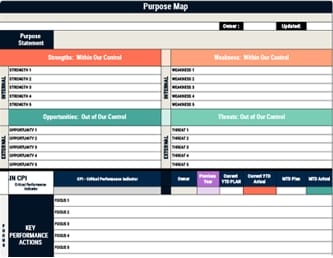
Diagnose your current state through situational awareness—review your environment, legacy anchors like outdated IT or HR processes, and culture fit, since these are where change efforts commonly stall.
Use persona-based profiling to map impacted groups so you can anticipate resistance driven by skepticism or fear of lost proficiency.
Collect adoption risk signals early, because workers experiencing change fatigue are 54% more likely to leave.
Finally, validate that your executive sponsor is visibly effective and messaging builds genuine desire and belief.
Ensure your change effort aligns with broader business priorities by reinforcing shared values and maintaining clear communication across teams to prevent misalignment and confusion.
Build a Change Management Framework That Works
At its core, a change management framework that works starts with one clear, measurable objective—not a vision statement, not a broad aspiration, but a specific operational target like reducing time-to-process by 20% or reaching 90% workflow adoption within 60 days. That single objective anchors every downstream decision, from how you sequence communications to what you measure after rollout. Incorporating tools like a Balanced Scorecard ensures that progress is tracked with aligned metrics that reinforce strategic execution.
From there, you’ll build an implementation loop with three components: targeted training, consistent reinforcement, and adoption metrics you actually track.
Ask whether managers are approving on time, whether employees are using the new workflow, and whether completion rates are trending upward.
If you skip reinforcement, you’ll see strong initial compliance that fades within weeks.
The framework isn’t a document you file—it’s an active cycle you run until the change holds.
10 Questions to Stress-Test Your Change Management Strategy
Before you commit resources to any change initiative, you need to pressure-test your strategy with pointed questions that expose weak spots—because only 26% of organizations successfully implement change management in practice, which means the odds are already against you if you skip this step.
Only 26% of organizations nail change management—pressure-test your strategy before committing resources or the odds will bury you.
Start by asking who’s accountable for the change and who’s executing it, since only 42% of leaders rate executive sponsorship as effective.
Then assess your audience’s capacity for another transformation, because change saturation kills adoption.
Confirm your communication plan covers what people need to know before, during, and after go-live—28% of employees resist when they don’t feel psychologically safe.
Finally, identify the operational tweaks required during execution, including training, process adjustments, and parallel runs, so you don’t misjudge efficiency and spike turnover risk.
Incorporate visual management tools to provide real-time visibility into progress and issues, helping teams respond faster and stay aligned during the transition.
Lead Your Team Through the Emotional Side of Change
Even when your change strategy checks every operational box, the human side of transformation is where most initiatives quietly unravel—because change isn’t a straight-line process but an emotional journey that typically moves through excitement, frustration, and eventually adaptation.
Your job is to plan leadership touchpoints that explicitly move your team through each phase rather than hoping people will figure it out on their own.
Start by building belief in the “why” through simple, repeated purpose messaging before rushing into the “how.”
Create psychological safety so concerns surface honestly—28% of employees actively resist when communication feels top-down and fear blocks candor.
Form coalitions of early adopters whose enthusiasm turns your initiative into a movement through small-group traction.
Reinforce progress and transparency by using visual management boards that make performance visible, highlight gaps quickly, and keep teams aligned during change.
Design Change Management Processes That Stick
Because the emotional groundwork you’ve laid only holds if there’s a structured process underneath it, your next step is to design change management workflows that don’t just launch well but actually persist through the messy reality of extended timelines, shifting priorities, and competing demands on your team’s attention.
Change management workflows must be built to survive shifting priorities, not just to launch with enthusiasm.
Start every initiative with a measurable objective and defined success metrics, then build operational tweaks directly into your workflow so you’re planning for disruption rather than reacting to it.
Use an adoption model like ADKAR—Awareness, Desire, Knowledge, Ability, Reinforcement—to map exactly what individuals need to learn and how you’ll reinforce new behaviors after go-live.
Pair this with a signed project charter and a formal change-request process to govern scope, preventing the creep that quietly undermines adoption before it takes root.
Establish consistent governance rhythms to monitor progress, reinforce accountability, and ensure the change effort stays aligned with evolving strategic priorities.
Frequently Asked Questions
What Are the 5 R’s of Change Management?
The 5 R’s of change management are Right Change, Right Timing, Right People, Right Communication, and Right Support.
You’ll want to make sure you’re solving the correct business problem, sequencing rollout so users aren’t overwhelmed, engaging sponsors and early adopters, communicating the “why” before the “how,” and providing training, tools, and metrics to sustain adoption—because without all five aligned, you’re much more likely to face resistance and failure.
What Are the 7 C’s of Change Management?
The 7 C’s of change management are Clarity, Commitment, Competence, Communication, Coalition/Capacity, Control, and Continuity.
You’ll use these as a practical checklist across the change lifecycle—ensuring you’ve defined clear goals, secured visible sponsorship, built capability through training, delivered tailored messaging that sticks, assembled a guiding coalition, tracked measurable adoption KPIs, and reinforced the new state so improvements don’t erode over time.
What Are the 5 Roles of a Leader in Change Management?
Picture yourself as the steady hand on the wheel guiding your team through uncertainty—you’ll fill five key roles.
You sponsor and drive the change visibly, define the “why” and vision so people believe before they adopt, equip and remove barriers through training and tools, communicate consistently across every audience to close resistance gaps, and measure, reinforce, and sustain adoption so new behaviors permanently stick.
Conclusion
You don’t need a perfect plan to start managing change effectively—you need a clear objective, an honest readiness assessment, and a framework that addresses both the strategic and human sides of migration. If you’re thinking this feels like too much structure for a fast-moving operation, consider that unstructured change is exactly what causes rework, resistance, and burnout. Start with one change, apply this framework, measure the outcome, and build from there.