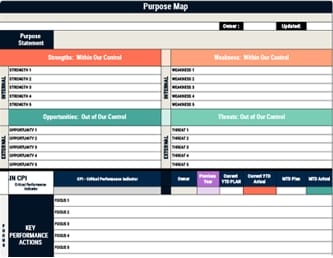


A well-designed business scorecard acts as your organization’s compass, pointing every team member toward the outcomes that matter most. You’ve likely seen scorecards that collect dust on conference room walls, but the difference between decoration and a driver of real accountability comes down to how you structure, communicate, and connect metrics to daily decisions. What follows will show you exactly how to build scorecards that create ownership at every level.
Key Takeaways
- Effective scorecards directly link measurable KPIs to strategic objectives, ensuring every metric drives meaningful business outcomes and accountability.
- Industry-specific approaches tailor metrics to sector priorities, from patient outcomes in healthcare to customer loyalty in technology.
- Cascading scorecards translate organizational goals into department-specific measures, creating clear ownership and alignment across all levels.
- Employee involvement in selecting relevant metrics increases buy-in and connects daily work to broader strategic results.
- Regular reviews and consistent reporting prevent scorecards from becoming irrelevant and maintain focus on what truly matters.
Business Scorecard Examples by Industry and Function
When you’re developing a balanced scorecard for your organization, understanding how different industries approach this strategic tool can provide valuable insights that help you tailor your own framework. Banking institutions typically focus on financial stability, customer service excellence, operational efficiency, and employee development, while manufacturing companies emphasize productivity, product quality, supply chain optimization, and workforce upskilling.
Healthcare providers center their scorecards on patient outcomes, care coordination, cost efficiencies, and fostering innovation cultures. Non-profit organizations prioritize stakeholder satisfaction, program effectiveness, resource stewardship, and staff engagement differently than for-profit entities. Technology firms highlight revenue growth, customer loyalty, new product delivery, and talent pipeline cultivation. Each industry’s scorecard reflects its unique operational demands and strategic priorities, so you’ll want to identify which elements align with your organization’s specific goals and challenges. Strong organizational alignment ensures your scorecard connects strategic objectives to day-to-day actions through clear communication and well-defined roles.
What Separates Scorecards That Drive Results From Wall Decor
Although many organizations invest significant time creating balanced scorecards, the difference between tools that actually transform performance and those that become forgotten posters on conference room walls comes down to how deeply the scorecard connects strategy to daily action.
Effective scorecards feature clear strategic objectives paired with measurable KPIs that directly link to specific initiatives driving accountability. You’ll notice that successful implementations engage stakeholders throughout the development process, creating ownership that sustains momentum over time.
When you align individual and team goals to your organizational scorecard, everyone’s daily efforts contribute meaningfully to broader strategic outcomes. Additionally, leveraging technology for data collection, visualization, and reporting streamlines your ability to track progress and make informed decisions quickly. Regular review cycles maintain your scorecard’s relevance rather than allowing it to become static wall decor that nobody references. Embedding governance rhythms ensures those review cycles translate into clear accountability and timely course-corrections.
Choosing KPIs That People Actually Own
How effectively your KPIs drive performance depends largely on whether the people responsible for them feel genuine ownership over the results. This works best when you also establish clear roles and responsibilities so accountability doesn’t get diluted. You’ll achieve this by involving employees directly in selecting metrics that connect to their daily work and fall within their sphere of influence.
Focus on measuring outcomes that matter to your business rather than defaulting to activities that are simply convenient to track. Each KPI should link clearly to strategic objectives, which helps individuals and teams understand how their efforts contribute to organizational success.
You’ll need to review these metrics regularly and adjust them when business conditions shift or employees provide feedback suggesting improvements. Don’t forget to supply adequate training and resources so your team members understand exactly how to monitor their progress and take meaningful action to improve their numbers.
How to Cascade Your Scorecard Across Every Team
Once you’ve established KPIs that employees genuinely own, you’ll need to connect these individual metrics to your broader organizational strategy through a process called cascading. This approach breaks down high-level objectives into department-specific measures, ensuring every team understands how their daily work contributes to company-wide goals. Cascading also reinforces vertical and horizontal alignment by translating strategy into clear objectives at every level while encouraging cross-team coordination.
Start by clearly defining how each strategic objective translates into actionable targets for business units, functions, and individual contributors. You’ll want to maintain consistent metric definitions, target-setting methods, and reporting processes across all levels, which creates a shared understanding of performance expectations throughout your organization.
Don’t treat cascaded scorecards as static documents. Schedule regular reviews to assess alignment and track progress, allowing you to adapt your approach as business conditions shift and strategic priorities evolve over time.
Reviewing and Updating Scorecards Without Losing Momentum
Because your balanced scorecard reflects strategic priorities that naturally shift over time, you’ll need to establish a consistent review cadence that keeps your metrics current without disrupting the momentum you’ve built across teams. Quarterly or semi-annual reviews work best for most organizations, giving you enough time to gather meaningful data while catching misalignments before they derail progress. To maintain strategic cohesion between review cycles, consider using OKRs to reinforce shared priorities through regular check-ins and performance reviews.
When you conduct these reviews, bring cross-functional team members into the process to encourage collaboration and secure buy-in for any adjustments you’ll make. Document why you’re changing specific objectives, measures, or initiatives so everyone understands the reasoning behind updates. Consider incorporating agile methodologies like sprint planning to make your scorecard more responsive, allowing you to adapt quickly when market conditions or organizational priorities demand immediate attention.
Scorecard Mistakes That Destroy Accountability
Five critical mistakes can transform your balanced scorecard from a powerful accountability tool into an ineffective document that wastes time and breeds organizational cynicism. When you fail to link metrics directly to strategic objectives, you create a disconnect that eliminates accountability because no one understands how their performance connects to larger goals. Use the 1-3-10 second rule to make scorecard status, problems, and next actions obvious at a glance.
Overloading your scorecard with too many metrics dilutes focus and prevents teams from identifying priorities. You’ll also destroy accountability when you neglect regular reviews, causing scorecards to become outdated and irrelevant to current business conditions.
Without executive and employee buy-in, your scorecard loses its organizational impact entirely. Finally, inconsistent reporting and communication of results undermines the transparency that makes accountability possible, leaving stakeholders confused about expectations and performance standards.
Frequently Asked Questions
What Is a Real Life Example of a Balanced Scorecard?
Marriott International provides an excellent real-life example of a balanced scorecard in action.
You’ll find they track performance across four key perspectives: financial metrics, customer satisfaction, internal processes, and employee learning and growth.
This approach allows the hotel chain to align its strategy across all business units while measuring what actually matters for long-term success, not just short-term profits.
What Are the 4 Pillars of the Balanced Scorecard?
The four pillars of the Balanced Scorecard measure what matters most while balancing short-term gains against long-term success. You’ll track financial performance through metrics like revenue growth and profit margins, then evaluate customer satisfaction and retention rates.
The internal process perspective helps you assess operational efficiency, including on-time delivery, while the learning and growth pillar measures employee development through training hours and skill advancement.
Does Coca-Cola Use a Balanced Scorecard?
Yes, Coca-Cola uses a balanced scorecard approach to manage its business performance strategically across all four perspectives: financial, customer, operational, and organizational learning. You’ll find the company tracks metrics like revenue growth, market share, operating efficiency, and employee engagement.
Coca-Cola cascades its enterprise-level scorecard down to individual business units and functions, which helps align strategic priorities throughout the organization and enables data-driven decision-making.
Conclusion
Think of your scorecard as a compass, not a photograph—it should guide your organization’s journey rather than capture a static moment. When you select meaningful KPIs, cascade them thoughtfully across teams, and review them consistently, you’re building a navigation system that keeps everyone moving toward shared goals. Your scorecard becomes the tool that transforms strategic intentions into daily accountability and measurable progress.