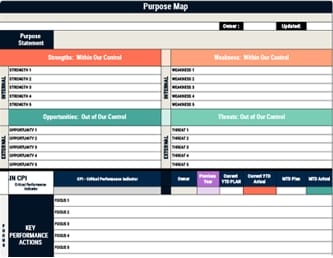


Like Odysseus without a map, you’ll drift if plans don’t become disciplined action, so start by translating goals into a few clear priorities, owners, and weekly deliverables, then track leading indicators that predict outcomes. You’ll need real-time visibility, short feedback loops, and blocker reviews to surface risks early, while tiered accountability and simple dashboards keep focus tight. If that sounds rigid, it’s how strategy breathes daily—now see how to wire this system into your cadence.
Key Takeaways
- Close the planning-doing gap with explicit pillars, measurable indicators, and weekly operating rhythms tied to real work.
- Use real-time dashboards to link objectives to milestones, owners, dependencies, and leading indicators for early risk detection.
- Limit concurrent strategic initiatives to three to five, with clear decision points, escalation paths, and a visual status system.
- Run weekly blocker reviews to surface impediments, assign owners, and track time-to-resolution across cross-functional handoffs.
- Establish tiered accountability with cascaded scorecards, no-surprise culture, and periodic resource reallocation via a single source of truth.
The Gap Between Planning and Doing in Strategy Execution
Why does strategy so often stall between a polished plan and daily work? You face a disconnect when directives collide with limited resources, so teams can’t execute without tradeoffs they aren’t empowered to make. Real-time visibility gaps make it worse, because delayed or outdated data slows decisions and prevents timely course corrections, allowing small issues to compound. Manual strategy management drains executive time on collecting and validating information, leaving too little capacity for proactive analysis and competitive moves. Without a defined architecture that bridges planning to action, teams interpret goals differently, creating silos and fragmented priorities. To close the gap, establish explicit pillars, define measurable indicators that track progress, and create weekly rhythms that align execution, surface constraints early, and support rapid, informed adjustments. Establish aligned OKRs that connect top-level strategies to daily work and reinforce governance rhythms for performance visibility.
Turn Strategy Into Action With Clear Priorities
How do you move from intent to impact without scattering effort across too many fronts? Start by limiting active strategic initiatives to three to five concurrent priorities, which concentrates talent, budget, and attention where they matter most. Make those priorities visible through a simple visual management system—dashboards, walls, or digital boards—so everyone sees status, dependencies, and who owns what, enabling rapid resource shifts when signals change. Set a review cadence that fits your size—weekly if you’re a startup, monthly if you’re larger—to verify progress, rebalance workloads, and retire low-yield bets. Define explicit decision points and escalation paths, so teams know when to commit deeper or reallocate. Finally, link daily activities to outcomes with layered metrics, ensuring frontline work directly advances strategic objectives. To strengthen execution discipline and transparency, use OKRs to break strategic objectives into measurable key results and align departmental goals.
Run Weekly Blocker Reviews to Accelerate Strategy Execution
With priorities visible and few by design, you keep execution tight by running weekly blocker reviews that surface what’s slowing work, assign clear owners, and track time-to-resolution until issues are closed. Use a consistent agenda to reveal barriers early, link each blocker to a strategic priority, and confirm that resources move accordingly. In matrix organizations, concentrate on cross-functional impediments, clarifying decision rights and handoffs; in hierarchical structures, push issues up and down vertical channels fast to secure approvals or support. Foster psychological safety so teams raise risks without penalty, which shortens delays and prevents repeat problems. Pair these reviews with visual management, keeping progress transparent and momentum aligned to your weekly strategic pulse checks, and apply the Four-step Thriving Teams program to structure the cadence. Incorporate OKRs to tie blockers and resolutions to measurable key results, strengthening strategic alignment and accountability across teams.
Run weekly blocker reviews: surface impediments, assign owners, track resolution, and keep priorities moving.
1) Define blockers precisely and link to priorities.
2) Assign an owner and due date immediately.
3) Measure and report time-to-resolution weekly.
4) Capture root causes and prevent recurrence.
Build a Tiered Accountability System That Drives Results
Sometimes the fastest way to execute your strategy is to design a tiered accountability system that links daily work to enterprise outcomes, defines who reviews what at each level, and makes performance visible in real time. Start by tying frontline metrics to company objectives, then cascade scorecards so every team sees how its KPIs roll up. Use real-time dashboards as the operational backbone, ensuring leaders and contributors share a single source of truth. Establish a no-surprise culture by pairing recognition with consequences, running proactive cross-functional reviews, and setting clear escalation paths. Schedule weekly and periodic reviews to track progress, surface barriers early, and redirect resources to priorities. In large organizations, formal governance supports this system; in small teams, embed it in meetings and sprints. Embed process optimization practices to cut waste, tighten handoffs, and sustain execution momentum across teams.
Engage Stakeholders With Cadences That Support Execution
Clear accountability only works when the right people stay engaged on a steady rhythm, so you should set stakeholder cadences that keep strategy tied to daily work and decisions. Design targeted engagement strategies for executives, managers, and frontline leads, since each group needs different context, metrics, and decision points to stay aligned. Use a clear communication framework that defines message owners, channels, frequency, and expected actions, then maintain regular touchpoints with key influencers to sustain momentum and unblock issues quickly. Blend formal reviews with frequent, informal check-ins, especially in agile environments, so decisions keep pace with learning. Anchor activities to weekly rhythms and pulse checks, linking strategic outcomes to current priorities, risks, and dependencies. Aligned organizations can grow revenue 58% faster and be 72% more profitable, underscoring the value of maintaining vertical and horizontal alignment through consistent stakeholder cadences.
Set steady stakeholder cadences that tie strategy to daily work through clear roles, rhythms, and rapid feedback.
1) Map stakeholders, influence, and needs.
2) Set channel, frequency, and purpose.
3) Build support coalitions across teams.
4) Run weekly pulses with action follow-up.
Lead the Culture: Teaming Behaviors That Power Execution
How do you turn culture from a slogan into execution power? Start by leading teaming behaviors, because people, not processes, convert strategy into results. Richard Branson’s advice applies here: when you look after the team, they look after the customer, and execution accelerates. Avoid overloading projects with processes and metrics that ignore human dynamics, since trust, communication, and adaptability drive day-to-day performance. Incorporating visual management with the 1-3-10 second rule helps teams spot issues and act quickly, reinforcing accountability and fast feedback during execution. Focus on two critical moments. Before planning, build alignment on purpose, priorities, and roles to prevent misalignment and friction. During execution, maintain clear commitments, fast feedback, and calm problem-solving to reduce delays. Replace shallow teambuilding with routines that improve collaboration in real work. Use the Thriving Teams Self-Guided Program’s four-step approach to synchronize purpose, priorities, and ways of working, boosting speed and cohesion.
Get Real-Time Visibility With Strategy Execution Dashboards
Dashboards turn strategy from a slide into a live system, giving you real-time visibility that links objectives to daily work and flags issues before they stall progress. You translate goals into milestones, track leading indicators that forecast outcomes, and see how cross-functional work intersects, so you can shift resources or course-correct before risks escalate. By automating data collection, you close the visibility gap, improve data quality and traceability, and reduce manual reporting that slows decisions. With clear visibility, organizations report higher profitability and sales productivity, because engaged teams act on signals, not surprises. Incorporating routine outcome reporting through Visual Management Boards strengthens transparency and accountability, ensuring teams act on timely insights aligned to strategic goals.
1) Define outcomes, break them into milestones, and assign owners with due dates and dependencies.
2) Select leading indicators that predict results and set thresholds for alerts.
3) Integrate systems to automate updates and standardize data.
4) Review variance, reallocate resources, and adjust priorities swiftly.
Make Strategy Execution a Daily Practice (Routines and Reviews)
Discipline turns strategy into habit by embedding it in your weekly rhythms, where teams review real-time performance, connect actions to priorities, and make fast adjustments before small issues become costly detours. Treat strategy as a daily practice, not an annual event, by integrating strategic questions into every team meeting and project review. Ask explicitly how each task supports your 3–5 strategic pillars, and stop work that doesn’t align, which curbs scope creep and protects momentum. Run weekly strategic pulse checks that capture leading indicators, cross-functional dependencies, and resource allocation risks, so you can course-correct before outcomes slip. Use automated, real-time dashboards to translate priorities into observable metrics, reduce manual reporting, and speed decisions. Close each week by confirming owners, next actions, and expected impacts. Embed stakeholder touchpoints into these rhythms to reinforce leadership alignment and ensure operational realities inform adjustments as circumstances change.
Frequently Asked Questions
How Do We Budget for Strategy Execution Tools Without Overspending?
Start by defining success metrics and must‑have features, then cap spend with a quarterly budget tied to measurable outcomes.
Map processes, shortlist tools that integrate with existing systems, and run small pilots to validate value before scaling.
Use tiered licenses, negotiate annual discounts, and avoid overlapping functionality.
Track adoption, time saved, and impact on key KPIs, and set a stop‑loss rule to sunset tools that don’t meet thresholds within two review cycles.
What Skills Should We Hire for to Strengthen Execution Capability?
Hire for program management, process improvement, data analysis, change management, and cross-functional collaboration. You’ll need planners who translate goals into milestones, analysts who build KPIs and dashboards, and facilitators who resolve dependencies and risks.
Prioritize communication, stakeholder management, and negotiation, since alignment drives outcomes. Don’t overlook technical fluency with workflow tools, basic finance for ROI tracking, and coaching skills to develop teams.
Finally, seek resilience and ownership—who else sustains momentum when plans wobble?
How Do Mergers or Reorgs Affect Existing Strategic Pillars?
They pressure-test your pillars, exposing overlaps, gaps, and conflicting priorities, so you must reassess fit, sequence, and ownership.
Map both organizations’ goals to each pillar, quantify synergies and risks, then decide to retain, merge, retire, or add pillars.
Redefine measurable outcomes, reallocate funding and talent, and set single-point accountability.
Update governance and cadence, communicate rationale and trade-offs, and run a 90-day stabilization plan with leading indicators to confirm traction.
Which Incentives Best Reinforce Disciplined Execution Behaviors?
Like a VHS tape, you need clear signals: tie bonuses to milestone delivery, quality metrics, and customer outcomes; use short, frequent performance checkpoints with visible scorecards; reward cross‑functional handoffs that meet SLAs; grant autonomy linked to accountability; offer spot awards for removing bottlenecks; withhold incentives for scope creep or missed dependencies; and include learning KPIs, such as post‑mortems and skill gains, so you’re reinforcing disciplined execution, not just speed.
How Do We Sunset Legacy Projects That Conflict With New Priorities?
You sunset conflicting legacy projects by defining clear criteria, scoring each project against new priorities, and making a transparent go/hold/stop decision. Communicate the rationale, outline decommission plans, and set end dates, then reassign budgets and people to strategic work. Preserve essential data, document learnings, and manage risks with contingency steps. Monitor dependencies, retire contracts and tools, and track value realization to ensure resources don’t drift back, reinforcing the new portfolio direction.
Conclusion
Now you’ve mapped priorities, installed weekly blocker reviews, and built tiered accountability, you’re ready to make execution a daily habit—yet one choice remains. Will you lock in cadences, dashboards, and ownership so issues surface early, resources shift fast, and milestones never drift? If you commit, your strategy will breathe through routines, metrics, and cross‑functional focus, turning plans into momentum. Start the next week with crisp goals, real-time signals, and one hard question: what risks must you remove today?